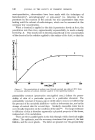
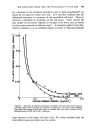
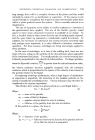
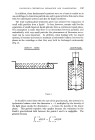
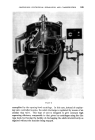
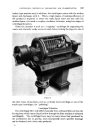
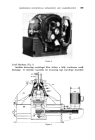
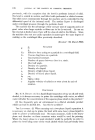
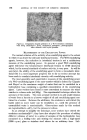
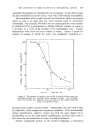
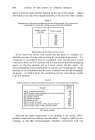
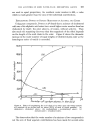
CONTINUOUS CENTRIFUGAL SEPARATION AND CLASSIFICATION 157 In addition, these fundamental equations serve as a basis to enable us to use centrifuges to determine particle size and in general terms this can be done both for solid liquid systems and also for liquid emulsions. The brief mathematical treatment given has assumed the separation of small solid particles from a liquid. It does, however, remain valid for the separation of small dispersed liquid globules from a continuous liquid phase. The assumption is made that there is no interaction between particles, and undoubtedly with very small particles the phenomenon of Brownian move- ment can be come important. In addition, when dealing with two liquid systems, it becomes necessary to maintain a hydrostatic balance between the phases in the centrifuge so that they may both be discharged continuously (Fig. •). GRAVITY TANKS CENTRIFUGE h h Figure I It should be noted that with the case of the gravity tank, the system is in hydrostatic balance when the dimension e -- 1 multiplied by the density of the light phase equals the dimension e -- h times the density of the heavy phase. This general equation only applies because the variations in the Earth's gravitational field between the points 1 and h is negligible. The general formula fr----•f •r:h (r)dr •- ½hf(r)dr r---- r=e

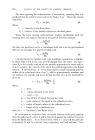
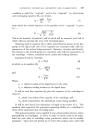
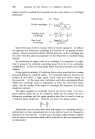
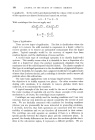
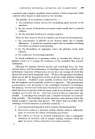
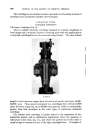
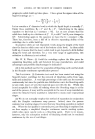
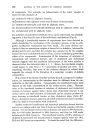
158 JOURNAL OF THE SOCIETY OF COSMETIC CHEMISTS is applicable. In the earth's gravitational field the values of f(r) on each side of the equation are almost identical and cancel out so that (e- l) (e- h) With centrifuges this does not apply and •¾• (e•--I •) • •h (e•--h •) 2 2 or E -- •h __ e •-- 1 • • e •-- h • Types of Application There are two types of application. The first is clarification where the object is to remove the solid material in suspension in a liquid either to recover product or to remove an undesirable contaminant from the liquid phase. Typical examples would be the recovery of organic dyes from reaction liquors, and the clarification of waxes and fats. A second main type of centrifugal operation is to classify liquid-solid systems. This usually occurs when it is desirable to have a dispersion of a solid in a liquid but where the product requirement stipulates that the maximum size of the solid dispersed shall be limited. The classic example of this type of centrifugal operation is in the classification of pigmented liquors. It may be desirable, for example, that a pigment should have no agglomerates of more than 2 microns in size, and a centrifuge is therefore used to remove all particles above this critical size. The same basic applications exist in binary liquid systems. Sometimes the objective is to totally separate two phases. On other occasions when dealing with emulsions, it is desirable to remove globules which have coalesced, or to concentrate the emulsion. A typical example of the first case would be the use of centrifuges after the water washing of vegetable oils and the classic example of the second mechanism is, of course, the centrifugal cream separator. Centrifuges are very widely used for treating emulsions and I am very conscious that my own interests are almost completely the reverse of your own. We are basically concerned with machines for breaking emulsions whereas you are presumably far more interested in promoting emulsions. I do think, however, that both operations are concerned with the overall stability of emulsions and we are therefore all interested in their nature. The centrifuge can only separate an emulsion if there is a difference in specific gravity between the disperse phase and the continuous phase. In general, the density differences are low and since the emulsion globule size is often in the sub-micron region, it represents a difficult problem. We are
Purchased for the exclusive use of nofirst nolast (unknown)
From: SCC Media Library & Resource Center (library.scconline.org)