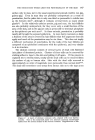
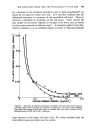
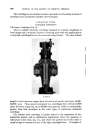
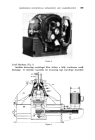
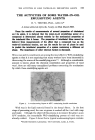
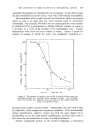
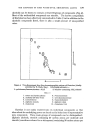
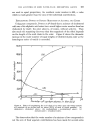
THE ACTIVITIES OF SOME V•7ATER-IN-OIL EMULSIFYING AGENTS 173 THE ACTIVITIES OF SOME WATER-IN-OIL EMULSIFYING AGENTS E. V. TRUTER, Ph.D., A.R.C.S.* A lecture delivered before the Society on 22rid March 1962. From the results o• measurements o• several properties o• cholesterol and its esters, it is deduced that the water-in-oil emulsifying power o[ a compound is determined almost entirely by the mechanical properties o[ the interfacial film it [orms. The properties o[ interfacial films cannot be deduced •rom measurements o[ the effect that a compound has on the water-oil interfacial tension, nor can the results [or one oil phase be used to predict the inter[acial properties o[ a system containing a different oil phase. The importance o[ other relevant •ctors is discussed. Wool wax and its constituents are among the most effective W/O emulsifying agents so that it is not surprising that many workers have been interested in discovering the source of the emulsifying power x-4. Although a considerable amount is known about the chemical constitution and properties of wool wax 5, there are still many unexplained problems concerning the mechanism by which these emulsifying agents act. : .• . .o. .j ,:•-.... • v • i •: • • :. •Q. • '• Figure 1. A woolscouring liquor at 45øC. containing double emulsions Wool wax is the lipid material found in the sheep's fleece. In the first stage of processing wool, the wax or grease is washed off the wool with soap and water. Although the object of this process is to remove the grease as an O/W emulsion, the remarkable W/O emulsifying powers of wool wax are already evident. Figure 1 shows that a typical woolscouring liquor contains *Textile Chemistry Laboratory, The University, Leeds, 2, Yorks.

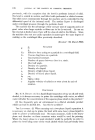
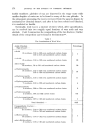
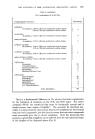
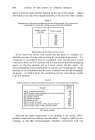
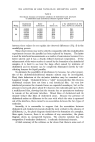
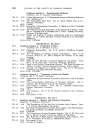
17•1 JOURNAL OF THE SOCIETY OF COSMETIC CHEMISTS double emulsions globules of wax are dispersed in the soapy water while smaller droplets of water are to be found in many of the wax globules. In the subsequent processing, the wax is recovered from the aqueous liquors by mechanical or chemical means 5, and after it has been refined and bleached, it is marketed as lanolin. Chemically, wool wax is a mixture of esters which, after saponification, can be resolved into two roughly equal fractions of wax acids and wax alcohols. Table 1 summarises the compositions of the two fractions further details of the composition can be found in the literature 5'ø. Table 1 The Constitution of Wool Wax Acidic Fraction Type of acid :--- nAcids 15 members, C10 to C32 even numbered carbon chains C13 to C17 odd numbered carbon chains isoAcids 12 members, C10 to C32 even numbered carbon chains anteisoAcids 12 members, C9 to C31 odd numbered carbon chains a-Hydroxynacids 13 members, C12 to C24 even numbered carbon chains C13 to C23 odd numbered carbon chains a-Hydroxyisoacids 6 members, C14 to C24 even numbered carbon chains a-Hydroxyanteisoacids 7 members, C13 to C25 odd numbered carbon chains o•-Hydroxynacids 5 members, C26 to C34 even numbered carbon chains eo-Hydroxyisoacids 2 members, C30 and C32 carbon chains o•-Hydroxyanteisoacids 4 members, C27 to C33 odd numbered carbon chains Total identified :-- Unsaponifiable fraction :-- nHydrocarbons 21 members, C14 to C32 even numbered carbon chains C13 to C33 odd numbered carbon chains isoHydrocarbons 10 members, C14 to ( 32 even numbered carbon chains anteiso Hydrocarbons 8 members, C15 to C29 odd numbered carbon chains Percentage • 7 23 30 15 0.5 94-5
Purchased for the exclusive use of nofirst nolast (unknown)
From: SCC Media Library & Resource Center (library.scconline.org)