PREPARATION AND HAIR WAVING PROPERTIES OF 2,5-DIMERCAPTOADIPIC ACID By P. F•N•:ELs'rE•½, Pu.D., Dr: Yt:•½o HSItSNG, Pu.D., and L. E. DEMYT•r, M.S.* Presented February/3,/962, Chicago VAR•ot:s •ERCAPTA•rS have been utilized to wave human hair over the years, but few have achieved the commercial importance of thioglycolic acid. Despite the pre-eminence of this substance, new compounds con- tinue to be sought which will provide an effective waving composition and conceivably possess novel and other unexpected properties in addition. This paper describes work done with a new compound, 2,5-dimercapto- adipic acid (DMA), that is bifunctional in two senses: it is a dithiol as well as a dicarboxylic acid. Thus, it was thought useful to compare it with thioglycolic acid which is monofunctiOnal in these respects. Further- more, this compound has two asymmetric carbon atoms and is capable of forming a stable cyclic disulfide, leading to properties which might prove novel in use. This paper describes the synthesis, waving behavior and some toxicological properties of DMA. EXPERIMENTAL Synthesis For this study, DMA was prepared according to scheme 1. The details of the various reactions are given below. /1. 2,5-Dibromadipic ztcid. Adipic acid was 'converted into its acid chloride and brominated as described in Organic Syntheses (1). The brominated acid chloride was slowly added to eight liters of cold water contained in a three-gallon enameled pail. During the addition, good agitation was maintained, and the reaction vessel was cooled ex- ternally. Stirring was continued for several hours during which time the crude dibromadipic acid separated as a pale yellow solid. It was removed by suction filtration, well washed with cold water, and, finally, air dried. The yield of crude product was 65-75 per cent. The crude acid was purified by recrystallization from glacial acetic acid. * The Toni Co., Div. The Gillette Co., Chicago 54, Ill. 253

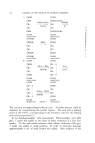
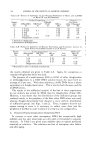
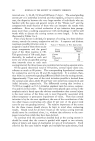
:254 JOURNAL OF THE SOCIETY OF COSMETIC CHEMISTS II. COOH I (•HBr CHq. CH2 I CHBr I COOH (meso-form) COONHa CHSNH4 I I ] CHSNH4 COONH4 (meso-form) COOH ! CHSH I CHs 1 CH2 CHSH COOH (meso-form) COOH I CH--S CH• I CH• I CH---S ! COOH (dl-mixture) KSSC(OC,,Ha) Na:•COo H•SO• FeCI., + H.,.O= NH•OH Zn dust H2SO4 - ) NH•OH scheme 1 COOH CHSSC(OCsHa) ] NH4OH CH• - j N. CH• CHSSC(OC.oH.•) COOH (meso-form) COOH CHSH CH: I CH, CHSH COOH (meso-form) COOH CH--S ] heat CH• ] 220øC. CH2 CH--S COOH (meso-form) COOH CHSH I CH• - CH• CHSH COOH (dl-mixture) The recovery was approximately 80 per cent. A further amount could be obtained by concentrating the mother liquors. The acid had a melting point of 191-193øC., corresponding to the literature value for the melting point of the meso-form (7). B. 2,5-Xanthogenoadipic /lcid (meso-form). Dibromoadipic acid (30 •, gin. 1 mole) was added to two liters of water contained in a four liter beaker. To the well-stirred mixture, solid sodium carbonate (106 gm. 1 mole) was added in small portions. In order to minimize foaming, approximately 1 ml. of octyl alcohol was added. After addition of the
Purchased for the exclusive use of nofirst nolast (unknown)
From: SCC Media Library & Resource Center (library.scconline.org)