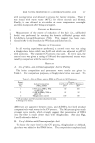
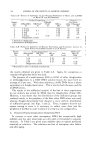
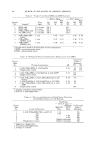
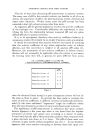
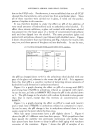
INTERPRETATION OF EYE IRRITATION TESTS 289 a "Moderately Irritating" rating down into the "Minimal to Mild" range of irritation. Another significant point may be noted with respect to the "Aerosol Hair Sprays." Here the standard Draize method of direct instillation into the conjunctival sac is contrasted with a technique in which the spray is released from the can at a definite distance from the eye. The anticipated result, namely that the standard Draize method would be a more rigorous one, is evident from the difference in the final eye irritation ratings. Before completing examination of the data of this table, attention should be drawn to the uniformly low incidence of un- diluted products which are free from all evidence of eye irritation by the end of twenty-four hours following ocular instillation. Even diluted products, such as those exemplified in the anti-dandruff group, had only a 28 per cent incidence. Incidentally, dilutions here averaged about 1:12. The presence of irritation at twenty-four hours or beyond in a product designed for household use (and subject to the Federal Hazardous Substances Labeling Act) would, under the present regulations, cause it to require labeling as an "eye irritant" in the majority of instances. The present criteria for defining an "eye irritant" in the regulations under this act would result, if cosmetics were subject to it, in labeling for a large number of cosmetic products. For example, the data of Table 9 would indi- cate that few aerosol hair sprays, shampoos or anti-dandruffproducts would escape labeling as eye irritants. In closing, we would like to stress that it is difficult, if not a practical im- possibility, to devise a numerical system for either scoring or classifying eye irritants which is totally adequate. Such a classification system as we have developed is not to be regarded as a substitute for the experience, training and judgment of a competent scientist. We believe the merit of the system described to lie principally in that it represents at least a practical, work- able approach to the ideal of total adequacy, and hope that it may be of some value to those individuals who encounter difficulties in condensing detailed raw eye irritation data into a more simple, understandable form. .4cknowledgment: The authors wish to express their thanks to Mr. Rich- ard J. Palazzolo for his contributions in the past toward the development of the rating system described in this paper and to Miss Betty Quack and Mr. Walter A. Wilson for their aid in the collection and analysis of data pre- sented. (Received March 13, 1962) References (1) Draize, John H., Woodard, Geoffrey, and Calvery, Herbert O., 5 e. PharmacoL, 82, 377 (1944).

290 JOURNAL OF THE SOCIETY OF COSMETIC CHEMISTS NOTICE 'Members of the Society may borrow books from the library at The Chemists' Club, 52 East Forty-first Street, New York. The library is located on the mezzanine and open Monday through Friday, 9:00 a.m. to 5:00 p.m.
Purchased for the exclusive use of nofirst nolast (unknown)
From: SCC Media Library & Resource Center (library.scconline.org)