MODIFICATION OF THE WATER HOLDING CAPACITY OF CALLUS BY PRETREATMENT WITH ADDITIVES By C•^RLEs Fox, B.A., J^•4Es A. T^ssoFF, B.S., M^Rn'•½ M. R•G•, P•.D., and Do•q^LD E. D•E•4, B.S.* Presented May 8, 1962, New York City I. Introduction Du}usc THE PAST DECADE, increasingly more cosmetic preparations have been marketed for which skin "moisturizing" claims have been made. The rationale for such claims is found in the work of Jacobi (1) and of Blank (2, 3). Jacobi described a very hygroscopic water-soluble fraction which could be extracted from hair, wool and skin and demonstrated that fibers and tissues became hydrophobic as a result of such extraction. Blank in his classic studies showed that water, not oil, was primarily responsible for skin softness and flexibility and that cornified epithelium must contain 10 to 20 per cent of water to remain soft and flexible. Blank also showed that the moisture uptake of the stratum corneum is reduced if its water-soluble components are removed. Subsequent studies by Spier and Pascher (4-9), Flesch and Esoda (10, 11), and Szakall and his co- workers (12-14) have confirmed the presence of many water-soluble com- ponents in the stratum corneum and their importance in enhancing the water-holding capacity of this tissue. Yet, despite the presence of this natural hygroscopic material, "dry skin" still remains a problem, and its relief requires external application of lotions, creams, bath oils, etc. (15). The cosmetic chemist has relied primarily on the use of fatty materials and humectants to increase the retention of skin moisture. Fatty ma- terials may act as partial barriers to water evaporation from the skin (16, 17), and, presumably, this occlusivity increases the skin's water content (18, 19). Other fatty materials, especially those found on the skin, are believed to promote skin hydration by forming emulsions with water, which then become reservoirs of water for the skin (20, 21). By com- parison, the mechanism by which humectants moisturize the skin has re- ceived less attention. Powers and Fox (16) reported that humectants, such as propylene glycol and glycerol, accelerate the rate at which water is * Warner Lambert Research Institute, Morris Plains, N.J. 263

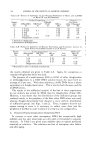
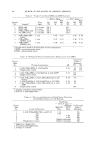
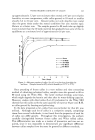
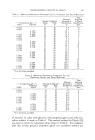
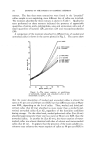
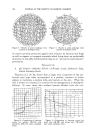
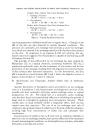
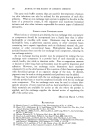
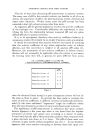
264 JOURNAL OF THE SOCIETY OF COSMETIC CHEMISTS lost from living skin to a dry atmosphere. Blank (18) indicated that glycerol moisturizes the skin by attracting water from the environment. Recently, Flesch (22), working with dead skin and powdered callus, re- ported that glycerol acts as a barrier to water diffusion through the skin in one instance and potentlares the water pickup of powdered callus tissue in another. No work has been published comparing the effects of commonly used humectants on the moisture sorption of the stratum comeurn, nor have the humectant properties of the known naturally occurring water-soluble ma- terials in the stratum corneum been studied individually so far. The pres- ent work reports on such studies. II. Methods and Results A. Effect of Particle Size and Grinding on l'Fater Sorption of Unwashed Callus The water-holding capacity of whole callus tissue at various relative humidities has been determined by Blank (2, 3). On a priori grounds, it is expected that the rate of moisture pickup is a function of the particle size and source of the callus. Accordingly, in the present study, powdered callus of uniform particle size was utilized. It has been shown that grind- ing may degrade keratin and that the degree of grinding has a direct bearing on the amount of water extractables in callus (23) this, in turn, may affect the water-holding capacity of callus. Therefore, a preliminary study was necessary to determine whether the water-holding ability of callus (at equilibrium) was affected by the degree and type of grinding. Gross pieces of plantar callus (Lot #1) approximately 1 cm. 2 in area and 0.25 ram. in thickness were placed in test tubes, chilled in a dry ice/acetone bath for about illteen minutes and pulverized by pounding in a Platther tool steel mortar. The particles were passed through standard mesh sieves and screened into 10 to 20 mesh, 20 to 40 mesh, 40 to 60 mesh and 80 and up mesh aliquots. Duplicate samples (ap- proximately 100 to 200 rag.) of each size range as well as of the gross pieces of callus were placed into weighing bottles and dried to constant weight in a vacuum desiccator over P2Os at room temperature. The samples were then placed in a constant humidity chamber at 45 per cent R.H. and maintained at room temperature. The constant humidity chambers were prepared by placing 500 g. of known constant humidity mixtures of glycerol and water (24) in the base of 200 min. sleeve top desiccators and Boekel stainless steel desiccating cabinets. The samples were weighed daily until they reached constant weight. The data for the average moisture pickup is plotted in Fig. 1. It is apparent that grinding of callus to a particle size of 10 mesh or smaller in- creases its water-holding capacity by a small amount. Gross callus takes
Purchased for the exclusive use of nofirst nolast (unknown)
From: SCC Media Library & Resource Center (library.scconline.org)