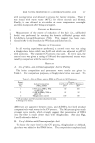
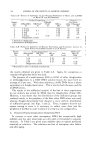
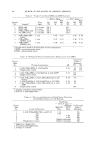
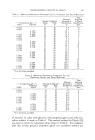
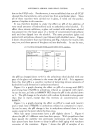
RESINS AND THEIR APPLICATION TO DRUG AND COSMETIC PRODUCTS 297 skin from contact with common soap. This information is summarized in Table 2. Thurmon has also applied the principles of skin deionization by ion exchange to the treatment of dermatitis resulting from skin contact with poison ivy, oak and sumac (17, 18). His studies included in vitro patch tests using simulated irritant solutions containing urushiol, which is closely related in structure to the main skin irritant of the poison ivy plant. In vivo studies with an Amberlite XE-87 system in a variety of bases re- vealed that the ion exchange resin system gave greater relief for longer periods of time and cleared the positive reaction sites days sooner than other medications studied. D. Deodorant-dntiperspirant Compositions--.dmberlite XE-6•t--.d Car- boxylic Resin The combination of aluminum salts and Amberlite XE-64, a carboxylic type cation exchange resin in the hydrogen cycle, as an admixture was TABLE 2--T•r. ACTION OF AMBEKLITE XE-64 AND AMBEKLITE XE-87 IN VAKIOUS OINTMENT BASES t APPLIED TO ADULT MALE PALM* Concentra- Time tion of Applied pH pH Amberlife in Before After Difference, Amberlite Base Resin, % Minutes Application Application pH XE-64 Hydrophilic 25 10 10.0 6.3 3.7 U.S.P. XIV XE-64 Beelet Base 25 10 8.5 4.9 3.6 XE-87 Hydrophilic 25 10 8.3 5.8 2.5 U.S.P. XIV XE-64 Beelet Base 25 5 8.8 5.3 3.5 XE-64 Hydrophiiic 25 1 8.4 5.2 3.2 U.S.P. XIV XE-64 Glycerol 25 1 8.6 4.8 3.8 Methocel XE-64 Polyethylene 25 1 8.7 5.0 3.7 * Normal measured pH of this palm 4.7. • Tests with Yardley Shaving Bowl Soap. shown by Thurmon (19) to be unique in respect to its absence of irritant effects in individuals who are sensitive to common aluminum antiperspirant products. This combination effectively removes such materials as amino acids, which, through decomposition or putrefactive action by bacteria, can lead to irritating or malodorous products. Levels of Amberlite XE-64 as low as 2 per cent and as high as 35 per cent combined with from 5 to 25 per cent of a water soluble aluminum salt have proved to be effective. PREVENTIVE MAINTENANCE APPROACH TO SKIN HEALTH The ability of ion exchange resins to react upon demand by means of an ion exchange interreaction with invading skin irritants provides a means of developing an effective skin protective system.

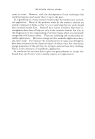
298 JOURNAL OF THE SOCIETY OF COSMETIC CHEMISTS The same resin buffer systems that are used for the treatment of poison ivy skin infections can also be utilized for the prevention of such skin ailments. When an ion exchange resin system is applied to the skin in the form of a protective cream, it will sequester and inactivate botanical irritants and also other irritants responsible for certain types of industrial dermatitis. FORMULATION CONSIDERATIONS When lotions or ointments are desired, the ion exchange resin component or components should be incorporated into a liquid base that is either hydrophilic or miscible with water. Ointments may be made with a hydrophilic base, a gelatinous aqueous paste, or other ointment bases containing inert organic ingredients such as thickened mineral oils, pet- rolatum or other conventional bases. Hydrophobic bases should be avoided because they coat the ion exchange resin component, reducing its ion exchange activity. An ion exchange dusting powder may be prepared by mixing the ion exchange resin component in a powder base of such materials as talc, starch, kaolin, zinc oxide or titanium oxide. Zinc or magnesium stearate or laurate or other long chain carboxylates may be used for dispersion and adhesion. However, ion exchange resins themselves have excellent substantivity on the skin because of the co-action of their functional groups with functional groups of an opposite charge of the skin. If desired, pigments may be used as tinting materials and perfumes may be added. Drugs may be admixed with the ion exchange resin dusting powder or with the powder base or may be complexed ionically with the ion exchange resin component. The ion exchange resin may be used to release ther- apeutic amounts of ionic materials such as local anesthetics or antibiotics. Such materials are available for action at the site where the powder is applied, and the exchange supplies the desired action of regulating the pH of the surface area. (Received March 5, 1962) REFERENCES (1) Martin, Gustav J., and Wilkinson, John, Gastroenterology, 6, No. 4, 1 (1946). (2) Martz, N. L., Kohlstaedt, K. G., and Helmer, O. M., Proc. Central Soc. Clin. Res., 23rd Atnnual Meeting, Chicago, 23, 70, Abst. 90 (1950). (3) Segal, Harry L., Miller, Leon L., Morton, John J., and Young, Henry Y., Gastroenterology, 16, No. 2, 380 (1950). (4) Quintos, Florencio N., 5% Philippine Med. Atssoc., 26, 155 (1950). (5) Cass, Leo J., and Frederik, Wilhel, S., New Engl. 5% Med., 259, 1108 (1958). (6) Becker, Bernard A., and Swift, John G., Toxicol. Atppl. Pharmacol., 1, 42 (1959). (7) Chow, Bacon, "Mechanism of Absorption of Vitamin Bp2," in "World Review of Nutrition and Dietetics," Philadelphia, J. B. Lippincott Co. (1959), p. 135-138. (8) VanAbbe, N.J., and Rees, J. T., 5 t. Arm. Pharm./lssoc., $ci. Ed., 47, 487 (1958). (9) Winters, James C., J. Soc. CoswETm Ct4v. mSTS, 7, 256 (1956).
Purchased for the exclusive use of nofirst nolast (unknown)
From: SCC Media Library & Resource Center (library.scconline.org)