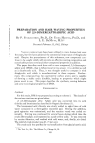
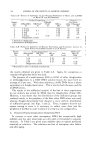
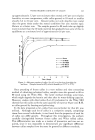
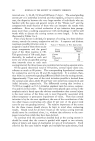
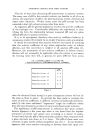
ANHYDROUS AEROSOL HAIR SPRAY SYSTEMS 301 Thus far we have been discussing pH measurement in aqueous systems. The many uses of pH in the cosmetic industry are familiar to all of us, as well as the importance of pH in the pharmaceutical, textile, chemical and many other industries. Within recent years the pH concept has been extended to deal with solvent systems other than water. As explained, pH tbr general application involves the activity coefficient of the hydrogen ion. Considerable difficulties are experienced in iden- tifying the form the relationship between measured pH and any given defined pH takes in aqueous solutions. It is to be anticipated, therefore, that activity coefficient behavior in nonaqueous media will certainly be no simpler if aqueous scales are adopted. It should be remembered that aqueous solutions are treated by assuming that the activity coefficient of any solute approaches unity at infinite dilution, and this convention is implicit in all aqueous pH scales (2). However, this assumption of unit activity coefficient at infinite (water) dilution will not necessarily be applicable when the solvent is not water the limiting value then will, in general, be quite different from unity, pH of PROPELLENTS 11/IZ 65%/35% :• EQUAL QUANTITY ANHYDROUS ETHYL ALCOHOL Manufacturer A Manufacturer B Manufacturer C Manufacturer D Figure 1. 6.6 6.5 since the electrical forces acting in a pure nonaqueous solvent will not be the same as those in water. An attempt has been made to compute the ratios of activity coefficients in different solvents by Gutbezahl and Grun- wald (3) who have calculated "degenerate" single ion coefficient values from the ratio of basicity constants in water and ethanol-water mixtures. The significance of pH measurement in anhydrous hair spray systems became apparent a few years ago when it was found that the tinplate containers of certain hair sprays were corroding in a matter of weeks. It was found that the pH of those particular products when measured with a glass electrode was down to 2 or lower. The pH of these same con- centrates in glass bottles without propellent was over 7. It was therefore apparent that some reaction was going on between these hair spray con-

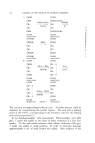
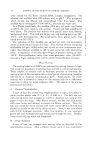
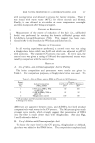
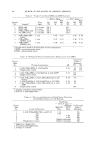
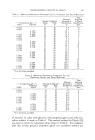
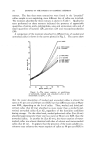
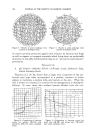
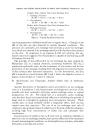
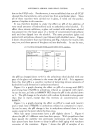
302 JOURNAL OF THE SOCIETY OF COSMETIC CHEMISTS centrates and the propellent to reduce materially the pH value as measured, if we assume that the tinplate does not enter the reaction as was later shown. After considerable fruitless investigation, it was finally decided to test the pH of a 50 per cent by weight solution of the propellent in anhydrous ethanol. The propellent containing 65 per cent trichlorofiuoromethane and 35 per cent dichlorodifiuoromethane was chilled to below its boiling point and poured into a glass bottle. An equivalent amount by weight of anhydrous ethanol was then added. The dichlorodifiuoromethane would within a few minutes boil off, leaving the alcohol and the trichlorofiuoro- methane in the bottle. A pH was then taken and the sample allowed to stand at room temperature for twenty-four hours, when a second pH was taken. The pH values as determined originally on samples of the four different manufacturers is shown on Fig. 1. After twenty-four hours it was found that propellent mixtures of CC12F2 and CClaF had dropped in pH to about 2 or less. Those lots of propellents that dropped in pH by this test invariably caused considerable corrosion in those products that contained anhydrous ethanol. As a result of this finding a stability spec- ification was established wherein the pH should not drop more than one unit after twenty-four hours in a 50 per cent solution in anhydrous ethanol. It has been shown by Sanders (4) that minute amounts of hydrochloric acid are liberated by a free radical reaction between anhydrous ethanol and trichlorofluoromethane. It was determined that in those instances where the pH dropped in mixtures of CCI•F and CC12F2 in anhydrous ethanol, the drop in pH was ...?.?: .• ::- '7: . .. ::7• ....• • :-.• -:. :.•X"•:: :: • ß •,. ,,.?'...- .. :. ... : •:.: {a• . .:: .:: f .r, ::,-e .... '•": ..... ß ':55'.. ::'. % ,• Fisure •.
Purchased for the exclusive use of nofirst nolast (unknown)
From: SCC Media Library & Resource Center (library.scconline.org)