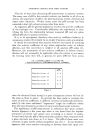
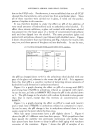
HAIR WAVING PROPERTIES OF 2,5-DIMERCAPTOADIPIC ACID 255 sodium carbonate was complete, stirring was continued until solution was complete. The reaction mixture was neutral at this time. Potassium ethyl xanthate (320 gin. 2 moles), which had been previously recrystal- lized from alcohol, was added over a period of ten minutes. Stirring was continued until solution was complete. This required approximately one hour. The reaction mixture after standing at room temperature for twenty-four hours was acidified with 50 per cent sulfuric acid to Congo Red. The dixanthogenoadipic acid separated as an oil, which soon solid- ified. By maintaining good agitation during this time, a granular solid was obtained, which was removed by suction filtration and washed with water until free of mineral acid as indicated by Congo Red paper. The product thus obtained was air dried. The yield of crude product was 80-85 per cent. Upon recrystallization of a small amount from ethyl acetate, it had a melting point of 163-164øC. C. 2,5-Dimercaptoadipic Atcid (meso-form). Crude 1,4-dixanthogeno- adipic acid (386 gm. 1 mole) was dissolved in 500 mi. of methanol con- tained in a two-liter round-bottom flask. While the solution was slowly stirred with a magnetic stirrer and externally cooled, concentrated aqua ammonia (500 ml.) was slowly added over a period of thirty minutes. An atmosphere of nitrogen was maintained during this time. The reaction vessel was stoppered and allowed to stand for forty-eight hours at room temperature. At the end of this time, most of the methanol and ammonia were re- moved under reduced pressure. The residue was made distinctly alkaline with ammonia and extracted twice with 100 mi. portions of di-isopropyl ether in order to remove some ethyl thionocarbamate (xanthogenamide), which is formed during the reaction. The ether extracts were discarded. The aqueous phase was acidified with 50 per cent sulfuric acid to Congo Red. The dimercapto acid separated as a light brown solid. It was removed by suction filtration and washed free of mineral acid with water as indicated by Congo Red paper. The yield of crude product was 80-85 per cent. The crude dimercaptoadipic acid was purified by dissolving it in hot glacial acetic acid, treating with decolorizing charcoal, and filtering through a hot funnel. The recovery was 80-90 per cent. The recrystallized product had a melting point of 186-188øC. (with moderate decomposition). D. 2,5-Dimercaptoadipic Atcid (dl-mixture). The dl-mixture of DMA was prepared from the meso cyclic disulfide by heating it at 220øC. for seven minutes, followed by reduction (2). An aqueous slurry of meso-DMA (105 gm. 0.5 moles) was adjusted to pH 8 with ammonium hydroxide. Fifteen drops of 1 per cent ferric chloride were added and the solution cooled in an ice bath, while 15 per cent hydrogen peroxide was added dropwise with stirring until the violet

256 JOURNAL OF THE SOCIETY OF COSMETIC CHEMISTS color caused by the ferric chloride-DMA complex disappeared. The solution was acidified with 8M sulfuric acid to pH 2. The precipitate which formed was filtered and recrystallized twice from water. This disulfide had a melting point of 196-198øC. the yield was 56 per cent. In a Woods metal bath, this disulfide (20.8 gin. 0.1 mole) was heated to 220øC. for seven minutes with stirring. Fusion and then solidification , took place. The product was slurried with glacial acetic acid, filtered, washed and dried. The yield was 66 per cent, and melting point was 250- --' 252øC. with decomposition. Recrystallization from glacial acetic acid raised this to 267-270øC. The reduction of this disulfide was carried out with two equivalents excess of ammonia and excess zinc dust. The reaction mixture containing __- dLdisulfide (59 gm. 0.284 moles) was stirred at room temperature over- night, then filtered, acidified to pH 3, and extracted with alcohol-free ether. Evaporation of the ether gave 49 gin. of product melting at 103- , 110øC. Recrystallization twice from ether-petroleum ether (30-60øC. ' b.p.) gave 29 gin. melting at 111-113 ø C., which titrated 94.8 per cent pure. HAIR WAVING The waving behavior of DMA was evaluated by waving tresses of virgin hair using two procedures simulating those utilized in commercial practice. These employ an oxidant such as hydrogen peroxide to terminate the waving action of the mercaptan after a brief period of processing, hereafter referred to as chemical neutralization (CN). Alternatively, the moist reduced hair is allowed to remain on the waving rods for a sufficiently long time to allow for aerial oxidation (AO). The details of the waving processes are as follows: 7I. Chemical Neutralization Tresses of hair five inches long, weighing about 1.4 gin., were glued to white vinylire plastic tabs (21/8 X 18/4 X 0.02 in.). The hair was wet with waving lotion and wrapped on a 0.20 in. diameter rod, using an end paper to start the wrap. After fifteen minutes, the hair was resaturated with more lotion and allowed to process for fifteen minutes. Then the hair was rinsed for thirty seconds with warm water (40øC.), blotted and allowed to remain on the rod for thirty minutes. Next, it was neutralized with 0.75N hydrogen peroxide. After five minutes, it was unwound gently and more hydrogen peroxide was poured through the tress. Finally, it was rinsed with tap water and shampooed. B. /Ierial Oxidation A tress of hair was wrapped with waving lotion as described in the neutralization process. After a fifteen minute wait, it was resaturated
Purchased for the exclusive use of nofirst nolast (unknown)
From: SCC Media Library & Resource Center (library.scconline.org)