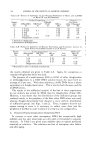
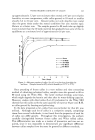
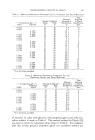
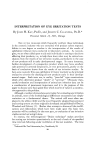
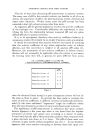
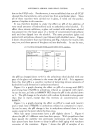
WATER HOLDING CAPACITY OF CALLUS 271 test described under D below. A known aliquot of this liquid was then dried to constant weight in a vacuum desiccator over P205 to determine the total solids. The solvent and water-washed callus (Lot #3 sw) was used in later experiments. A second portion (approximately 35 g.) of the milled callus (Lot #3) was extracted by shaking with consecutive 250 mi. portions of distilled water at room temperature until the washings no longer yielded positive biuret and ninhydrin tests. Eight such washings were required. These washings were concentrated and dried as discussed above, and the callus (Lot #3 ww) was reserved for additional experiments. This washing pro- cedure was also repeated on a different lot of Wiley milled callus (Lot//4). Finally, samples of 50 g. of callus (Lots #2 and 5), which were pulver- ized to 40 to 60 mesh by the freezing and pounding technique discussed previously, were each washed with eight consecutive 250 mi. portions of water. The washings were combined and a dry residue obtained as discussed above. (The calluses washed by this method are identified as Lots #2 ww and 5 ww.) Approximately 150 rag. duplicate samples of these various calluses were accurately weighed into weighing bottles and stored in constant humidity chambers at 45, 60 and 90 per cent R.H. at room temperature. The samples were weighed daily until they reached constant weight. The water soluble callus extracts isolated by the techniques described above were placed in weighing bottles and dried to constant weight in a vacuum desiccator at room temperature over P205. The samples were then stored in constant relative humidity chambers at 60 per cent R.H. at room temperature and weighed daily until they attained constant weight. The weight of extractives obtained and the value of total nitrogen and lactates found are shown in Table 6. The Wiley milled callus (Lot #3) yielded approximately the same amount of water-soluble extract, whether pretreated with solvent or not. The difference of about 1.3 per cent may be attributed to small amounts of lipids that were carried into the water TAm.•. 6--WA.EI• SO•UBLES (Ex•:1•C.F•r• v•o• C•L•tTs) Pounded (40-60 Mesh) Extracted with Distilled Water Lots 2 and 5 combined ,-Wiley Mill (60 Mesh and Finer)-- Extracted with Solvent*/ Extracted with Water •-Distilled Water--, Lot 3 Lot 3 Lot 4 Total water solublest (%) 18.10õ 14.14 15.4 16.35 Total solvent solubles (%) 3.48 [I Total N2 (Kjeldahl) in water 1•i•} 17.0 1'7'.'5 1• i i soluble fraction (rag./100 rag.)+ + Lactic acid (%) :[: 0.73 1.7 0.8 2.17 * Solvent was a 1:1 mixture of ethyl alcohol and ethyl ether. t Based on dry weight of callus. :[: Based on dry weight of extractives. õ Combined extracts of Lots 2 and 5. I[ The solvent soluble fraction contained 10.8% total N•, based on total solids of this frac- tion.

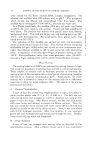
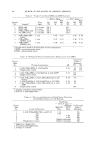
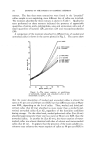
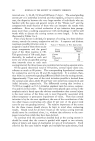
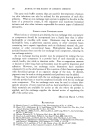
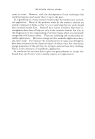
272 JOURNAL OF THE SOCIETY OF COSMETIC CHEMISTS extract. The fact that more extractives were found in the "pounded" callus sample is not surprising, since different lots of callus are involved. The moisture absorbed by these extracts is shown in Table 7. Qualitative tests performed on these extracts indicated the presence of appreciable quantities of amino acids, polypeptides, urea and ammonium salts and of small quantities of lactates (28), penroses (29) and mucopolysaccharides (30). A comparison of the moisture absorbed by different lots of washed and unwashed callus is shown in the curves plotted in Fig. 3. The curves show 25 •,/.,•o Lot 4 (milled) Lot 2WW (pounded) Lot 2 (pounded) •!"/•'i.x Lot 4WW (milled) i I ,...' ß ... Lot •SW ////,.,..... •,•/ Lot 3WW(milled) 40 50 60 70 80 90 I00 Relative Humidity (%) Figure &--The water sorption at equilibrium of pulverized, washed and unwashed callus at dif- ferent R.H.'s at 23øC. •: 2øC. that the water absorption of washed and unwashed callus is almost the same at 45 per cent and 60 per cent R.H. but that differences exist at 90 per cent R.H., depending on the lot of callus. Thus, washed and dried pul- verized callus (Lot #2 ww) absorbed no more water than a similarly pul- verized unwashed callus (Lot #2), regardless of the humidity conditions during storage. On the other hand, washed pulverized callus (Lot #4 ww) absorbed approximately 13 per cent less water at 90 per cent R.H. than the unwashed callus. In another lot (Lot #3 ww), the water sorption of water- washed callus was almost identical with that of solvent and water-washed callus (Lot #3 sw). It appears that the presence of the water-soluble con- stituents may enhance the water sorption of callus at 90 per cent R.H. in
Purchased for the exclusive use of nofirst nolast (unknown)
From: SCC Media Library & Resource Center (library.scconline.org)