INTERPRETATION OF EYE IRRITATION TESTS By JoN H. KAY, and JOSEPH C. CAI•ND•.•, Presented March !3, !962, Chicago ONE OF THE PROBLEMS which frequently confront those individuals in the cosmetic industry who are entrusted with product safety responsi- bilities to one degree or another is the interpretation of the results of ophthalmic irritancy tests conducted in laboratory animals. As toxicolo- gists, we are often called upon to aid such individuals in coming to decisions affecting their products, i.e., to help them draw what may be critical con- clusions from the results of eye irritation studies, particularly in the case of new products still in early developmental stages. In many instances, further development of a prospective product which may have excellent sales potential is arrested temporarily, or even permanently, purely on the basis of conclusions drawn from the results of eye irritation studies. In fact, some cosmetic firms use ophthalmic irritancy routinely as the principal evaluative criterion for checking all new products early in their develop- mental stages. Such tests are, in reality, "pass-fail" type examinations which often determine product "death" or "survival." Obviously then, careful evaluation and interpretation of animal eye irritation data can be a consideration of paramount importance and it is the purpose of this paper to discuss some basic guide lines which may be of value in a construc- tive approach to the problem. Although a number of procedures exist today for evaluating eye irritation in animals, most of the methodological differences encountered are simply variations on a fundamental theme. The animal still most often em- ployed is the albino rabbit and the most frequently adopted basic protocol and scoring system are those originally developed and published by Draize, Woodard and Calvery (1). Rather than attempt to discuss all the modifi- cations and elaborations which have been made upon this basic test, attention will be confined, for the most part, to evaluation of eye irritation studies carried out using it alone. In essence, the well-recognized "Draize technique" makes provision for scoring eye irritation quantitatively at the end of each of six specified time intervals following ocular instillation of the test material. The time * Industrial Bio-Test Laboratories, Inc., Northbrook, Ill. 281

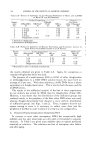
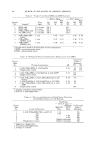
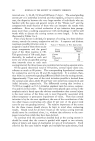
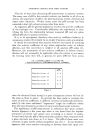
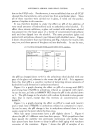
282 JOURNAL OF THE SOCIETY OF COSMETIC CHEMISTS intervals are: 1, 24, 48, 72, 96 and 168 hours (7 days). The actual grading system per se is somewhat involved and this explains, at least to some ex- tent, the disparity between the very large number of individuals who are familiar with the name and general nature of the "Draize test" and the comparatively small fraction of them who can interpret the results with confidence. Since any critical evaluation of eye irritation data presup- poses more than a nodding acquaintance with methodology it will be well worth while to discuss the scoring system at some length. It has been illustrated in Tables 1 to 4. First of all, the eye is divided, for purposes of scoring, into three distinct tissues, namely the cornea, conjunctiva and iris. A separate and distinct maximum possible irritation score is assigned to each of these three ocular tissue components and the grand total of the three maxima is 110. This grand total of 110 could, hypo- thetically, be realized at each and every one of the six specified scoring time intervals since at each such TABLE' I--ScoRING OF EyE IRRITATION Theoretical Tissue Maximum Scored Score Cornea 80 Iris 10 Conjunctiva 20 Total 110 scoring interval the three tissues are considered and scored as separate units. Of the grand theoretical total of 110 points, corneal injury alone con- tributes as much as 80 points. The corresponding hypothetical maxima for conjunctiva and iris are 20 and 10, respectively. It is evident, then, that there is a noteworthy grading differential built into the scoring system. Approximately 73 per cent of the total irritation possible is derived from the corneal score alone, while 18 and 9 per cent stem from conjunctival and iridial irritation, respectively. The differential scoring then involves a 73: 18:9 or roughly an 8: 2:1 irritation emphasis ratio for cornea, conjunc- riva and iris in that order. The particular stress placed upon cornea in the emphasis ratio is based upon the obvious consideration that corneal injury is the most serious of the three and is most frequently associated with either temporary or permanent impairment of vision. Note that corneal irritation is by far the most significant, the sum of the contributions of the' two other tissues constituting only about 27 per cent of the grand total score for any one grading interval. The relative importance of the scores for the three tissues should always be kept in mind when evaluating results. Grand totals for all three tissues at the various scoring intervals should never be considered alone, i.e., without due reference to the com- ponent scores from which they have been derived. To continue with this somewhat detailed look at the scoring system it should be noted that the cornea is graded with regard to two criteria, degree of injury and degree of localization (or area of involvement). Each criterion has the same relative weight and multiple but quite minute, focal
Purchased for the exclusive use of nofirst nolast (unknown)
From: SCC Media Library & Resource Center (library.scconline.org)