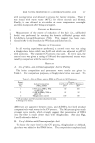
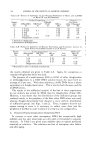
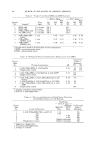
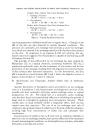
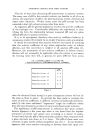
HAIR WAVING PROPERTIES OF 2,5-DIMERCAPTOADIPIC ACID 261 However, these advantages would be lost if it were necessary to employ booster additives which were odoriferous. A means of overcoming this drawback would be to impregnate the waving end paper with the booster. As is shown in Table 5, satisfactory wave levels could be achieved by using either a solid thioglycolate salt (magnesium thioglycolate) or di- ammonium dithiodiglycolate to impregnate the waving end papers. SAFETY EVALUATION At. Toxicity The acute intraperitoneal toxicity (mice) of DMA indicates that it is even less toxic than thioglycolate (L.D.50 equals 425 mg./kg. for DMA rs. 187 mg./kg. for thioglycolate). B. Sensi•ization Potential Human volunteers were used to evaluate the sensitization potential of 0.4M DMA solutions, such as those used in the waving experiments, by a procedure previously reported (4). Of a total of 33 subjects, none reacted to either the meso- or the all-form. C. Primary lrritancy The irritancy of DMA waving lotion formulations was found to be low in the same range of irritancy as standard thioglycolate lotions. No un- toward reactions were observed in over 100 subjects given waves with such compositions. Discussion When compared to thioglycolate as an agent for waving hair, DMA has several advantages and certain disadvantages. The main disadvan- tages are higher cost and the need for a booster additive, such as thio- glycolate, in small amounts. It has the advantages of excellent stability in the dry state or in lotion form (in the absence of oxygen, of course) and of very low odor. Most other mercaptans reported in the literature (5) seem to cause sensitization reactions in humans, but DMA, like thio- glycolate, apparently does not. Attempts were made to boost the waving activity of DMA by converting it to amide or ester derivatives (6). Although in general it is possible to boost the waving activity of mercapto acids by such modifications, this has not been successful with DMA. However, when used on hair which has been previously waved or bleached, DMA does not require any waving boost to produce satisfactory results. (Received March 27, 1962)

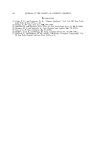
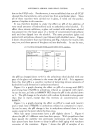
262 JOURNAL OF THE SOCIETY OF COSMETIC CHEMISTS REFERENCES (1) Guha, P. C., and Lankaran, D. K., "Organic Synthesis," Coil. Vol. lII, New York, John Wiley & Sons (1955), p. 623. (2) Fredga, A., Ber. deut. chem. Ges., 7lB, 289 (1938). (3) Whitman, R., and Eckstrom, H. G., Proc. Sci. Sect. Toilet Goods •lssoc. No. 22, 23 (1954). (4) Brunner, M. J., and Smiljanic, A., •lrch. Dermatol. and SyphiloL, 66, 703 (1952). (5) Voss, J. G., 7. Invest. Dermatol., 31, 273 (1958). (6) DeMytt, Louis E., and Hsiung, Du Yung, Canadian Patent No. 615,944 (1961). (7) Heilbron, I., and Bunburg, H. M., editors, "Dictionary of Organic Compounds," Vol. II, New York, Oxford University Press (1953), p. 67.
Purchased for the exclusive use of nofirst nolast (unknown)
From: SCC Media Library & Resource Center (library.scconline.org)