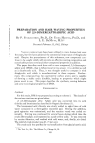
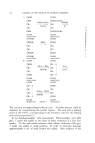
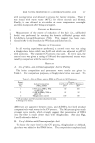
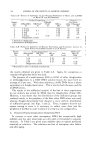
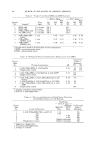
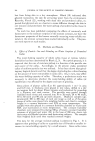
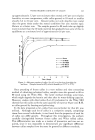
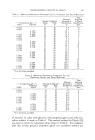
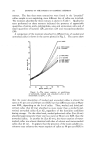
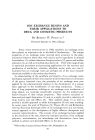
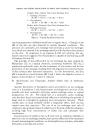
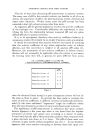
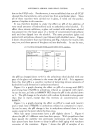
ANHYDROUS AEROSOL HAIR SPRAY SYSTEMS 305 pH of HAIR SPRAY CONCENTRATES with DIFFERENT RESIN BASES Resin pH Ciba 9.0 National Starch 8.3 Shellac (Esterified) 5.4 Polyvinyl pyrrolidone 6.3 Copolymer V.P/V.A #735 7.6 Figure 6.--Ciba = Ciba No. 325. National Starch = National Starch No. 28-1310. CORROSI ON CHARACTERISTICS OF SHELLAC BASE HAIR SPRAY 4-YEAR SHELF LIFE S&mple No. pH Can Condition 1 5.9 O.K, • •. 6 Det/nned 3 5.8 O.K. 4 1. 9 D•tinned 5 2.2 Detinned 6 5.9 O.K. Figure 7. measurements of these solutions would undoubtedly increase with pH drop. It is of course well established that electrolytic corrosion is a function of the conductivity of the solution. Bates and Schwarzenbach (5) studied 3 series of solutions: HCI, an acetate buffer, and a triethanolamine buffer in which the solvent water was replaced successively by ethanol. The proton (hydrogen ion) activ- ity of an acetate buffer strongly decreases when the solvent water is re- placed by EtOH and the proton activity of a triethanolamine buffer strongly increases thereby. In the case of a dilute solution of HC1, the

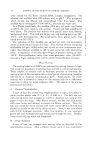
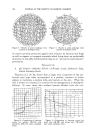
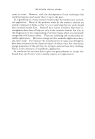
306 JOURNAL OF THE SOCIETY OF COSMETIC CHEMISTS Figure 8.--Corroded tinplate container. proton activity at the beginning decreases when water is replaced partly by ethanol, then it reaches a minimum and increases again, especially during the lemoval of the last percentages of the water. The alcoholic solution of HCl is much more strongly acidic than is the aqueous solution. Norio Yui (6) studied the effect of ethyl alcohol on the pH values deter- mined by the glass electrode and the association of ions in alcoholic hydro- ß ..... Figure 9.--Normal tinplate container.
Purchased for the exclusive use of nofirst nolast (unknown)
From: SCC Media Library & Resource Center (library.scconline.org)