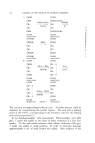
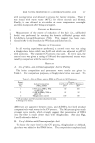
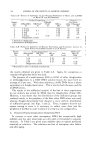
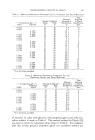
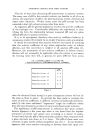
HAIR WAVING PROPERTIES OF 2,5-DIMERCAPTOADIPIC ACID 257 with waving lotion and allowed to process for twenty minutes. Then it was rinsed with warm water (40øC.) for thirty seconds and blotted. Finally, it was allowed to air-oxidize at room temperature overnight and then shampooed after being unwrapped. EXTENT OF REDUCTION Measurement of the extent of reduction of the hair (i.e., sulfhydryl levels) was performed by reacting the keratin sulfhydryl groups with 2,3-dichloro-l,4-naphthoquinone (NQ). This reagent has been men- tioned briefly in the literature by Whitman and Eckstrom (3). DEGREE OF CURLINESS In all waving experiments performed, a control tress was run using a thioglycolate lotion which was 0.6M and which was adjusted to pH 9.2 with ammonia. The standard CN process was used. In every case, the control tress was given a rating of 100 and the experimental tresses were rated by comparison with the control tress. RESULTS .4. Use of Meso- and dl-Dimercaptoadipic .4cid in 14fRying The lotion composition and permanent wave results are given in Table 1. For comparison purposes, a thioglycolate lotion was used. No TABLE 1--USE Or MESO- AND DL-DMA •N CN AND •N AO PROCF. SSES Experi- ment No. ß Process-- Lotion Composition Curl Levelt (After 1 Shampo• (NH4)2 DMA CN* AO* 1 0.4M meso-DMA, NIq3 60 100 to pH 9.28 2 0.4M dl-DMA, NH3 to 55 95 pH 9.28 3 Thioglycolate control 100 110 * CN procedure and AO procedure described in text. t Average of 2 tresses. differences are apparent between meso~ and dl-DMA, but both produce comparatively weak waves in the CN process. The AO process gives much stronger wave results, which strongly suggest that penetration of DMA into the fiber is much slower than with thioglycolate. (See also Figs. 1 and 2 referred to below.) B. Use of /lddi/ives with Dimercaploadipic .4cid To boost the wave level in the CN process, thioglycolate or dithiodi- glycolate was added to the DMA lotion. The compositions employed and

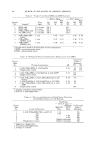
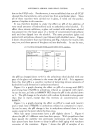
258 JOURNAL OF THE SOCIETY OF COSMETIC CHEMISTS TABLE 2-A--EvVECT OV ADDITIVES ON T•E WAVING PROVERTIES OV MESO- AND D•-DMA IN BOT• CN AND AO PROCESSES Lotion Composition- , ,-- Process---- Experi- (NH4)2SS- Curl Level ment (NH4)2DMA NH4TGA* TGAt NH:, to (After 1 Shampoo) No. M M M pH CN AO 1 $.4 meso ... 9.28 60 100 2 0.4 meso 151i ... 9.28 85 110 3 0.4 dl 9.28 55 95 4 0.4 dl 61i '" 9.28 85 110 5 0.4 meso 0'.•)'5 9.12 90 6 Thioglycolate con•r •i ...... 100 ii6 * Ammonium thioglycolate. t Diammonium dithiodiglycolate. TABLE 2-B--EFFECT oF ADDITIVES ON WAVING PROPERTIES AND SULFHYDKYL LEVELS OF HAIR WAVED WITH DMA LOTIONS IN A CN PROCESS Experi- Composition. , SH Level,* NH4TGA NH.•
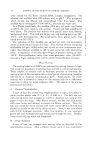
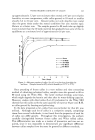
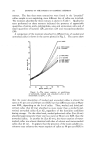
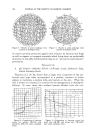
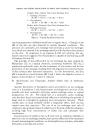
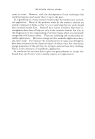
iNH4)2DMALOtion to Curl Meq./G. ment No. M M pH Level Hair 0.50 9.30 65 0.27 0.45 6'i 9.2s 95 0,39 0.2 9.25 110 0'.'2'9 Thioglycolate control ... 100 0.22 * Measured just prior to chemical neutralization. the results obtained are given in Table 2-A. Again, for comparison, a standard thioglycolate lotion was used. The presence of a small amount (0.05 to 0.1M) of either thioglycolate or dithiodiglycolate in a 0.4M DMA solution boosts the wave level an average of 35 per cent. With these additives, a 0.4M DMA lotion is about equivalent to a thioglycolate lotion. This is true for both the meso- and the dl-DMA lotions. The results of the sulfhydryl analysis of the hair in these experiments do not indicate less attack by DMA than by thioglycolate (Table 2-B). However, it was shown that the distribution of the sulfhydryl groups was confined mainly to the periphery of the fiber when DMA alone was used, whereas thioglycolate-treated hair showed a more uniform distribution of sulfhydryl groups (see Figs. 1 and 2). Thus, it appears that for ad- equate waving to occur it is necessary to reduce more than just the periphery of the fiber in order to allow it to creep to a new configuration. C. Powdered FFaving Compositions Containing DM/1 In contrast to most other mercaptans, DMA has exceptionally high stability and low odor when kept as a dry solid or formulated in aqueous solutions. In Table 3 are given some stability data on typical powdered materials or solutions. The solutions are free of mercaptan odor before and after aging.
Purchased for the exclusive use of nofirst nolast (unknown)
From: SCC Media Library & Resource Center (library.scconline.org)