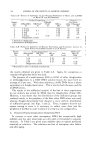
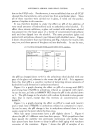
RESINS AND THEIR APPLICATION TO DRUG AND COSMETIC PRODUCTS 295 Strongly Atcidic, Sulfonic Type Cation Exchange Resin 1. Exchange of Cations Rz-H + q- Na+C1 - • Rz-Na + q- H•-C1 - 2. Neutralization Rz-H + q- Na•-OH - • Rz-Na + q- H20 14Zeakly Atcidic, Carboxylic Type Cation Exchange Resin 1. Exchange of Cations Rz-H + q- Na+C1 - • Rz-Na + q- H+C1 - 2. Neutralization Rz-H + q- Na+OH - • Rz-Na + q- H20 Figure 6.--Typical Equilibrium Reactions taminating presence of alkaline earth ions or organic bases. Changes in the pH of the skin are also observed in various diseased conditions. The presence of a carboxylic, ion exchange resin provides a source for hydrogen ions, which are released in an exchange reaction with the electrolyte present on the skin. In suspension in an aqueous O. 15M salt solution, the car- boxylic type resin suggested for this purpose is capable of maintaining a pH of between 3.0 and 6.0. The principle of skin pH control by ion exchange has been utilized by Richardson (12) in a topical ointment, containing Amberlite XE-112, a polyacrylic-carboxylic resin, for the treatment of skin lesions and for the prevention of skin damage resulting from the digestion by intestinal juices of skin surfaces after ileostomy operations. In this formulation, the skin pH is lowered to a level between pH 3 and 5 where the digestive action of pepsin, chymotrypsin or trypsin is reduced. B. Bacteriostatic and Fungistatic ztctivity--Cobalt Salts of Carboxylic Resins Another illustration of therapeutic action provided by an ion exchange resin in a formulation is the bacteriostatic and fungistatic activity of the metallic salt from carboxylic acid type, cation exchange resins in topical preparations (15, 16). The cobalt salt of a carboxylic cation exchange resin has been found to be particularly effective in inhibiting the growth of fungi such as trichophyton gypseum and microsporum lanosum. While soluble salts of cobalt similarly exhibit a fungistatic effect, their use has caused some skin reactions. The use of an ion exchange resin salt of cobalt provides gradual release of cobalt ions in the area of the skin eruption, avoiding high local concentration of cobalt ions and attendant skin sensitization. Concentrations of cobalt as low as 0.1 per cent as cobaltous chloride, in the form of an ion exchange complex, have proven effective for the treatment of such dermatological conditions as dermatophytosis, pruritus, seborrheic dermatitis, intertrigo and eczem a.

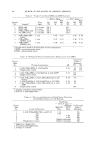
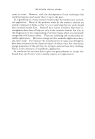
:296 JOURNAL OF THE SOCIETY OF COSMETIC CHEMISTS Strongly Basic, •,uaternary Type .,tnion Exchange Resin 1. Exchange of Anions Rz•-OH - 4- Na•-C1 - • Rz•C1 - 4- Na•-OH - 2. Neutralization Rz•-OH - 4- H •C1- • Rz •-C1- 4- H20 14Zeakly Basic, Polyamine Type .,tnion Exchange Resin 1. Exchange of Anions RzNHvH•O 4- Na•-C1 - .• RzNHvHC1 4- Na•-OH - 2. Neutralization RzNHvH•.O 4- H•-C1 - • RzNHvHC1 4- H•.O Figure 7.--Typical Equilibrium Reactions C. ztbsorption qf Skin [rritants--ztmberlite XE-87--zt Mixed Cation and zfnion Exchange Resin System A mixture of a sulfonic type cation exchange resin in the hydrogen form and of a quaternary ammonium resin in the hydroxyl form is useful com- mercially for the deionization of water and the processing of chemicals. Simultaneous exchange of cations for hydrogen ions and of anions for hydroxyl ions takes place, and the resulting hydrogen and hydroxyl ions neutralize one another. The application of such a mixture in powdered oeorm to body surfaces encounters some disadvantages and difficulties. The pH of the skin is not properly controlled as these two resins do not act as a buffering system however, when a cation exchange resin having carboxylic groups and an anion exchange resin possessing amino groups are added to the mixture, an effective buffer system is formed. The strong acid and strong base resin components absorb irritating electrolytes on the skin, while the weakly ionized carboxylic and polyamine resins buffer the first pair of resins. In a mixture of the four types of ion exchange resins, the amount of a sulfonic type cation exchange resin used is stoichiometrically equivalent to the amount of the strongly basic, quaternary ammonium resin. Similarly, the pair of weakly ionized carboxylic cation exchange resins and polyamine4 type anion exchange resins is stoichiometrically balanced. The ratio of the first pair of exchange resins (sulfonic and quaternary ammonium) to the second pair (carboxylic and polyamine) ranges from two-to-one to about one-to-five by weight. Any such mixture yields a careful com- promise between two conflicting properties. A larger proportion of the first pair would give higher capacity for absorbing undesirable substances, while higher proportions of the second pair would increase the buffering capacity of the total system. One of these mixtures used dermatologically is identified by the commercial designation Amberlite XE-87. As an example of the applications of these principles of action, Thurmon has shown the effectiveness of cation-anion exchange resin systems in hand creams as a means of correcting the development of alkalinity on the
Purchased for the exclusive use of nofirst nolast (unknown)
From: SCC Media Library & Resource Center (library.scconline.org)