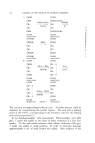
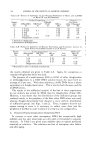
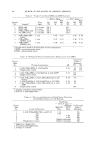
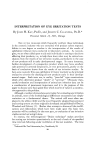
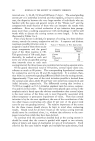
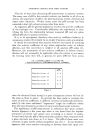
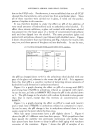
282 JOURNAL OF THE SOCIETY OF COSMETIC CHEMISTS intervals are: 1, 24, 48, 72, 96 and 168 hours (7 days). The actual grading system per se is somewhat involved and this explains, at least to some ex- tent, the disparity between the very large number of individuals who are familiar with the name and general nature of the "Draize test" and the comparatively small fraction of them who can interpret the results with confidence. Since any critical evaluation of eye irritation data presup- poses more than a nodding acquaintance with methodology it will be well worth while to discuss the scoring system at some length. It has been illustrated in Tables 1 to 4. First of all, the eye is divided, for purposes of scoring, into three distinct tissues, namely the cornea, conjunctiva and iris. A separate and distinct maximum possible irritation score is assigned to each of these three ocular tissue components and the grand total of the three maxima is 110. This grand total of 110 could, hypo- thetically, be realized at each and every one of the six specified scoring time intervals since at each such TABLE' I--ScoRING OF EyE IRRITATION Theoretical Tissue Maximum Scored Score Cornea 80 Iris 10 Conjunctiva 20 Total 110 scoring interval the three tissues are considered and scored as separate units. Of the grand theoretical total of 110 points, corneal injury alone con- tributes as much as 80 points. The corresponding hypothetical maxima for conjunctiva and iris are 20 and 10, respectively. It is evident, then, that there is a noteworthy grading differential built into the scoring system. Approximately 73 per cent of the total irritation possible is derived from the corneal score alone, while 18 and 9 per cent stem from conjunctival and iridial irritation, respectively. The differential scoring then involves a 73: 18:9 or roughly an 8: 2:1 irritation emphasis ratio for cornea, conjunc- riva and iris in that order. The particular stress placed upon cornea in the emphasis ratio is based upon the obvious consideration that corneal injury is the most serious of the three and is most frequently associated with either temporary or permanent impairment of vision. Note that corneal irritation is by far the most significant, the sum of the contributions of the' two other tissues constituting only about 27 per cent of the grand total score for any one grading interval. The relative importance of the scores for the three tissues should always be kept in mind when evaluating results. Grand totals for all three tissues at the various scoring intervals should never be considered alone, i.e., without due reference to the com- ponent scores from which they have been derived. To continue with this somewhat detailed look at the scoring system it should be noted that the cornea is graded with regard to two criteria, degree of injury and degree of localization (or area of involvement). Each criterion has the same relative weight and multiple but quite minute, focal

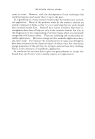
INTERPRETATION OF EYE IRRITATION TESTS TABLE 2--CoRNEAL SCORING 283 A. Opacity-Degree of Density (.4rea Most Dense Taken for Readin,O No opacity Scattered or diffuse area, details of iris clearly visible Easily discernible translucent areas, details of iris slightly obscured Opalescent areas, no details of iris visible, size of pupil barely discernible Opaque, iris invisible B. Atrea of Cornea Involved One quarter (or less) but not zero Greater than one quarter, but less than half Greater than one half, but less than three-quarters Greater than three quarters, up to whole area Total score = A X B X 5 Theoretical maximum = 80 TABLE 3--I. IR•IXA• SCOt,NO o Normal Folds above normal, congestion, swelling, circumcorneal injection (any or all of these or combination of any thereof) iris still reacting to light (sluggish reaction is posi- tive) No reaction to light, hemorrhage, gross destruction (any or all of these) Theoretical maximum = 10 5 TABLE 4--CoNJUNCTIVAL SCOaINC, A. Redness (Refers to Palpebra! and Bulbar Conjunctiva Excluding Cornea andIris) Vessels normal 0 Vessels definitely injected above normal 1 More diffuse, deeper crimson red, individual vessels not easily discernible 2 Diffuse beefy red 3 B. Chemosis No swelling 0 Any swelling above normal (includes nictitating membrane) 1 Obvious swelling with partial eversion of lids Swelling with lids about half closed 3 Swelling with lids half closed to completely closed 4 C. Discharge No discharge 0 Any amount different from normal 1 Discharge with moistening of lids and hairs adjacent to lids 2 Discharge with moistening of lids and hairs and considerable area around eye 3 Total score = (A q- B q- C) X 2 Theoretical maximum = 20 lesions scattered over the four quadrants of the corneal surface will result in a score identical to that of a single, larger, discrete area of complete opacity confined to one quadrant. It should be noted that the total score for cornea is five times the product of the subscores for degree of opacity and area of involvement. It might appear from this scheme that corneal scoring is not overly difficult but in actual practice great care must be exercised to avoid missing minute focal lesions. The use of a fluorescein flush helps considerably in this respect and readily renders visualization of very small superficial lesions which otherwise might be completely overlooked. At least in theory, though again not in practice, iridial scoring is rela- tively simple. It may be divided fairly sharply into three categories:
Purchased for the exclusive use of nofirst nolast (unknown)
From: SCC Media Library & Resource Center (library.scconline.org)