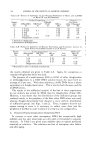
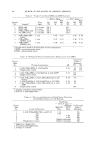
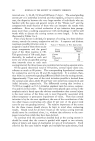
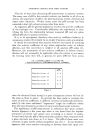
288 JOURNAL OF THE SOCIETY OF COSMETIC CHEMISTS gent one and eye irritation following human ocular contact may be consider- ably reduced in intensity depending upon the particular circumstances involved. In a sense, we are attempting, via this rather rigorous rabbit test, to assess the maximum ocular irritation which might be produced in man. Assessment of the practical hazard is another matter and follows from knowledge of additional factors, particularly the applicable use condi- tions. In any case, however, the practical industrial hazard should never be evaluated so/ely under what might be termed the purely practical conditions of use any more than a new drug is studied toxicologically in lower animals only under the dosage conditions of intended human use. For safety's sake, the effect of abnormally high amounts of the drug must be known and, by the same token, an estimation of maximum eye irritation should be elicited on a cosmetic product. Once this is known, modifications of the basic stringent test may be made as applicable,to render it less rigorous and to assess more realistically the irritation which may be anticipated under actual use conditions. In particular, rinsing the treated eyes with water at specified time intervals following instillation may be quite critical. In many cases of course, additional testing may not be necessary and the "practical hazard" can be estimated based upon the results of the more rigorous test alone and logical considerations drawn therefrom. The results of applying our classification system to a sampling of each of three general types of cosmetic products are shown in Table 9. These data were abstracted from our records over the past eighteen months. We did not analyze all of the data at our disposal but rather took only a sampling from each category for illustrative purposes. However, the results provide a •easonably good idea of the range of eye irritation pro- duced by the product types. As may be seen, undiluted products fall for the most part into "Moder- ately Irritating" category (M3). The effect of dilution is illustrated by the "Anti-Dandruff Rinses, Shampoos and Sprays" where dilution brings T^a•,E 9--EYE IRRITATION DATA ON COSMETIC PRODUCTS General Type of Product Number Class Tested Mean Eye Irritation Data Per Cent Free of Descriptive Irritation Rating At 24 Hr. I. Anti-Dandruff Rinses, Shampoos and Sprays A. Tested undiluted B. Tested diluted II. Shampoos III. Aerosol Hair Sprays A. Draize instillation (undiluted) B. Spray instillation (undiluted) 41 4.2 21 2.4 77 4.2 22 4.5 13 3.5 MR+ 5 Mt to M2 28 MR+ 4 Ma to S 0 M,, to Ma 0

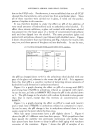
INTERPRETATION OF EYE IRRITATION TESTS 289 a "Moderately Irritating" rating down into the "Minimal to Mild" range of irritation. Another significant point may be noted with respect to the "Aerosol Hair Sprays." Here the standard Draize method of direct instillation into the conjunctival sac is contrasted with a technique in which the spray is released from the can at a definite distance from the eye. The anticipated result, namely that the standard Draize method would be a more rigorous one, is evident from the difference in the final eye irritation ratings. Before completing examination of the data of this table, attention should be drawn to the uniformly low incidence of un- diluted products which are free from all evidence of eye irritation by the end of twenty-four hours following ocular instillation. Even diluted products, such as those exemplified in the anti-dandruff group, had only a 28 per cent incidence. Incidentally, dilutions here averaged about 1:12. The presence of irritation at twenty-four hours or beyond in a product designed for household use (and subject to the Federal Hazardous Substances Labeling Act) would, under the present regulations, cause it to require labeling as an "eye irritant" in the majority of instances. The present criteria for defining an "eye irritant" in the regulations under this act would result, if cosmetics were subject to it, in labeling for a large number of cosmetic products. For example, the data of Table 9 would indi- cate that few aerosol hair sprays, shampoos or anti-dandruffproducts would escape labeling as eye irritants. In closing, we would like to stress that it is difficult, if not a practical im- possibility, to devise a numerical system for either scoring or classifying eye irritants which is totally adequate. Such a classification system as we have developed is not to be regarded as a substitute for the experience, training and judgment of a competent scientist. We believe the merit of the system described to lie principally in that it represents at least a practical, work- able approach to the ideal of total adequacy, and hope that it may be of some value to those individuals who encounter difficulties in condensing detailed raw eye irritation data into a more simple, understandable form. .4cknowledgment: The authors wish to express their thanks to Mr. Rich- ard J. Palazzolo for his contributions in the past toward the development of the rating system described in this paper and to Miss Betty Quack and Mr. Walter A. Wilson for their aid in the collection and analysis of data pre- sented. (Received March 13, 1962) References (1) Draize, John H., Woodard, Geoffrey, and Calvery, Herbert O., 5 e. PharmacoL, 82, 377 (1944).
Purchased for the exclusive use of nofirst nolast (unknown)
From: SCC Media Library & Resource Center (library.scconline.org)