256 JOURNAL OF THE SOCIETY OF COSMETIC CHEMISTS color caused by the ferric chloride-DMA complex disappeared. The solution was acidified with 8M sulfuric acid to pH 2. The precipitate which formed was filtered and recrystallized twice from water. This disulfide had a melting point of 196-198øC. the yield was 56 per cent. In a Woods metal bath, this disulfide (20.8 gin. 0.1 mole) was heated to 220øC. for seven minutes with stirring. Fusion and then solidification , took place. The product was slurried with glacial acetic acid, filtered, washed and dried. The yield was 66 per cent, and melting point was 250- --' 252øC. with decomposition. Recrystallization from glacial acetic acid raised this to 267-270øC. The reduction of this disulfide was carried out with two equivalents excess of ammonia and excess zinc dust. The reaction mixture containing __- dLdisulfide (59 gm. 0.284 moles) was stirred at room temperature over- night, then filtered, acidified to pH 3, and extracted with alcohol-free ether. Evaporation of the ether gave 49 gin. of product melting at 103- , 110øC. Recrystallization twice from ether-petroleum ether (30-60øC. ' b.p.) gave 29 gin. melting at 111-113 ø C., which titrated 94.8 per cent pure. HAIR WAVING The waving behavior of DMA was evaluated by waving tresses of virgin hair using two procedures simulating those utilized in commercial practice. These employ an oxidant such as hydrogen peroxide to terminate the waving action of the mercaptan after a brief period of processing, hereafter referred to as chemical neutralization (CN). Alternatively, the moist reduced hair is allowed to remain on the waving rods for a sufficiently long time to allow for aerial oxidation (AO). The details of the waving processes are as follows: 7I. Chemical Neutralization Tresses of hair five inches long, weighing about 1.4 gin., were glued to white vinylire plastic tabs (21/8 X 18/4 X 0.02 in.). The hair was wet with waving lotion and wrapped on a 0.20 in. diameter rod, using an end paper to start the wrap. After fifteen minutes, the hair was resaturated with more lotion and allowed to process for fifteen minutes. Then the hair was rinsed for thirty seconds with warm water (40øC.), blotted and allowed to remain on the rod for thirty minutes. Next, it was neutralized with 0.75N hydrogen peroxide. After five minutes, it was unwound gently and more hydrogen peroxide was poured through the tress. Finally, it was rinsed with tap water and shampooed. B. /Ierial Oxidation A tress of hair was wrapped with waving lotion as described in the neutralization process. After a fifteen minute wait, it was resaturated

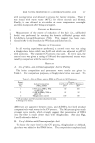
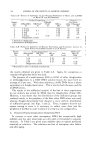
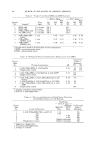
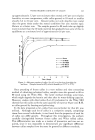
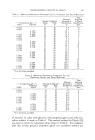
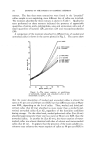
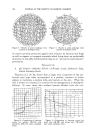
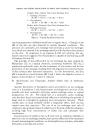
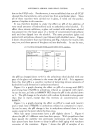
HAIR WAVING PROPERTIES OF 2,5-DIMERCAPTOADIPIC ACID 257 with waving lotion and allowed to process for twenty minutes. Then it was rinsed with warm water (40øC.) for thirty seconds and blotted. Finally, it was allowed to air-oxidize at room temperature overnight and then shampooed after being unwrapped. EXTENT OF REDUCTION Measurement of the extent of reduction of the hair (i.e., sulfhydryl levels) was performed by reacting the keratin sulfhydryl groups with 2,3-dichloro-l,4-naphthoquinone (NQ). This reagent has been men- tioned briefly in the literature by Whitman and Eckstrom (3). DEGREE OF CURLINESS In all waving experiments performed, a control tress was run using a thioglycolate lotion which was 0.6M and which was adjusted to pH 9.2 with ammonia. The standard CN process was used. In every case, the control tress was given a rating of 100 and the experimental tresses were rated by comparison with the control tress. RESULTS .4. Use of Meso- and dl-Dimercaptoadipic .4cid in 14fRying The lotion composition and permanent wave results are given in Table 1. For comparison purposes, a thioglycolate lotion was used. No TABLE 1--USE Or MESO- AND DL-DMA •N CN AND •N AO PROCF. SSES Experi- ment No. ß Process-- Lotion Composition Curl Levelt (After 1 Shampo• (NH4)2 DMA CN* AO* 1 0.4M meso-DMA, NIq3 60 100 to pH 9.28 2 0.4M dl-DMA, NH3 to 55 95 pH 9.28 3 Thioglycolate control 100 110 * CN procedure and AO procedure described in text. t Average of 2 tresses. differences are apparent between meso~ and dl-DMA, but both produce comparatively weak waves in the CN process. The AO process gives much stronger wave results, which strongly suggest that penetration of DMA into the fiber is much slower than with thioglycolate. (See also Figs. 1 and 2 referred to below.) B. Use of /lddi/ives with Dimercaploadipic .4cid To boost the wave level in the CN process, thioglycolate or dithiodi- glycolate was added to the DMA lotion. The compositions employed and
Purchased for the exclusive use of nofirst nolast (unknown)
From: SCC Media Library & Resource Center (library.scconline.org)