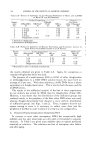
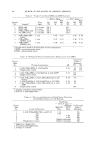
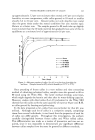
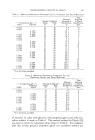
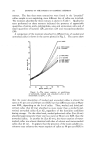
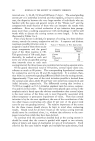
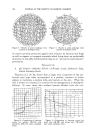
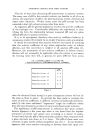
:292 JOURNAL OF THE SOCIETY OF COSMETIC CHEMISTS (a) Control and maintenance of pH at optimum levels (b) Sustained, nonirritating release of bacteriostatic and fungistatic agents (c) Nonfi•gitive absorption of skin toxins and irritants (d) Deodorization Ion exchange resin-based formulations have been developed for such diversified cosmetic and therapeutic topical applications as after-shave preparations, face and body powders, underarm deodorants, baby powders, hand and face creams, protective skin creams, poison ivy preparations, surgical dusting powders, etc. NATt•Rv. ov Ios Exc. Asov. Rv. sxss An ion exchange resin may be considered as an insoluble, large organic, three dimensional molecule, to which are attached a great number of acid or basic functional groups. The chemical behavior is determined by the nature of the polar group attached to the polymer. The four categories of functionality found in ion exchange resins are strong acids (sulfonic), weak acids (carboxylic), strong bases (quaternary amine) and weak bases (polya- mine). The chemical characteristics of each of these structures are out- lined in Table 1. In the synthesis of an ion exchange resin, high molecular weight insol- uble polymers are formed by the co- polymerization of such monomers as styrene with divinylbenzene, form- ing bead shaped particles, as illus- trated in the photomicrograph TABLe. 1 Exchange Capacity (Milliequiva- Functional Effective lent/Dry Group pH range Gram) Sulfonic 1-14 5.0 Carboxylic 5-14 10.0 Quaternar. y 0-12 3.5 ammonlum Polyamine 0-8 10 0 shown in Fig. 1. A two dimensional illustration of the structure of a sul- fonated polystyrene resin is presented in Fig. 2, illustrating the location of sulfonic functional groups throughout the resin matrix. Figure 3 pre- sents a similar sketch of the structure of a quaternary, ammonium type, anion exchange resin. One of the best means of studying the behavior of an ion exchange resin is by means of its titration curve. Figures 4 and 5 show typical titration curves for strong and weak acid cation exchange resins and strong and weak base anion exchange resins. Depending upon the strength of the acid or base group, each resin undergoes standard reactions typical of weak and strong acids and bases such as neutralization, salt formation, hydrolysis, etc. Figure 6 compares typical equilibrium reactions of a strong acid sulfonic type resin with those of a weak acid, carboxylic type, cation ex- change resin. Similar equations are provided in Fig. 7 for the cases of strong and weak base anion exchange resins

RESINS AND THEIR APPLICATION TO DRUG AND COSMETIC PRODUCTS 293 Since ion exchange resins are insoluble but exhibit reactivity of their fuvctional groups when hydrated and placed in contact with an electrolyte- containing environment, they retain their original identity when mixed in a powder, lotion or hydrophilic ointment. By an ionic binding reaction, they serve as a means of absorbing and rendering inactive certain undesirable skin irritants or exudant products of a skin eruption. For topical applications, bead form ion exchange resins are purified to remove residual traces of unreacted low molecular weight hydrocarbons and metallic contaminants and then are ground to an impalpable powder of Figure 1.--Microphotograph of a bead form, strongly acidic, sulfonic type, cation exchange resin. an average particle size of 25 mi- crons. These powders, when prop- erly formulated, are nonirritating and cosmetically acceptable for ex- ternal use, even on tender and sensi- tive skin. The ion exchange activity provided by these resins prevents or inhibits the growth or reproduction of organisms, including both fungi and bacteria, which are sensitive to the pH character of the resin or the therapeutic ionic salt form of the resin. Moreover, the resin is cap- able of absorbing and rendering in- active metabolic products, toxins, or decomposition products resulting from the growth of organisms. The specific ion exchange resin sys- tems which have received major at- tention in dermatological prepara- tions are Amberlite XE-64, a weakly acidic, carboxylic acid type, cation exchange resin, notable for its ability to control pH and absorb basic skin toxins the cobalt salt of Amberlite XE-64, which provides a nonirritating sustained release source of cobalt which has marked bacteriostatic and fungistatic action and Amberlite XE-87, a four-component cation and anion exchange resin system which provides an absorption mechanism coupled with controlled buffering action. PRINCIPLES OF ACTION The ability of an ion exchange resin to retain its identity in a dermatolog- ical system because of its insoluble nature and its reactivity with skin elec- trolytes or ionic skin irritants provide a dual role in its action. Therapeutic formulations can be developed for the correction of an imbalance of electrolytes on the skin surface. The reactivity of these systems can also
Purchased for the exclusive use of nofirst nolast (unknown)
From: SCC Media Library & Resource Center (library.scconline.org)