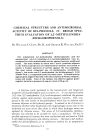
•. Soc. Cosmetic Chemists, 15, 717-725 (1964) CHEMICAL STRUCTURE AND ANTIMICROBIAL ACTIVITY OF BIS-PHENOLS. IV. BROAD SPEC- TRUM EVALUATION OF 2,2'-METHYLENEBIS (DI CH LOROPH ENO LS) By WILLIAM S. GUMP, PH.D., and GEORGE R. WALTER, PH.D.* ABSTRACT Five symmetrical 2,2'-methylenebis (dichlorophenols) and the asymmetrical 3,4,4',5'-tetrachloro-2,2'-methylenediphenol were in- vestigated for their antimicrobial activity against bacteria, molds and yeasts. The three isomers in which the 6- and 6'-positions adjacent to the hydroxyl groups are not substituted by chlorine were found to exhibit a broader spectrum of activity against the test organisms. The most potent compound was 2,2'-methylenebis (3,5-dichloro. •henot) less active was 2,2'-methylenehis (4,6-dichlorophenol), G-5© (Sindar Corp.), a compound known for many years. It lacked activity against gram-negative bacteria (with the exception of Proteus vulgaris), yeasts and molds. None of the isomers was effective against gram- negative bacteria in presence of soap at a level of 20 •g. mi. A previous study pertained to the bacteriostatic and fungistatic properties of hexachlorophene and its isomers (1). It was reported earlier (1,2) that 2,2'-methylenebis (3,4,5-trichlorophenol) exhibited the greatest activity against gram-positive and gram-negative bacteria. This com- pound is the only isomer of hexachlorophene which has no chlorine sub- stituents adjacent to the hydroxyl groups. It seemed to be of interest to determine whether other bis-phenols with ring hydrogen atoms next to the hydroxyls are more active than those in which these hydrogen atoms are replaced by chlorine atoms. The series of 2,2'-methylenebis (dichloro- phenols) was selected to be suitable for such a comparison. Of the six possible symmetrical isomers, five were synthesized and are listed in Table I with their melting points and chlorine contents. Omitted is 2,2'-methyl- enebis (4,5-dichlorophenol), as no satisfactory method for its preparation * Sindar Corporation, Delawanna, N.J. 717

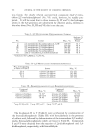
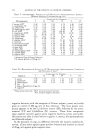
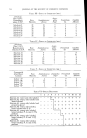
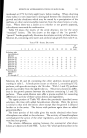
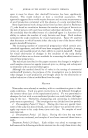
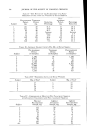
718 JOURNAL OF THE SOCIETY OF COSMETIC CHEMISTS was found the closely related asymmetrical compound 3,4,4',5'-tetra- chloro-2,2'-methylenediphenol (No. Vl) could, however, be readily pre- pared. It will be noted that in three isomers (I, IV and V) the hydrogen atoms in the 6,6'-positions are substituted by chlorine atoms, whereas in the other three (Nos. II, III and VI) this is not the case. TAB•,E I--2,2'-METHYLENEBIS (DIcHLOROPHENOL) ISOUEI•S Analyses, % Chlorine* No. Isomer M.p., o C. Found I 2,2'-methylenebis (4,6-dichlorophenol), G-5© 168-170 II 2,2'-methylenebis (3,4-dichlorophenol) 221-223 I I I 2,2'-methylenebis (3,5-dichlorophenol) 186-187 IV 2,2'-methylenebis (3,6-dichlorophenol) 113-115 V 2,2'-methylenebis (5,6-dichlorophenol) 145-147 VI 3,4,4',5'-tetrachloro-2,2'-methylenediphenol 199-201 41 7 41 9 41 6 41 7 41 4 41 8 * Calculated for C•3HsO2C14: C1, 41.9%. TASLE II--2,2'-METHYLENEBIS (BROMODICHLOKOPHENOLS) Nos. Corresponding to Those of Table I Isomer M.p., øC. II A 6-bromo-3,4-dichloro 171-172 IIIA 4-bromo-3,5-dichloro 207-208 IV A 4-bromo-3,6-dichloro 162-164 V A 4-bromo-5,6-dichloro 213-214 TABLE I]]--BP. oMODICHLOP. OANILINES AND BP. OMODICi-ILOKOPHENOLS Compound Compound (Anilines) M.p., øC. (Phenols) M.p., øC. 4-bromo-2, 5-dichloro 91-92 * 4-bromo-2,5-dichloro 71-73 ++ 4-bromo-3,5-dichloro 125-127J' 4-bromo-3,5-dichloro 121-123 6- bromo-3,4-dichloro 91-93 6-bromo-3,4-dichloro 70-71 4-bromo-2,3-dichloro 53-54 6-bromo-2,3-dichloro 87-89 * m.p. 91-92, ref. 8. • m.p. 129 ø, ref. 7. 1: m.p. 71-72% ref. 8. The bis-phenols II to V (Table I) were synthesized by condensation of the bromodichlorophenols (Table III) with formaldehyde in the presence of sulfuric acid, followed by debromination of the intermediate 2,2'-methyl- enebis (bromodichlorophenols) which are listed in Table II. Compounds I and VI were obtained from the reaction of 2,4-dichlorophenol and 3,4- dichlorophenol, respectively, with form aidehyde.
Purchased for the exclusive use of nofirst nolast (unknown)
From: SCC Media Library & Resource Center (library.scconline.org)