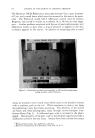
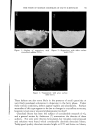
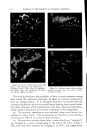
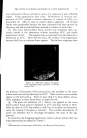
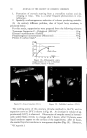
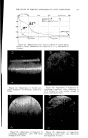
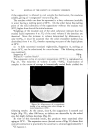
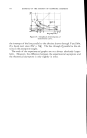
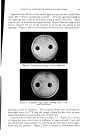
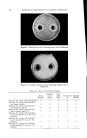
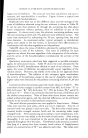
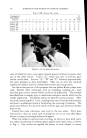
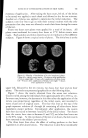
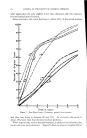
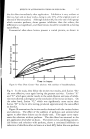
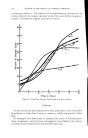
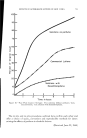
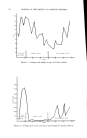
MEASUREMENT OF THE PROTECTIVE EFFECT OF SUNSCREENS 715 Rolleifiex camera with a F-3.5 lens} using 32 min. diameter interference filters, manufactured by B alzersõ. Photographs were taken on Kodak Tri-X Panchromatic Film* with electronic flash and developed in Dektol developer. To maximize the effect of erythema, the interference filter was chosen to have its trans- mission peak at one of the absorption maxima of oxyhemoglobin the illustration was made through a filter with 542 millimicron transmission peak. The grey scale and the test areas are read with a Photovolt trans- mission densitometer. It is also possible to generate a meaningful curve by putting the film into 2 X 2 slide, projecting the image with a standard slide projector and making measurements in the projected field with a photographic exposure meter. Obviously flat lighting is necessary for the proper use of this technique. SUMMA RY While we have not had extensive practical experience in their use, we have established the feasibility of the following recommendations. 1. The amount of information from a sunscreen test can probably be greatly increased over minimal erythema and grading systems by measuring the shift of the biological response curve. Since the shape of the ery- thema response curve depends upon wavelength and probably upon optical considerations in the skin itself, not only the position of this curve in rela- tionship to the unprotected control area but its shape may provide useful inform ation. 2. In previously unpublished work, Bergeron and I have shown that areas as small as 1 mm. produce an erythema as intense as that of larger diameters. It is suggested therefore, that instead of the usual 1 X 1 or 2 X 2 inch square test sites test sites of the order of magnitude of 5 -8 mm. in di- ameter may be cosmetically more acceptable, both because of their smaller size and because they can be more randomly distributed. 3. Since sunburn erythema spreads very little, it is possible to use triangles, squares, and other shaped areas to facilitate identification of specific test spots. 4. In order to obtain measurements of the response, I have suggested the use of photography through narrow bandpass interference filters with grey scale calibration. The use of photography makes it possible to meas- ure small areas and also avoids the artefacts involved in measuring ski•q color with reflectance meters and spectrophotometers. (Received June 8, 1964) :• Rolleiflex camera distribute:t in U.S. by Burleigh Brooks, lnc., Englewood, N.J. õ Balzers Aktiengesellschaft fiir Hochvakuumtechnik und Diinne Schichten. Balzer. Fiirstentum Liechtenstein. U.S. supplier Robert M. Lynn, Arcadia, Calif. * Eastman Kodak Co., Rochester, N.Y.

716 JOURNAL OF THE SOCIETY OF COSMETIC CHEMISTS REFERENCES (1) Daniels, F., Jr., Hopkins, C. E., and Fitzpatrick, T. B., VI.M. VI. virch. Dermatol., 77, 503 (1958). (2) Daniels, F., Jr., in D. B. Dill, Man and Radiant Energy: Solar Radiation, Handbook of Physiology, Sect. 4, Adaptation to the Environment, American Physiological Society, Washington, D.C., 1964, pp. 969-997. (3) Blum, H. F., Eicher, M., and Terus, W. S., vim. y. Physiol., 146, 118 (1946). (4) Blum, H. F., "Sunburn," in A. Hollaender, Radiation Biology II, McGraw-Hill Book Co., Inc., New York, 1955. (5) Hausser, K. W., and Vahle, W., IFiss. ?er6ff. Siernens-Konzern., 6, 101 (13 May 1927). (6) Sanderson, J. A., and Hulbert, E. O., "Sunlight as Source of Radiation," in A. Hollaender, Radiation Biology II, McGraw-Hill Book Co., Inc., New York, 1955. (7) Daniels, F., Jr., virch. Derrnatol., 85, 358 (1962). (8) Daniels, F., Jr., and Imbrie, J. D., y. ]nvest. Derrnatol., 30, 295 (1958). (9) Daniels, F., Jr., Hopkins, C. E., Imbrie, J. D., Bergeron, L., Miller, O., Crowe, F., and Fitzpatrick, T. B., y. ]nvest. Derrnatol., 32, 321 (1959). (10) Daniels, F., Jr., "Quantitative Measurements of the Reactions of Human Skin to Ultx a- violet Light," in B. Chr. Christensen and B. Buchmann, Progress in Photobiology, Proc. of the 3rd lntern. Congr. Photobiology, Elsevier, Amsterdam, 1961. ERRATUM REVERI•CE No. 3 on page 577 of the September 16, 1963, issue should read H. Green, Ind. Eng. Chem. •Inal Ed., 13, 632 (1941).
Purchased for the exclusive use of nofirst nolast (unknown)
From: SCC Media Library & Resource Center (library.scconline.org)