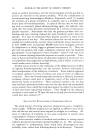
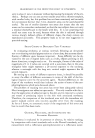
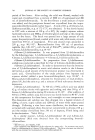
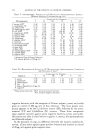
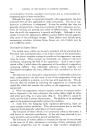
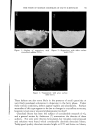
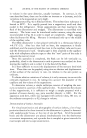
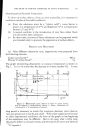
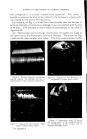
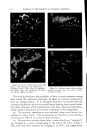
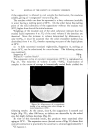
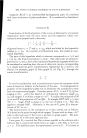
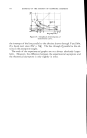
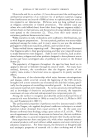
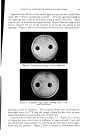
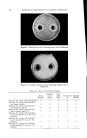
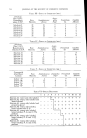
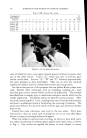
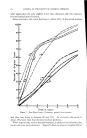
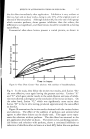
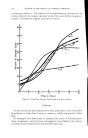
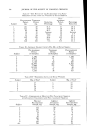
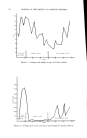
734 JOURNAL OF THE SOCIETY OF COSMETIC CHEMISTS and correspond to a common mathematical expression. This makes it possible to estimate the limit to be reached by the decrease in volume with- out waiting for the end of the experiment. For example, on Fig. 5, it would have been possible after the 3rd day to estimate the limit of contraction, although it was not reached until the end of 40 days. The principle of this method of measurement is set forth in Appendix II. (b) Macroscopic and microscopic examination of samples was made at the same time as the dilatometric data were obtained. The arrows on Fig. $ indicate the times samples were taken. The latter were examined in flat Figure &--Freshly prepared suppository smooth surface the scratches are due to imperfections of the aluminum molds (12X). Figure 8. Suppository after 20 hours de- velopment of stirface defects (12X). Figure 7.---Suppository after 3 hours begin- ning of stirface defects (12X). * Cf. Appendix I Figure 9.--Suppository after 20 hours the surface (tefects in this sample are caused by modifications of the surface due to improper handling (12X).

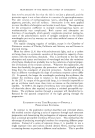
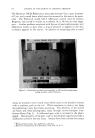
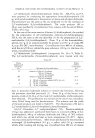
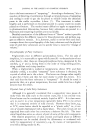
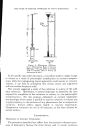
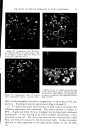
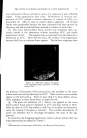
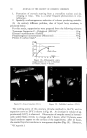
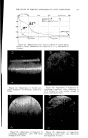
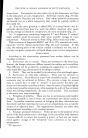
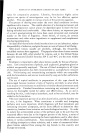
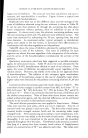
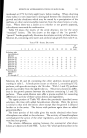
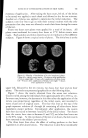
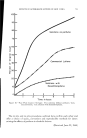
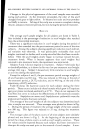
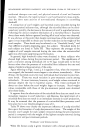
THE STUDY OF SURFACE ANOMALIES OF FATTY SUBSTANCES 735 Figure 10. -Suppository after 48 hcurs the circinate defects are always black they are analogous to those found by Vaeck (5) in the use of chocolate (12X). Figure 11. Suppository after 72 hours black excrescences always develop (12X). Figure 12 and 13.--Suppository after :240 hours white forms appear very fine crystals are involved these defects are excrescences, not holes, as shown by the tangential view of Fig. 13 (12X). light and photographed normally or tangentially to the surface of the sup- pository. The observations are reproduced in Figs. 6 through 15. (c) To specify the origin and formation of these surface anomalies, the following experiment was conducted: The above mixture is melted at 80øC. A glass rod (diam. 10 mm.) is dipped into the liquid and withdrawn immediately. A thin coating of fat which solidifies immediately is thus deposited on the rod. The rod is then inserted into a hermetically sealed flask, and the latter is placed in the thermostatic bath. Surface anomalies identical to those appearing on the suppositories appear on the rod (Fig. 16).
Purchased for the exclusive use of nofirst nolast (unknown)
From: SCC Media Library & Resource Center (library.scconline.org)