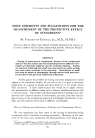
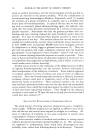
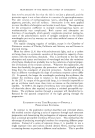
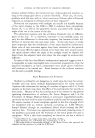
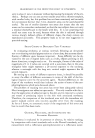
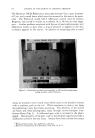
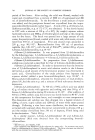
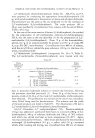
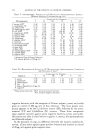
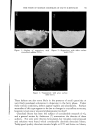
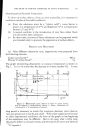
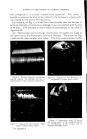
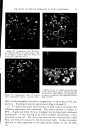
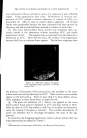
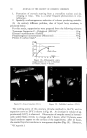
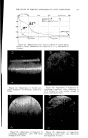
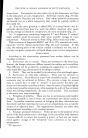
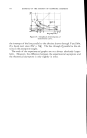
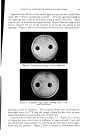
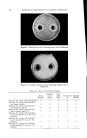
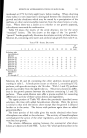
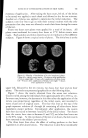
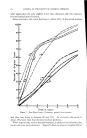
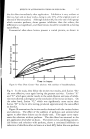
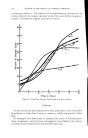
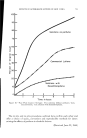
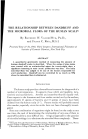
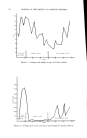
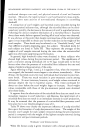
736 JOURNAL OF THE SOCIETY OF COSMETIC CHEMISTS Figure 14 and 15. Suppository after 648 hours the formation of excrescences is completed (12X) 40X (Fig. 1.5) magnifica- tion shows that the proportion of white crystals has slightly increased. Figure 16.--Surface defects of fat solidified rapidly on glass rods: (a) after 3 hours (b) after 17 hours. This finding eliminates the possibility of fluid or pasty exudates coming from inside the substance examined, for glass at constant temperature does not change volume. It is, therefore, necessary to consider that the circinate ring defects are due to crystallization starting from crystal nuclei. It is likely that part of the liquid phase of the fatty substance crystallizes, which would correspond to an increase in hardness of the suppository. (d) The previous experiments were repeated, using cocoa butter con- taining no carbon black. The excrescences are identical to the previous ones but more difiqcult to see due to their whiteness. (e) The previous mixture (cocoa butter--carbon black) was "tempered," i.e., brought to a state corresponding to the end of the curve of Fig. 5. The mass was then softened by bringing it to 28øC, and suppositories

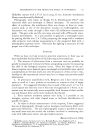
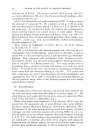
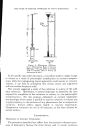
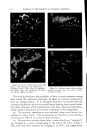
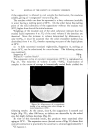
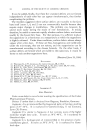
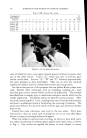
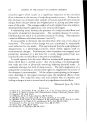
THE STUDY OF SURFACE ANOMALIES OF FATTY SUBSTANCES 737 were fabricated without melting by means of a suppository press (Mabille type•'). These suppositories were softer. Dilatometry at constant tem- perature of 25øC yielded a relative reduction of volume of 0.2%, i.e., practically nil. After 27 days no surface defects appeared. All of these results were predictable because the fatty substance had been ground by the press, and the crystals had been oriented in relation to each other. (f) The cocoa butter-carbon black mixture was tempered, then cau- tiously melted in the thermostat without exceeding 36øC, and finally poured into a mold. The suppositories so prepared were then placed in a thermostat at 25øC. After the first hour, the surface of the suppository becomes dull, but no circinate forms appear. The dullness originates from Figure IT--Shrivelled surface of supposi- tory containing large quantities of S-form nuclei (12X). the presence of thousands of fine excrescences, due probably to the many •-form nuclei not entirely destroyed at 36øC. After one hour some wrinkles appear on the dull surface. After six days (Fig. 17), these defects are en- tirely analogous to those found when an apple shrivels. (g) The glass rod technique (cf. c above) was applied to the cocoa butter-carbon black mixture tempered at 25øC and then melted at 36øC. After six days at 25øC the surface is dull, but no wrinkles are formed be- cause the volume of the glass is constant. The wrinkles described in (f) above are therefore due to shrinkage throughout the mass of the sup- pository. In summary, the foregoing experiments make it almost certain that two major phenomena are related to "bloom": Manufactured by Instrument de Precision, 4 rue Rampon, Paris, France.
Purchased for the exclusive use of nofirst nolast (unknown)
From: SCC Media Library & Resource Center (library.scconline.org)