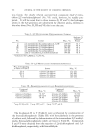
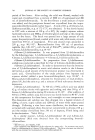
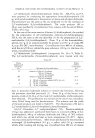
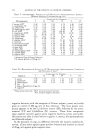
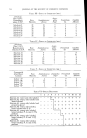
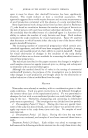
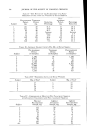
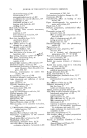
718 JOURNAL OF THE SOCIETY OF COSMETIC CHEMISTS was found the closely related asymmetrical compound 3,4,4',5'-tetra- chloro-2,2'-methylenediphenol (No. Vl) could, however, be readily pre- pared. It will be noted that in three isomers (I, IV and V) the hydrogen atoms in the 6,6'-positions are substituted by chlorine atoms, whereas in the other three (Nos. II, III and VI) this is not the case. TAB•,E I--2,2'-METHYLENEBIS (DIcHLOROPHENOL) ISOUEI•S Analyses, % Chlorine* No. Isomer M.p., o C. Found I 2,2'-methylenebis (4,6-dichlorophenol), G-5© 168-170 II 2,2'-methylenebis (3,4-dichlorophenol) 221-223 I I I 2,2'-methylenebis (3,5-dichlorophenol) 186-187 IV 2,2'-methylenebis (3,6-dichlorophenol) 113-115 V 2,2'-methylenebis (5,6-dichlorophenol) 145-147 VI 3,4,4',5'-tetrachloro-2,2'-methylenediphenol 199-201 41 7 41 9 41 6 41 7 41 4 41 8 * Calculated for C•3HsO2C14: C1, 41.9%. TASLE II--2,2'-METHYLENEBIS (BROMODICHLOKOPHENOLS) Nos. Corresponding to Those of Table I Isomer M.p., øC. II A 6-bromo-3,4-dichloro 171-172 IIIA 4-bromo-3,5-dichloro 207-208 IV A 4-bromo-3,6-dichloro 162-164 V A 4-bromo-5,6-dichloro 213-214 TABLE I]]--BP. oMODICHLOP. OANILINES AND BP. OMODICi-ILOKOPHENOLS Compound Compound (Anilines) M.p., øC. (Phenols) M.p., øC. 4-bromo-2, 5-dichloro 91-92 * 4-bromo-2,5-dichloro 71-73 ++ 4-bromo-3,5-dichloro 125-127J' 4-bromo-3,5-dichloro 121-123 6- bromo-3,4-dichloro 91-93 6-bromo-3,4-dichloro 70-71 4-bromo-2,3-dichloro 53-54 6-bromo-2,3-dichloro 87-89 * m.p. 91-92, ref. 8. • m.p. 129 ø, ref. 7. 1: m.p. 71-72% ref. 8. The bis-phenols II to V (Table I) were synthesized by condensation of the bromodichlorophenols (Table III) with formaldehyde in the presence of sulfuric acid, followed by debromination of the intermediate 2,2'-methyl- enebis (bromodichlorophenols) which are listed in Table II. Compounds I and VI were obtained from the reaction of 2,4-dichlorophenol and 3,4- dichlorophenol, respectively, with form aidehyde.

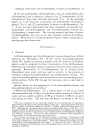
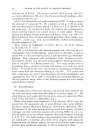
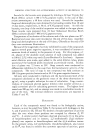
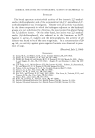
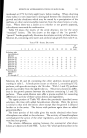
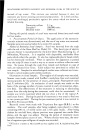
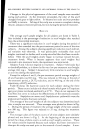
CHEMICAL STRUCTURE AND ANTIMICROBIAL ACTIVITY OF BIS-PHENOLS 719 Of the 2,2'-methylenebis (dichlorophenols), only 2,2'-methylenebis (4,6- dichlorophenol) and a substance claimed to be 2,2'-methylenebis (4,5-di- chlorophenol)* have been described previously (3,4). In the preceding papers (2, 5) we listed two compounds, 2,2'-methylenehis (5,6-dichloro- phenol), No. 9, and 2,2'-methylenehis (4-bromo-5,6-dichlorophenol), No. 5. It has now been determined that these compounds are actually 4,4'- methyleneNs (2,3-dichlorophenol) and 4,4'-methylenehis (6-bromo-2,3- dichlorophenol), respectively. The starting material had been 6-bromo- 2,3-dichlorophenol and not, as we had assumed, 4-bromo-2,3-dichloro- phenol. Bromination of 2,3-dichlorophenol leads to either compound, de- pending upon the solvent used. EXPERIMENTAL I. Chemical 2,3-Dichlorophenol and 3,4-dichlorophenol were purchased from Aldrich Chemical Co., Milwaukee, Wis. Of the various bromodichlorophenols (Table III) needed as starting materials, only the 4-bromo-2,3-dichloro- phenol could be prepared by direct bromination of the dichlorophenol. Otherwise, this procedure results in mixtures of isomers which could not be separated. Bromination of 2,3-dichlorophenol led to 4-bromo-2,3-di- chlorophenol when acetic acid was used as solvent in the presence of methanol, 6-bromo-2,3-dichlorophenol•' was predominantly formed. The other bromodichlorophenols were obtained from the corresponding bromo- dichloroanilines (Table III) through the diazonium salts as described by Tiessens (6). Specific details for the preparation of the bromodichloroanilines and bromodichlorophenols are as follows: 6-Bromo-3,¾-dich/oroani/ine. To a stirred slurry of 612 g. of 3,4-di- chloroacetanilide and of 24:6 g. of anhydrous sodium acetate in 1500 mi. of acetic acid was added a solution of 480 g. of bromine in 600 mi. of acetic acid during six hours. The next day, the batch was heated at 50 ø for a * The latter compound (4) was reportedly obtained by the condensation of 3,4-dichloro- phenol with formaldehyde in the presence of 80% sulfuric acid. Recrystallization of the crude product yielded a substance melting at 194-196 ø. Further purification raised the m.p. to 201 ø. Following the cited procedure we isolated a his-phenol with a m.p. of 199-201 ø. It is our belief that this Ns-phenol is actually the asymmetrical 3,4,4',5'-tetrachloro-2,2'-methylene- diphenol and does not have the structure of 2,2',-methylenebis(4,5-dichlorophenol) assigned to it in Geigy Co.'s patents. The basis for this conclusion is presented under preparation of Compound No. VI in the Experimental part of this article. J' Its structure was proved by the following sequence of reactions: Condensation with formaldehyde gave 4,4'-methylenehis (6-bromo-2,3-dichlorophenol) which, on debromination, yielded 4,4'-methylenehis (2,3-dichlorophenol). When this compound was chlorinated, 4,4'- methylenehis (2,3,6-trichlorophenol) was obtained. It melted at 162-164 ø. The m.p. of a mixture with pure 4,4'-methylenehis (2,3,6-trichlorophenol), m.p. 166-167 ø (1), was 163-165 ø showing no depression.
Purchased for the exclusive use of nofirst nolast (unknown)
From: SCC Media Library & Resource Center (library.scconline.org)