722 JOURNAL OF THE SOCIETY OF COSMETIC CHEMISTS with the aid of Filtrol. The product obtained (26.6 g., m.p. 190-195 ø) was recrystallized from 280 mi. of the ethylene dichloride yielding a white, crystalline powder (16.2 g.). 3,4,4',$',6,6'-Hexach/oro-2,2'-methy/enedipheno/(VII). In order to prove the structure of compound No. VI, a solution of 2.3 g. in 30 mi. acetic acid was chlorinated by slowly adding a solution of 1 g. of chlorine in 50 mi. acetic acid. At the end of 4 hours, the solution was concentrated to about one-third volume and a small amount of water added. The pre- cipitate was filtered, washed with water and dried 2.8 g. m.p. 148-151 ø Recrystallization from ethylene dichloride gave fine, white needles, m.p. 162-163ø mixed m.p. with 2,2'-methylenebis (3,4,6-trichlorophenol), hexachlorophene 135-142 ø. Anal. Calcd. for CjaH602Cla: C, 38.76 H, 1.5 C1, 52.32. Found: C, 38.71 H, 1.6 C1.52.13. As VII is not identical with hexachlorophene and could not be 2,2'- methylenebis (4,5,6-trichlorophenol) which melts at 220-222 ø, it was as- sumed that it is the asymmetrical 3,4,4',5',6,6'-hexachloro-2,2'-methylene- diphenol. This substance was synthesized from 2-hydroxy-3,5,6-tri- chlorobenzyl alcohol (11) and 2,3,4-trichlorophenol, following the proce- dure of example 1 of a British patent (12). The crude product was re- crystallized from a mixture of hexane and toluene (2:1) with the aid of Filtrol. It melted at 161-162 ø and showed no melting point depression when mixed with the substance melting at 162-163 ø . This proves that both compounds are 3,4,4',5',6,6'-hexachloro-2,2'-methylenediphenol and consequently, that VI is 3,4,4',5'-tetrachloro-2,2'-methylenediphenol, as the 6,6'-positions being ortho to the hydroxyl groups are most readily substituted by chlorine. Microbiological. The preparation of the stock solutions, the twofold serial dilutions and the solid and liquid media were described in a previous paper (1). The serial dilutions were made with the aid of an automatic apparatus (Dilu- mat © , Fisher Scientific Co., Bloomfield, N.J.). Where solid media were employed, 25 mi. aliquots (48øC) were dis- pensed into the appropriate sets of serial dilution tubes using a Brewer automatic pipette (Baltimore Biological Laboratories, Baltimore, Md.). The contents of the tubes were poured into sterile Petri plates the hard- ened agar was then surface-inoculated with one drop (0.007 mi.) of a cul- ture by means of an Accu-Drop dispenser (Scientific Products, Flushing, L. I., N.Y.). The liquid medium was inoculated in bulk at the rate of 0.5 mi. culture per 1. of medium after which 25 mi. aliquots were aseptically dispensed with the Brewer pipette into the serial dilution tubes and the contents then transferred aseptically to 125 mi. Erlenmeyer flasks.

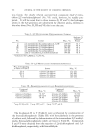
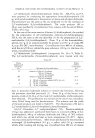
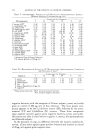
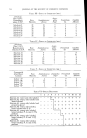
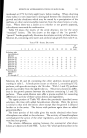
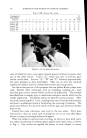
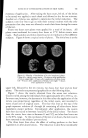
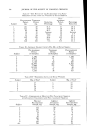
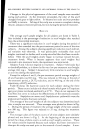
CHEMICAL STRUCTURE AND ANTIMICROBIAL ACTIVITY OF BIS-PHENOLS 723 Inocula for the bacteria were prepared by diluting a 24 hour Tryptic Soy Broth (Difco) culture 1:100 in 0.1% peptone water in the case of Bac- terium ammoniagenes a 48 hour culture was used. Inocula for imperfect fungi and dermatophytes were obtained by harvesting conidia from 10 and 15 day slants, respectively, in 50 ml. of 0.1% peptone water. As with the bacteria, one drop of the conidial suspension was added to the agar plates. Yeast inocula were prepared from 24 hour Sabouraud Dextrose Broth (Difco) cultures diluted 1-100 in 0.1% peptone water. Temperature of incubation of the cultures and of the test plates was 30 ø . Bacterial and yeast data were recorded at the end of five days imperfect fungi and dermatophytes at the end of 10 days Chlorella at the end of 30 days over continuous illumination. Because of the magnitude of activity exhibited by some of the compounds against several gram negative organisms, it was considered of interest to ascertain levels of activity in the presence of soap. For this purpose, a 1 ml. aliquot of the alcoholic stock solution of each compound was added to 100 ml. 2.5% white soap stock (Lever Brothers Co. Lux base). Aqueous serial dilutions were made, agar added to the serial dilution tubes, plates poured and the hardened plates inoculated as previously stated. Incuba- tion of plates was 72 hours at 30 ø . Soap controls were conducted to differentiate inhibition by the soap from the bacteriostatic activity of the compounds. The ratio of soap to test compound was held constant at 100-1 for gram-positive bacteria and at 50-1 for gram-negative bacteria. All tests were conducted in triplicate and the bacteriostatic level of the compound calculated as the geometric mean of the three observations in ug/ml., using a graphic technique for ease of calculation. Log•0 concen- trations of compound plotted against dilution tube number served as a rapid convenient plot for calculating geometric means. The highest level tested was 100 ug./ml., and no attempt was made to standardize inocula in any of the tests. The minimal inhibitory concentrations are reported in Tables V and VI. DISCUSSION Each of the compounds tested was found to be biologically active however, as may be noted from Table V, the isomers with hydrogens in the 6- and 6'-positions (II, III and VI) showed a broader spectrum of activity than the ones where these positions are occupied by chlorine (I, IV and V). A similar pattern had been observed previously (1) in the series of hexachlorophene and its isomers 2,2'-methylenebis (3,4,5-trichloro- phenol) was superior to hexachlorophene and the 4,5,6-trichloro isomer. In the present series, 2,2'-methylenebis (4,6-dichlorophenol), also known as G-5 ©, was found to exhibit the narrowest spectrum of activity gram
Purchased for the exclusive use of nofirst nolast (unknown)
From: SCC Media Library & Resource Center (library.scconline.org)