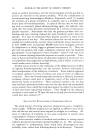
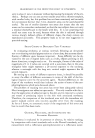
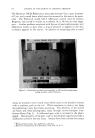
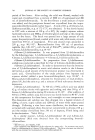
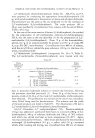
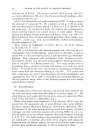
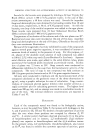
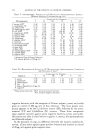
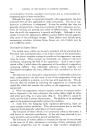
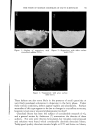
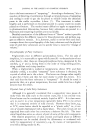
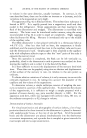
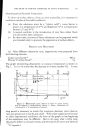
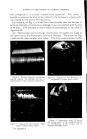
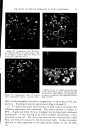
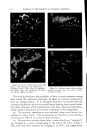
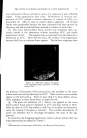
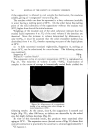
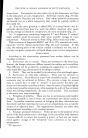
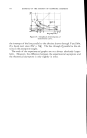
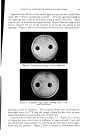
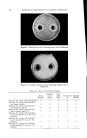
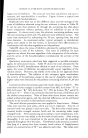
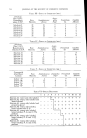
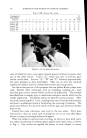
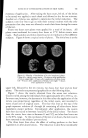
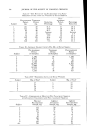
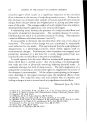
750 JOURNAL OF THE SOCIETY OF COSMETIC CHEMISTS Figure 3.--Penicillium culture showing large zone of inhibition. Figure 4.--Candida albicans culture showing typical zone of inhibition. TABLE II ZONES OF INHIBITION (MM.) Staphylo- Atsper- Face coccus gillus Bacteria .4ureus Niger Penicillium Candida Sp. Atlbicans Solution #1: water and ethyl alcohol 0 Solution #2: water, ethyl alcohol and benzyl alcohol 0 Solution #3: water, ethyl alcohol and propylene glycol 0 Solution #4: water, ethyl alcohol, benzyl alcohol and P. G. Solution #5: water, ethyl alcohol, benzyl alcohol, P. G. and 0.75% perfume 7 Solution #6: water, ethyl alcohol, bcnzyl alcohol, P.G. and 1. perfume 7 Solution #7: water, ethyl alcohol, benzyl alcohol, P. G. and 3. perfume 8 o o o o o o o o o o o o o o o o

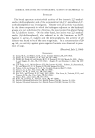
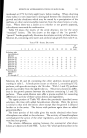
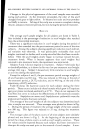
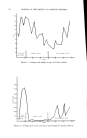
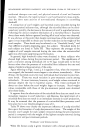
EFFECTS OF AFTER-SHAVE LOTIONS ON SKIN FLORA 751 larger zone of inhibition. The zones are very clear and distinct and easy to measure, anti reproducibility is excellent. l:igure 4 shows a typical zone obtained with Candida albicans. Duplicate tests were run on five different days, and the average of the zones of inhibition obtained using the test solutions is shown in Table II. It can be seen that solutions #1 through #4, containing the after-shave lotion components without perfume, show no inhibition of any of the organisms. In ahnost every case, the solutions containing perfume, even the one containing as little as 0.75%, did have some inhibitory action. The zones were measured by subtracting the 18 mm. opening from the total clear diameter. As mentioned earlier, typical antiseptic or disinfectant agents were added to the test lotions, to determine their effectiveness in combination with the other ingredients and the perfume. Table III shows the zones of inhibition obtained by adding 0.25% hexa- chlorophene to each of the solutions. The zones of inhibition for each organism are almost the same regardless of the composition of the solution, and the action of the hexachlorophene overshadowed the activity of the perfume. Quaternary ammonium salts have been suggested as possible antiseptic agents for after-shave lotions. Table IV shows the zones obtained by the additions of 0.10% benzalkonium chloride to each of our solutions. Once again, the zones of inhibition are approximately equal, regardless of the solution chosen. However, the widths of the zones do not approach those of hexachlorophene. The addition of this antiseptic again overshadows the activity of the perfumes, except in the case of .4spergi#us niger where higher values were obtained for the perfume containing solutions #5, #6 and #7. Commercial after-shave lotions gave the results shown in Table V. The after-shave lotions ranged in alcohol content from 66% for Lotion "A" to 60% for Lotion "B," 56% for Lotion "C," 58% for Lotion "D," and 47% for Lotion "E." There is no correlation between the zones of inhibition and the alcohol concentration. None of these after-shave lotions contain any added antibacterial agents, and the observed differences can be attributed directly to the variation in their perfume composition. The serial dilution procedure was next applied to these lotions. Fifteen tubes were used for each series, which was run in triplicate. Two ml. of nutrient broth was placed in each test tube. The first tube of each series received double strength nutrient broth and the remaining tubes single strength broth. After autoclaving and cooling to room temperature, 2 ml. of the test solution was added to the first tube of each series. After mixing thoroughly, 2 ml. was transferred to the second tube and the procedure repeated throughout 14 of the tubes. The fifteenth tube served as a control. One drop of a twenty-four hour nutrient broth culture of $tap]•y/ococcus aureus at a concentration of 10 -a was added to each tube. The tubes were
Purchased for the exclusive use of nofirst nolast (unknown)
From: SCC Media Library & Resource Center (library.scconline.org)