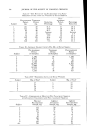
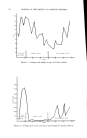
720 JOURNAL OF THE SOCIETY OF COSMETIC CHEMISTS period of five hours. After cooling, the solid was filtered, washed with water and crystallized from a mixture of 1000 mi. of isopropanol and 200 mi. of dimethylformamide. To the first flitrate a small amount of water was added, and the precipitate formed was crystallized from the isopro- panol-dimethylformamide mother liquor. A total of 331 g. of 6-bromo-3,4- dichloroacetanilide, m.p. of 172-173 ø, was obtained. It was slowly heated to 120 ø with a mixture of 330 g. of a 50% (by weight) aqueous sodium hydroxide solution and 1000 g. of ethylene glycol and kept at this tempera- ture for five hours. The batch was poured into a large amount of cold water, the precipitate filtered, washed with water and, while moist, crystal- lized from 450 mi. of isopropanol. First and second crops amounted to 258 g., m.p. 90.5-92 ø. Recrystallization from 450 mi. of petroleum naphtha (b.p. 120-135ø), with the aid of Filtrol ©*, yielded 210 g. of pure 6-bromo-3,4-dichloro aniline, m.p. 91-93 o. 4-Bromo-2,5-dichloroaniline. It was prepared from 2,5-dichloroaniline by the following steps: 2,5-dichloroaniline • 2,5-dichlorobromobenzene 4-bromo-2,5-dichloronitrobenzene --• 4-bromo-2,5-dichloroaniline (8). ¾-Bromo-3,5-dichloroaniline. Its preparation from 3,5-dichloroacet- anilide was conducted as described for that of 6-bromo-3,4-dichloroaniline. ¾-Bromo-2,3-dichlorophenol. In order to demonstrate that the bromina- tion of 2,3-dichlorophenol in acetic acid solution results in the 4-bromo- derivative, a small amount of the bromination product was chlorinated in acetic acid. Crystallizations of the crude product from heptane and aqueous alcohol yielded a pure bromotrichlorophenol, m.p. 83-84 ø. Bromo-2,3,6-trichlorophenol, obtained by bromination of 2,3,6-trichloro- phenol (9), had the same m.p. and a mixture of both substances showed no depression. ¾-Bromo-3,5-dichlorophenol. To 420 mi. of 96% sulfuric acid was added 42 g. of sodium nitrite with agitation and cooling, and then 144 g. of 4- bromo-3,5-dichloroaniline during 90 minutes at 25-30 ø. After addition of 410 mi. of 96% sulfuric acid, the mixture was slowly heated to 80-85 ø, held at this temperature for three hours, and overnight at room temperature. The diazonium salt solution was then dropped into a heated mixture of 1200 g. of cryst. cupric sulfate and 1200 mi. of water while steam passed through. Following a nine hour steam distillation, the distillates were extracted with isopropyl ether, the extract concentrated to dryness (101 g.) and the residue crystallized from 350 mi. of heptane, Filtrol being used fordecolorization. Yield: 80.5 g. In a similar manner, ¾-bromo-2,5-dichlorophenol (8) and 6-bromo-3,¾- dich/orophenol (10)-]- were obtained from the corresponding bromodi- chloroanilines. * Filtrol Corp., I,os Angeles, Calif. • The compound was mentioned in the reference by name only. Its structure was estab- lished by chlorinating it to 6-bromo-2,3,4-trichlomphenol. The latter substance was identical with the one obtained by bromination of 2,3,4-trichlorophenol (8).

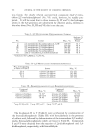
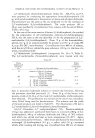
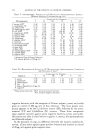
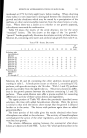
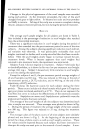
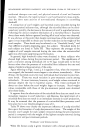
CHEMICAl. STRUCTURE AND ANTIMICROBIAL ACTIVITY OF BIS-PHENOLS 721 2,2'-Melhy/enebis (bromodich/orophe•o/s) (Table II). IIA, IVA, and VA were prepared by condensing the appropriate bromodichlorophenols (50 g.) with paraformaldehyde in the presence of oleum and ethylene dichloride. The procedure was the same as the one employed (1) for the synthesis of 2,2'-methylenebis (4,5,6-trichlorophenol). The crude products (49 to 50 g.) were purified by crystallization from toluene with the aid of Filtrol. Yields: 29 to 31 g. In the case of the more reactive 4-bromo-3,5-dichlorophenol, the method for the preparation of 2,2'-methylenebis (4-bromo-3,5-dichlorophenol), III A, was the same as the one described (1) for the preparation of 2,2'- methyleneNs (3,4,5-trichlorophenol). From 72 g. of the bromodichloro- phenol, 16.7 g. of an acetone-insoluble by-product and 49.7 g. of crude, III A, m.p. 201-202 ø, were obtained. Crystallization from 400 ml. of toluene, with the aid of Filtrol, yielded the pure substance (32.2 g.) in the form of a white, crystalline powder. 2,2'-Methylenehis (dich/orophenols) (compounds No. II to V, Table I). The 2,2'-methylenebis (bromodichlorophenols) were treated with zinc TABi, E IV Crude Yields Compounds of Pure (22-23 g.) Compounds No. Solvents for Crystallization (g.) II mixture of 100 ml. of toluene 16.7 100 mi. of hexane 50 mi. of p-dioxane III mixture of 220 ml. of toluene 15.4 110 ml. of hexane IV 1) 150 mi. of aqueous alcohol (60% by vol.) 11.2 2) 225 ml. ofhexane V 1) 75 mi. of toluene 9.8 2) 25 mi. of methanol dust in potassium hydroxide solution to remove the bromines, following the procedure described previously (1). From 34 g. of the bromo com- pounds, yields of 22-23 g. of the crude 2,2'-methylenebis (dichlorophenols) were obtained. The purification was carried out by one or two crystalliza- tions, Filtrol being used for decolorization. The solvents and the yields of the pure products are listed in Table IV. The chlorination of II led to 2,2'-methylenebis (3,4,6-trichlorophenol), hexachlorophene. 3,¾,¾',5'- Tetrachloro - 2,2' - methylenedipheno/ (VI). Paraformaldehyde (7.6 g.) was added over a period of three hours to a mixture of 80 g. of 3,4- dichlorophenol, 160 g. of ethylene dichloride and 100 g. of 78% sulfuric acid which was stirred and kept at room temperature (25-28ø). Agita- tion was continued for 18 hours. After steam distillation for the removal of unchanged 3,4-dichlorophenol (4.3 g.), a yellow solid (76 g.) remained which, after washing and drying, was crystallized from 280 ml. of toluene
Purchased for the exclusive use of nofirst nolast (unknown)
From: SCC Media Library & Resource Center (library.scconline.org)