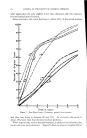
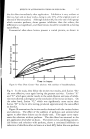
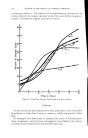
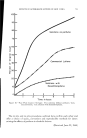
MEASUREMENT OF THE PROTECTIVE EFFECT OF SUNSCREENS 713 only to about 1 mm. in diameter without decreasing the intensity of the ery- thema. Perhaps one can use an even smaller area with a thinner template, with smaller holes, but this problem has not been examined, and certainly for convenience the fact that 5 mm. diameter areas can be used should be useful. The use of smaller diameter test areas also means that the test areas can be somewhat randomized, so that the test subject does not carry a residual checkerboard to the beach with him. It is not surprising that small test areas may be used, because when the skin is radiated through various sharply defined orifices of different shape, the sharp corners are reproduced accurately. This property leads us to our next suggestion in practical testing. SHAPE CODING OF DIFFERENT TEST VARIABLES In evaluating erythema at various intervals following an ultraviolet test or evaluating residual pigmentation at a later date, the accurate identi- fication of different spots becomes important. Some difficulty can be ob- viated by the use of shaped holes such as circles, ellipses pointing in dif- ferent directions, triangles and so on. For example, if areas of the order of magnitude of 3 X 3 inches are covered with a sunscreen, then in this area triangular holes might represent a 20 second exposure to the sunlamp, whereas a rectangle with the long axis vertical might represent the 40 second exposure. By setting up a series of different exposure times, it should be possible to assay the effect of different sunscreens in terms of the shift of the bio- logical response curve by the sunscreen agent. Marked differences in the slope of the erythema would then indicate the action of some of the com- plicating features which were discussed above. The problem of masking test areas has never been adequately solved. Most investigators use adhesive tape masks. The only trouble with this is that the application of adhesive tape to the skin and its removal is a stand- ard means of producing injury to the skin with associated erythema. Therefore, the comparison of the irradiated area with the immediate ad- jacent masked control area involves possible error from the masking. As far as I know, no systematic study of the magnitude of this error and how to avoid it has been made. GRADING, MEASURING, AND INTERPRETING THE F, RYTHEMA RESPONSE Erythema is evaluated by its presence or absence, by relative ranking, by comparison with visual standards such as the Munsell standards, or by measurement with a reflectance spectrophotometer or a reflectance meter.

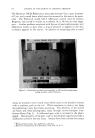
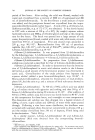
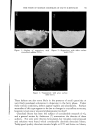
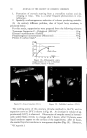
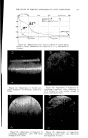
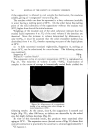
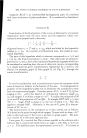
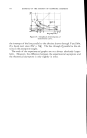
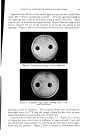
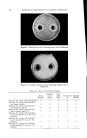
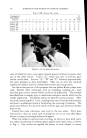
714 JOURNAL OF THE SOCIETY OF COSMETIC CHEMISTS The Beckman DK-R Reflectance spectrophotometer* has a port diameter of 2 cm. and a small beam which must be centered in the area to be meas- ured. The Fhotovolt model 610-T reflectance meter} used by Imbrie, Bergeron, and myself in studies on erythema (8, 9, 10) has an even larger port. Another problem associated with the use of spectrophotometers and reflectance meters is that when a ring of pressure is applied to the skin erythema appears in the center. In addition to measuring color in small Figure 1.--Ultraviolet erythema photographed at 542 mt• illustrating shape coding and grey scale calibration. areas, we wanted to try to reach areas which could not be placed in contact with a machine, such as the iris. While experience to date is not large, the preliminary tests have been promising. The elements of the system are black and white photographs, taken through narrow-bandpass inter- ference filters (Fig. 1). A calibrated grey scale is included in the photo- graph. Densitometry of the grey scale in the finished negative provides a calibration curve for the test areas. Studies have been carried out using a * Beckman Instruments, Inc., Fullerton, California. • Photovolt Corporation, 1115 Broadway, New York 10• N. ¾.
Purchased for the exclusive use of nofirst nolast (unknown)
From: SCC Media Library & Resource Center (library.scconline.org)