MEASUREMENT OF THE PROTECTIVE EFFECT OF SUNSCREENS 711 leans revolve around the fact that the skin is not just a photocell, and the protective agent is not a clear solution in a cuvette of a spectrophotometer. The skin consists of nonhomogeneous layers, absorbing and scattering pigments, particles, and cell surfaces. Attenuation is the term applied to cover the effects of absorption and scatter in each layer. The expressions for the attenuation coefficient in multiple nonhomogeneous layers are mathematically very complicated. Both scatter and absorption are functions of wavelength, which greatly complicates practical testing be- cause of the polychromatic nature of sunlight compared to the limited wavelengths put out by mercury arc and other artificial sources of ultra- violet radiation. The rapidly changing vagaries of sunlight, except in the Chamber of Commerce versions of Florida, California and Arizona, are well known in practical testing. Blum has shown (3, 4) that with polychromatic light, such as a carbon arc lamp, there is a systematic variation of the protective capacity of sun- screens with the erythema threshold. This is attributed to the fact that absorption and scatter are functions of wavelength and that the variations of erythema threshold are probably due to the variations of optical proper- ties of thickness of the stratum corneum. Whatever the explanation, the lower the threshold, the greater the protection--which is probably a good thing from the standpoint of practical protection. Another problem is that at different wavelengths the slope of erythema response curves differ (5). In general, the longer the wavelengths producing the erythema, the steeper the erythema slope in relation to the minimal erythema dose. At the 2537 A. output of the germicidal lamp, it is virtually impossible to get an erythema much more than twice as intense as the minimal per- ceptible. At 3100 A. the degree of erythema rises very rapidly with doses of ultraviolet above that required to produce a minimal perceptible ery- thema. The erythema reaction through a sunscreen will therefore be in- fluenced by the spectral composition of the light getting through the preparation. EXTF.•SmN OF THE T•4•. RF.Q.U•RF.D TO PRODUeF. A PEReE PTIB LE ]5•RYTH EMA In contrast to the qualitative method described and criticized above, this method consists of giving a series of exposures through each sunscreen preparation and determining the prolongation of exposure required to pro- duce a minimal perceptible erythema 24 hours later. This method has the advantage of producing meaningful numbers for comparing different prep- arations. Instead of a series of exposure times, it is possible to use a single exposure time and various neutral density filters, moving screens or rotating shutters to produce a different total radiation. This is possible

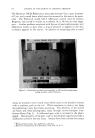
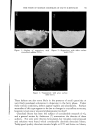
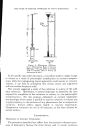
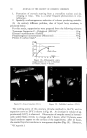
712 JOURNAL OF THE SOCIETY OF COSMETIC CHEMISTS because sunburn follows the reciprocity law of photochemical reactions as long as the energy gets above a certain threshold. There are, of course, problems with this test, such as "what constitutes 24 hours after a 30 second exposure, as compared to 24 hours after a 4 hour exposure ?" Protracted test exposures with sunlight are usually not feasible because of the rapid changes in the 2900 to 3200 A radiation from atmospheric factors (6, 7) as well as the geometric factors associated with change in angle of the sun in the course of the day. The ultraviolet response and the erythema threshold vary on different parts of the skin. It is, therefore, necessary to use multiple areas, not only for the differences in ultraviolet response, but because of their dif- ferences in natural skin oils and sweat rates. At the very least, it would seem important that the distribution of test areas should be randomized. Some tests of new sunscreen agents have been criticized on the grounds that the most effective agents seemed to be those that were tested nearest the spinal column where the angle of the sunlight would be slightly dif- ferent from the adjacent back and where the skin might be anatomically different. In spite of the fact that Blum's mathematical approach suggests that it is impossible to make meaningful tests of sunscreen preparations, from the practical standpoint, at least, comparative tests under given conditions will continue to be carried out. Some features of the sunburn reactions can be used to simplify testing. AREA REQUIRED FOR SUNBURN Sunburn is ordinarily not dangerous in small areas but may be uncom- fortable and may leave residual hyperpigmentation for many months. A person who volunteers for testing of a number of agents with 2 X 2 inch squares on his back may show the effect of his participation for months or even years. Because of this fact and because of our interest in the general operating characteristics of sunburn, Dr. Lester Bergeron and I at the University of Oregon Medical School, in previously unpublished studies, set out to see how small an area of sunburn could be used for test purposes. We used a number of metal templates applied to the skin through which we irradiated with an intense suniamp containing an A-H6 Mercury Lamp* filtered through an interference filter} which isolated the 2967 mercury line. The beam was approximately collimated, reducing some of the problems associated with the thickness of the metal plates we used as templates. With a thin brass template{ we found we can use a circle of * General Electric Co., Large Lamp Dept., Cleveland 12, Ohio. t Axler Associates, Inc., 102-42 43d Ave., Corona 68, L. I., N.Y. :• The author wishes to acknowledge the help of Mr. Henry Kayset who prepared this template and the apparatus for using the A-H6 lamp.
Purchased for the exclusive use of nofirst nolast (unknown)
From: SCC Media Library & Resource Center (library.scconline.org)