•. Soc. Cosmetic Chemists, I5, 7:27-743 (1963) THE USE OF CONSTANT-TEMPERATURE DILATOMETRY FOR THE STUDY OF SURFACE ANOMALIES OF FATTY SUBSTANCES By E. MAHLER, ING. CI-II:M.* Presented )•une 22-26, I964, Third Congress International Federation of Societies of Cosmetic Chemists, New York City ABSTRACT Surface defects of suppositories, lipsticks, eyebrow pencils, etc. may be due to one of the following: (1) Formation of crystals due to the presence of a foreign substance (2) Contamination by molds, fungi, etc. (3) Excrescence of solid fatty substances (4) Formation of wrinkles and (5) Exudation of liquid substances. The appearance of these surface defects is demonstrated photographically. A method for constant temperature dilatometry is described, and experimental data obtained by this procedure permit further insight into the causes of some of these surface defects. Techniques for the prevention of formation of surface defects are discussed. INTRODUCTION Recent experimental studies of several triglyceride bases used in the manufacture of lipsticks, eyebrow pencils and suppositories permitted ob- servations of numerous changes, such as bloom, etc., on the surface of these preparations. In order to reduce the incidence of these defects or to elim- inate them entirely, the conditions of appearance of these anomalies and their nature were studied. A variety of classical preparations, notably cosmetic sticks, pencils and pharmaceutical suppositories, were investigated. These preparations have one common feature: they consist largely of fatty acid esters, spe- cifically glycerides, with melting points ranging from +30 to d-52øC. In addition, they may contain emulsified or suspended liquid or powdered components. In view of the complexity of the formulas and multiplicity * Sociat• Gattefoss• SFPA, Lyon 3e, France. 727

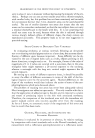
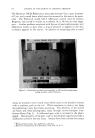
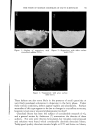
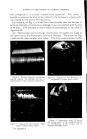
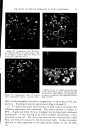
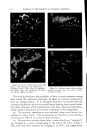
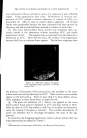
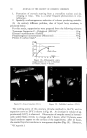
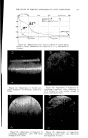
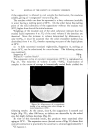
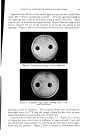
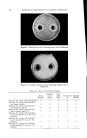
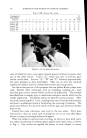
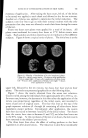
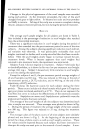
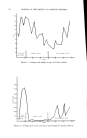
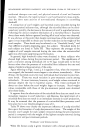
728 JOURNAL OF THE SOCIETY OF COSMETIC CHEMISTS of constituents of sticks, standard cocoa butter and an interesterified hy- drogenated palm oil were studied first. Although this paper is concerned primarily with suppositories, the data presented here are also applicable to sticks and pencils. The use of sup- positories in pharmacy is widespread. It may be recalled that they are generally obtained from a base mass (mixtures of fatty substances and ac- tives) by melting and pouring into molds of different types. On removal from the mold, the suppository is smooth and bright. Although it is de- sirable to retain this appearance, different surface defects become apparent after more or less prolonged storage. These defects may include spots, excrescences, exudates, circinate forms, bloom, etc., all of which may be due to different causes. Description of Surface Defects Two simple cases, which can be easily remedied, will be examined first., The third case, mentioned below, is the major concern of this presentation. 1. An almost complete coating of crystals on the suppository can some- times be found. These crystals are chemically not related to the fatty substances comprising the bulk of the suppository. Such a case is repre- sented in Fig. 1, which shows the appearance of the surface of a suppository containing caffeine. This sublimable substance, which originally was distributed throughout the mass, diffused to and crystallized on the sur- face. This behavior is not necessarily a characteristic of sublimable substances. Such a phenomenon can also occur if one of the components of the sup- pository is soluble in a solvent, as is the case with essential oils. This de- fect can often be avoided by enclosing the suppository in a hermetically sealed film which also touches the surface of the suppository, (e.g., alu- minum foil). 2. When the suppository contains aqueous solutions or extracts emulsi- fied or dispersed in the fatty substance, the surface defect might be either dull white spots (Fig. 2) or gray spots (Fig. 3). This defect is caused by mold, and the odor is always characteristic. The addition of an antifungal agent to the preparation generally corrects this condition. 3. Aside from the foregoing easily explained phenomena, there are more complex surface anomalies. They are excrescences due to the fatty substance itself, generally called bloom or liquid exudate. The formation of bloom (which is not necessarily white at the outset) is well known in chocolate manufacture. It has also been observed in cos- metic products, such as eyebrow pencils and lipsticks. The formation of surface defects is increased by the use of cocoa butter as the base (or of fatty substances or mixtures of fatty substances with analogous properties) and by storage at high constant temperature.
Purchased for the exclusive use of nofirst nolast (unknown)
From: SCC Media Library & Resource Center (library.scconline.org)