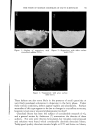
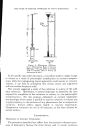
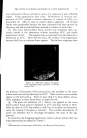
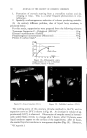
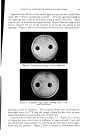
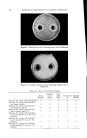
712 JOURNAL OF THE SOCIETY OF COSMETIC CHEMISTS because sunburn follows the reciprocity law of photochemical reactions as long as the energy gets above a certain threshold. There are, of course, problems with this test, such as "what constitutes 24 hours after a 30 second exposure, as compared to 24 hours after a 4 hour exposure ?" Protracted test exposures with sunlight are usually not feasible because of the rapid changes in the 2900 to 3200 A radiation from atmospheric factors (6, 7) as well as the geometric factors associated with change in angle of the sun in the course of the day. The ultraviolet response and the erythema threshold vary on different parts of the skin. It is, therefore, necessary to use multiple areas, not only for the differences in ultraviolet response, but because of their dif- ferences in natural skin oils and sweat rates. At the very least, it would seem important that the distribution of test areas should be randomized. Some tests of new sunscreen agents have been criticized on the grounds that the most effective agents seemed to be those that were tested nearest the spinal column where the angle of the sunlight would be slightly dif- ferent from the adjacent back and where the skin might be anatomically different. In spite of the fact that Blum's mathematical approach suggests that it is impossible to make meaningful tests of sunscreen preparations, from the practical standpoint, at least, comparative tests under given conditions will continue to be carried out. Some features of the sunburn reactions can be used to simplify testing. AREA REQUIRED FOR SUNBURN Sunburn is ordinarily not dangerous in small areas but may be uncom- fortable and may leave residual hyperpigmentation for many months. A person who volunteers for testing of a number of agents with 2 X 2 inch squares on his back may show the effect of his participation for months or even years. Because of this fact and because of our interest in the general operating characteristics of sunburn, Dr. Lester Bergeron and I at the University of Oregon Medical School, in previously unpublished studies, set out to see how small an area of sunburn could be used for test purposes. We used a number of metal templates applied to the skin through which we irradiated with an intense suniamp containing an A-H6 Mercury Lamp* filtered through an interference filter} which isolated the 2967 mercury line. The beam was approximately collimated, reducing some of the problems associated with the thickness of the metal plates we used as templates. With a thin brass template{ we found we can use a circle of * General Electric Co., Large Lamp Dept., Cleveland 12, Ohio. t Axler Associates, Inc., 102-42 43d Ave., Corona 68, L. I., N.Y. :• The author wishes to acknowledge the help of Mr. Henry Kayset who prepared this template and the apparatus for using the A-H6 lamp.

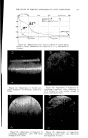
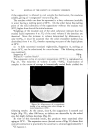
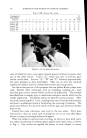
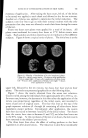
MEASUREMENT OF THE PROTECTIVE EFFECT OF SUNSCREENS 713 only to about 1 mm. in diameter without decreasing the intensity of the ery- thema. Perhaps one can use an even smaller area with a thinner template, with smaller holes, but this problem has not been examined, and certainly for convenience the fact that 5 mm. diameter areas can be used should be useful. The use of smaller diameter test areas also means that the test areas can be somewhat randomized, so that the test subject does not carry a residual checkerboard to the beach with him. It is not surprising that small test areas may be used, because when the skin is radiated through various sharply defined orifices of different shape, the sharp corners are reproduced accurately. This property leads us to our next suggestion in practical testing. SHAPE CODING OF DIFFERENT TEST VARIABLES In evaluating erythema at various intervals following an ultraviolet test or evaluating residual pigmentation at a later date, the accurate identi- fication of different spots becomes important. Some difficulty can be ob- viated by the use of shaped holes such as circles, ellipses pointing in dif- ferent directions, triangles and so on. For example, if areas of the order of magnitude of 3 X 3 inches are covered with a sunscreen, then in this area triangular holes might represent a 20 second exposure to the sunlamp, whereas a rectangle with the long axis vertical might represent the 40 second exposure. By setting up a series of different exposure times, it should be possible to assay the effect of different sunscreens in terms of the shift of the bio- logical response curve by the sunscreen agent. Marked differences in the slope of the erythema would then indicate the action of some of the com- plicating features which were discussed above. The problem of masking test areas has never been adequately solved. Most investigators use adhesive tape masks. The only trouble with this is that the application of adhesive tape to the skin and its removal is a stand- ard means of producing injury to the skin with associated erythema. Therefore, the comparison of the irradiated area with the immediate ad- jacent masked control area involves possible error from the masking. As far as I know, no systematic study of the magnitude of this error and how to avoid it has been made. GRADING, MEASURING, AND INTERPRETING THE F, RYTHEMA RESPONSE Erythema is evaluated by its presence or absence, by relative ranking, by comparison with visual standards such as the Munsell standards, or by measurement with a reflectance spectrophotometer or a reflectance meter.
Purchased for the exclusive use of nofirst nolast (unknown)
From: SCC Media Library & Resource Center (library.scconline.org)