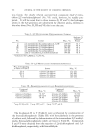
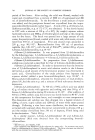
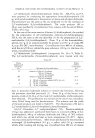
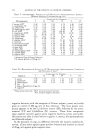
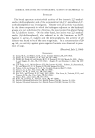
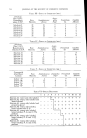
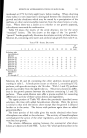
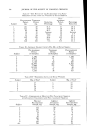
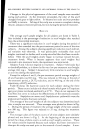
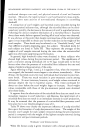
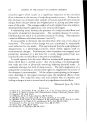
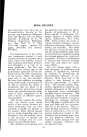
EFFECTS OF AFTER-SHAVE LOTIONS ON SKIN FLORA 753 incubated at 37øC for forty-eight hours before reading. When observing these tubes it is very important to distinguish between the cloudiness due to growth and the cloudiness which may be caused by a precipitation of the perfume or other water-insoluble materials from the shave lotions or solu- tions. Where there was a doubt as to whether or not growth appeared, sub-cultures were made for confirmation. Table VI shows the results of the serial dilutions test for the seven "standard" lotions. The line drawn at the edge of the "no growth"- "growth" border graphically illustrates the relative activity of these lotions. Solution//1, containing only water and alcohol, had growth from tube 4 on. TABLE VII--SEkIAL DILUTIONS 1 2 3 4 5 6 7 8 9 10 11 12 13 15 (Con- 14 trol) Solutions plus benzalkonium chloride Solution #1 Solution #2 Solution #3 4- 4- 4- 4- 4- 4- Solution #4 + + + + 4- + 4- Solution #5 - Solution//6 - Solution #7 Solutions plus hexachloro- phene #1 through #7 ..... 4- Solutions //2, //3 and #4 containing the other additives showed growth starting in tube 5. A break point occurs at solution 5, containing 0.75% perfume, with growth starting in the 7th tube. With 1.5 and 3% perfume growth was evident from the eighth tube on. These tests showed no differ- ence in the growth pattern between the solutions containing 1.5 and 3% perfume. These serial dilution tests offer a precise method for measuring differences in activity of these various lotions and ingredients. The upper portion of Table VII shows the previously described seven solutions, this time with added benzalkonium chloride. Here the picture is similar to that with the lotions above except that the growth is delayed further on in the series. The lotions with perfume again show an added germicidal effect. The lower portion of this table gives the results obtained when hexa- chlorophene was added to the solutions. The activity of hexachlorophene overshadowed the action of the other ingredients, and all of the solutions were free from growth. The relative differences existing between the commercial after-shave lotions are depicted in Table VIII. Lotion "B," which performed best in the

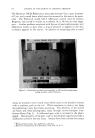
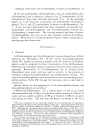
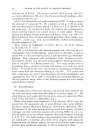
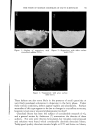
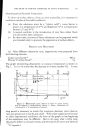
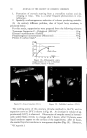
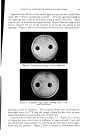
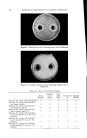
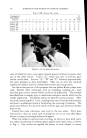
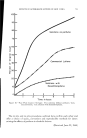
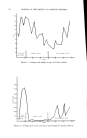
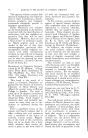
754 JOURNAL OF THE SOCIETY OF COSMETIC CHEMISTS TABLE VIII--SERIAL DILUTIONS Commercial 15 After-Shave (Con- Lotions 1 2 3 4 5 6 7 8 9 10 11 12 13 14 trol) Lotion "A" Lotion "B" -- Lotion "C" -- -- -- Lotion "D" Lotion "E" 4- 4- 4- 4- + + + + 4- 4- 4- Figure 5.--In vivo plate inoculation. zone of inhibition tests, once again showed greater inhibitory powers than any of the other lotions. Lotion "C," which was next in activity, gave similar results here. Lotions "A, .... D" and "E" followed approximately the same patterns as they had before. Thus two in vitro test methods confirm the relative activity of after-shave lotions and components. For the in vivo portion of this program the new plastic Rodac plates were used. Several other techniques such as swabbing, washing, etc., were tried but gave erratic results which could not be duplicated. The method described here is simple, easy to administer and gives results which can be readily duplicated. The Rodac plates are ideal for several reasons. They are small, measuring 60 X 5 min., making them easy to handle and incubate, and have a molded grid pattern facilitating the counting of colonies. The plates were filled to the top with sterile nutrient agar and allowed to harden prior to use. Twenty-five male volunteers took part in the test series. They were instructed to shave as usual each morning but not to use any after-shave lotions or soaps containing antibacterial agents. When the subjects reported each morning, an initial or base level count was taken by pressing a hardened plate against each cheek area, as shown in Fig. 5. One technician applied the plates to each subject to assure
Purchased for the exclusive use of nofirst nolast (unknown)
From: SCC Media Library & Resource Center (library.scconline.org)