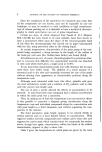
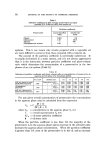
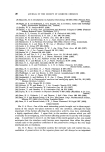
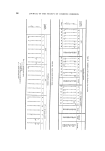
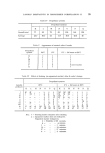
36 JOURNAL OF THE SOCIETY OF COSMETIC CHEMISTS SUMMARY After 1 hour at 20øC Liquid parajfin, B.P. (Systems K-N Table I) The solubility of the lanolin products is fair to good, with the exception of alcohol solution lanolin (iv), water soluble lanolin "75" (ix), and water soluble wool alcohols "20" (x). The addition of industrial methylated spirits effects complete solution of all products, with the somewhat sur- prising exception of water soluble lanolin "75" (ix). The different effects of the various propellant systems are not as marked as might have been expected from the results obtained previously (1). In two instances--wool alcohols, B.P. (ii) in the propellant 12/liquid paraffin, B.P. system (K), and liquid lanolin "L.I.N." (viii) in the propellants 11/12/liquid paraffin, B.P. system (M), the results are contrary to expectation. Water (Systems O-Q Table I) The solubility of the lanolin products is poor in the water-based systems with the exception of water soluble lanolin "75" (ix), and water soluble wool alcohols "20" (x), but even the last two products are not completely soluble. The system containing propel/ant 114 (P) is inferior to that containing propel/ant 12 (0) with only one product, wool a/cohols, B.P. (ii). Replacing the halogenated propellants with butane does not have a con- sistent effect. With three products--wool alcohols, B.?. (ii), alcohol soluble lanolin (iv), and liquid lanolin "L.I.N." (viii), the solvent power of system Q (butane/IMS/water) is superior to that of system 0 (propellant 12/IMS/water) and system P (propellant 114/IMS/water). With two products, liquid lanolin "ISO" (vi) and liquid lanolin "R.I.C.2" (vii), its solvent power is inferior to those of systems 0 and P. With four of the products its solvent power is equal to those of systems 0 and P, and with one product, anhydrous lanolin, B.P. (i) its solvent power is equal to that of system 0 which in turn is superior to that of system P. Storage for 6 weeks at 20øC Liquid parajfin, B.P. (Systems K-N Table II) The solvent power of these systems has decreased somewhat. Some. changes in solubility of the lanolin products have occurred, notably with anhydrous lanolin, B.P. (i), with wool alcohols, B.P. (ii), and with liquid lanolin "A.C.E." (iii). The solubility of liquid lanolin "R.I.C.2" (vii) in the propellant 114/liquid paraffin B.P. system (L) has improved on storage.

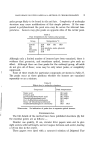
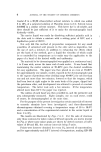
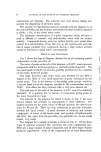
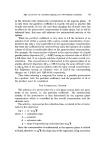
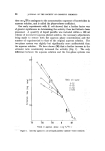
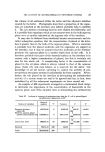
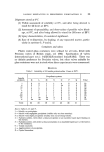
LANOLIN DERIVATIVES IN PRESSURIZED FORMULATIONS II 37 Crystal formation occurred with water soluble wool alcohols "oe0" (x) in the paraffin/alcohol system (N). Water (Systems O-Q Table H) The solvent power of the two systems incorporating halocarbon pro- pel!ants (O,P) has decreased marginally, while that of the butane system (Q) has increased to a similar extent. In general there have been only minor changes in solubility during the test period. Crystal formation occurred with wool alcohols, O.P. (ii) in both halocarbon propellant systems (O,P). Storage for 6 weeks at OøC The solvent power of all seven propel!ant systems decreased (Table II). In all propellant systems there is a marked decrease in the solubility of anhydrous lanolin, B.P. (i), and a moderate decrease in the solubility of liquid lanolin "R.I.C.2" (vii). With the other eight products, the decrease in solubility is almost negligible when compared with that obtained after six weeks' storage at 20øC. Agglomeration of separated matter is more prevalent. Storage for 6 weeks at OøC, followed by storage for 24 hours at 20øC In general, the solubilities are similar to those noted after storage for 6 weeks at 20øC, with the exception of liquid lanolin "R.I.C.2" (vii) in the presence of propel!ant 114 systems (L) and (P). Spray results (Table VI) Spray failure occurred only in systems incorporating propellant 114. (L),(P), and was generally caused by agglomerated particles jamming in the valve housing. Anhydrous lanolin, B.P. (i), liquid lanolin "A.C.E." (iii), liquid lanolin 'TS.O." (vi), liquid lanolin "L.I.N." (viii) did not cause valve blockage in any of the propellant systems tested. Spray characteristics Table III indicates that quick-breaking foams were obtained with wool alcohols, B.P. (ii), and alcohol soluble lanolin (iv) in propellant 114/IMS/ water (P), and in butane/IMS/water (Q) systems. Also with water soluble alcohols "20" (x) in the propellant 12/paraffin system (K). With wool alcohols, B.P. (ii) a stable foam on impingement was obtainable. Effect of shaking on separated matter All containers were shaken for • minute and the time taken for the
Purchased for the exclusive use of nofirst nolast (unknown)
From: SCC Media Library & Resource Center (library.scconline.org)