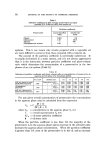
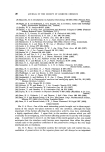
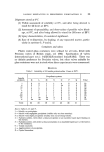
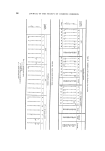
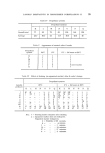
38 JOURNAL OF THE SOCIETY OF COSMETIC CHEMISTS settling of the redispersed matter was noted. The results are detailed in Table VI. CONCLUSIONS By adding the numbers in Tables I and L/ both horizontally and vertically, a total for each individual lanolin product in all propellant systems is obtained, together with a total for each individual propellant system containing all lanolin products. The lower the total, the better the solubility or solvent power. Liquid lanolin "50 Super" (v) was found to be the most soluble product, whereas anhydrous lanolin, B.P. (i), wool alcohols, B.P. (ii), alcohol soluble lanolin (iv), and water soluble lanolin "75" (ix) are almost identically least soluble. The solubility of anhydrous lanolin, B.P. (i), wool alcohols, B.P. (ii), liquid lanolin "A.C.E." (iii), and water soluble lanolin "75" (ix) in the various propellant systems decreases on storage, whereas that of liquid lanolin "50 Super" (v) increases during the storage period. As might be expected, only water soluble lanolin "75" (ix), and water soluble wool alcohols "20" (x) are moderately soluble in the aqueous systems (O-Q), but the limited extent of this is somewhat disappointing. Storage at 0øC materially affects the solubility characteristics of anhydrous lanolin B.P. (i), and of liquid lanolin "R.I.C.2" (vii). Propellants 11/12/liquid paraffin/IMS (N) was found to be not only the best propellant system in respect of solvent power, but also far superior to all the other six propellant systems, the solvent powers of which decreased on storage, as will be seen from Tables I and !I, The results obtained with the propellant 114/IMS/water system (P) should be treated with a certain amount of reserve because of the irre- versible separation into two liquid phases recorded after 6 weeks' storage at OøC (Table V). (Received: 7`1th June 796,t) REFERENCE (1) Herzka, A. J. Soc. Cosmetic Chemists 14 331 (1963).

Book reviews ANNUAL REPORTS ON THE PROGRESS OF CHEMISTRY FOR 1963. Vol. LX. Pp. 681 (1964). Chemical Society, London. 40s. The Chemical Society's "Annual Reports" must be familiar reading to most chemists. This annual publication presents a superb, very concise review of the world's literature on chemistry compiled by a panel of distinguished contributors. Inevitably the latest edition is a little larger than its predecessors. This volume follows the general pattern of earlier editions in being divided into six main sections: General and Physical, Inorganic, Organic, Biological, and Analytical Chemistry, and Crystallo- graphy. The first two reports are concerned with ionic solutions: Firstly the equilibrium properties of electrolyte solutions, and secondly, kinetic process, in solution particularly electron and proton transfers. The third report deals with photochemical and photosensitized reactions and is the first since 1950 in this field where exciting new developments are taking place. Reports follow on homogeneous liquid phase polymerization, infra-red and raman spectroscopy, mass spectrometry and microwave spectroscopy of gases. The section on Inorganic Chemistry gives an overall coverage of the typical elements, the transition elements and complexes. The usual chemical groups and synthetic methods are surveyed in the section on Organic Chemistry and, in addition, reports deal with reaction mechanisms, studies of equilibria, physical properties and structure, alka- loids, steroids, carbohydrates, amino-acids and peptides. Steroids are dealt with rather more thoroughly than they have been in recent years, and notable developments include those in allene chemistry, synthesis in the terpene field and recent work on pituitary hormones. Four reports are presented under Biological Chemistry which now- includes proteins and peptides, formerly dealt with in the organic section. Other reports are on heteromeric saccharides, action of thyroid hormones, and the structure and function of ribosomes in protein biosynthesis. 39
Purchased for the exclusive use of nofirst nolast (unknown)
From: SCC Media Library & Resource Center (library.scconline.org)