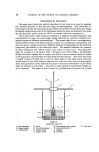
42 JOURNAL OF THE SOCIETY OF COSMETIC CHEMISTS from engineering practice or the packaging industry itself, are of colloquial origin and, as the compiler points out in his preface, it may be "exceed- ingly difficult to determine the appropriate equivalent in many of the other languages." Alternatively, artificial creations--which may be mean- ingless if literally translated without reference to the rationale of their evolution--are frequently assimilated, subject only to inflexion, into the technical patois of other tongues. The compiler has selected 263 English words and phrases that he considers basic to the field. In the first part of the Lexicon these are marshalled into six groups, thus (I) contains general terms including varieties of phase and spray systems these are followed by detailed terminology for (II) containers, (III) valve assembly and (IV) filling tech- niques group (V) has a few terms for propellants, and in (VI) are to be found 55 phrases likely to be employed in discussing laboratory equipment and methods. Each term as it appears is immediately rendered into, in most cases, 20 other languages, viz. French, Italian, Spanish, Rumanian, German, Dutch, Norwegian, Swedish, Danish, Russian, Czech, Serbo- croatian, Slovenian, Bulgarian, Hungarian, Finnish, Greek, Hebrew, Arabic and Japanese. The printers are to be complimented on the clarity with which they have set the variety of non-Roman scripts included in this list. In the next section, short definitions are given for 38 of the more important phrases appearing in the Lexicon. Many of these definitions were first published in the compiler's earlier book (1) or in an industrial glossary (2) but are usefully reiterated. Whilst the majority would find general acceptance, a few minor criticisms could be made. Thus, the choice of 105øF (40øC) as an arbitrary temperature for distinguishing "propellant" and "non-volatile ingredients" is debatable. Then, in defining "headspace" and "ullage," it would have been better to qualify "volume- in-dispenser" as "available volume," with suitable cross-references to the more precise definition given for "capacity." Finally, at the risk of appearing to cavil, it may also be observed that the now truly international word "aerosol" is given only its strict, scientific definition, despite current usage as both noun and adjective in connection with the release of coarse or fine sprays and pressurized powders. The wider sense is, however, implicit in the subsequent definition of "aerosol packs." The definitions are followed by eight neat drawings, which clearly illustrate many of the structural terms translated in the first section. Then to complete the book, there is for each of the 21 languages an alpha-

BOOK REVIEWS 43 betical index giving the code number under which every term appears. These indices materially enhance the value of the Lexicon to the non- English-speaking user. Whilst it is difficult to check the accuracy of the cited equivalents in many of the tongues, it is in the relevance and adequacy of the words and phrases selected that the Lexicon demonstrates its worth. All are terms recognized in United Kingdom practice whilst some purists might object to such American infelicities as "go-no-go gauge" and "unscrambler," these phrases are nevertheless widely used. In passing it is noted that the compiler acknowledges, as indeed does Webster (3), both spellings of propell(a/e)nt. As is well known the "a" version, traditionally employed for solid fuel propulsion, has been widely adopted by the aerosol filling industry and followed by a number of the specialist journals, whilst the alternative spelling is recommended by the British Standards Institution and has been used for many years by the largest producers of halocarbon propellents (sic) both in the United Kingdom and the U.S.A. Today, authorities in many countries are showing interest in regulations regarding safety in production, distribution and use of pressurized (aerosol) dispensers (4-6), whilst national and international agencies variously con- sider standard specifications and procedures. Accurate and unambiguous translation of specialised terms at international meetings and working groups is therefore particularly important this Lexicon has already proved useful for that purpose. It might be even more helpful if the compiler could be persuaded to include the equivalent abbreviations for some of these terms when a revised edition appears. It is concluded that this Lexicon is a timely and valuable contri- bution to the consolidation and further expansion of a vigorous industry. G. F. PHILLIPS. REFERENCES (1) YIerzka, A. and Pickthall, J., Pressurised Pachaging (.4erosols). 2nd edn. (1961) Butter- worth & Co: London. (2) Glossary of Technical Terms The Metal Box Company: London. (3) Webster's New Internationa• Dictionary, 2nd edn. (1961) G. Bell & Sons Ltd.: London. (4) Phillips, G. F. J. $o•. Cosmetic Chemists 14 357 (1963). (5) $•e½ialities 1 34 (December 1964). (6) Schuddeboom, L. J..Mfg. Chemist zlerosol News 3• 82 (July 1964).
Purchased for the exclusive use of nofirst nolast (unknown)
From: SCC Media Library & Resource Center (library.scconline.org)