66 JOURNAL OF THE SOCIETY OF COSMETIC CHEMISTS scientist, Lloyd K. Riggs. With Dr. Riggs, Hal worked on anesthesia, and soon he delivered his first technical paper, before the Biological Chemical division of the American Chemical Society in Baltimore in 1925. Hal's discourse was on the anesthetic effects of propylene, and he was complimented on it by a pioneer of American physiological chemistry, A. P. Matthews. Soon after, at the Thirteenth International Physiological Congress at Boston, Hal had the pleasure of meeting such other historic figures as T. C. Koch, Shiro Tashiro, and E. C. Kendall, and he will never forget his good fortune in meeting and chatting with the famous Pavlov, after which the great Russian physiologist pre- sented him with an autographed photo of himself. At Squibb's, Hal also studied the auto-oxidation of ether and de- veloped methods for determining peroxides, dissolved oxygen, and ai- dehyde in ether which formed the basis of valuable patents. Hal left Squibb's to become director of White Laboratories, where he studied the effects of vitamins A and D on rats. Here he showed his ingenuity by developing methods for measuring vitamin deficiencies and for photo- graphic recording of rickets. An early rapport was established with F.D.A. scientists when Dr. E. M. Nelson visited White Laboratories and asked Hal to write a letter substantiating the advantages of air- conditioned animal rooms. In this period, Hal obtained valuable ex- perience as part-time instructor in biological sciences at Rutgers Uni- versity College of Pharmacy in Newark. From White, he went to the Mennen Company as chief chemist, where he straightened out many formulas that had been causing production problems. Hal then be- came manager of the Jacqueline Cochran cosmetic firm, where he de- veloped a full line of high quality treatment cosmetics and became fa- miliar with all phases of the cosmetics business. While at Cochran, he was chosen as a member of the Toilet Goods Association Board of Directors, and on June 1, 1942, he resigned from Cochran to accept the position of Scientific Director of T.G.A. In his 22 years at T.G.A., Hal has made full use of his early training in hard work and thorough scientific methods to promote in the cosmetic industry an awareness of the need for good cosmetic chemists in de- veloping products that are safe, efficacious, and elegant. The members of the S.C.C. have indeed been fortunate in having a man of Hal's scientific competence and persuasive powers in a position where he has the ear of almost every cosmetics firm executive. The cosmetic in- dustry has been singularly blessed in having a man who commands the respect and trust of key F.D.A. scientists and who can smooth the path

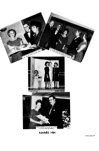
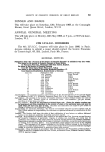
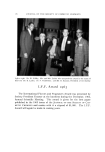
FIFTEENTH MEDAL AWARD 67 Mr. Robert Kramer (1.), President of the Society, presenting Medal to Mr. Harold D. Goulden (r.) at the 1964 Medal Award Dinner to agreement on technical requirements for cosmetic materials and products. Many of Hal's efforts on behalf of chemists and the cosmetic in- dustry have., of course, been confidential and may never be recorded. One of his better known achievements has been the issuance of specifi- cations for over 100 cosmetic materials. These T.G.A. Standards have become the industry's guide in purchasing ingredients that are pure, safe, and reliable. Each standard is the result of considerable cooperative effort of suppliers, users, and several cosmetic laboratories in developing, assembling, and agreeing upon the criteria to be used. Hal has organized this effort and has thus created a lasting monument that will long be used throughout the industry. Everyone here knows of the crisis precipated by the recent F.D.A. drive on colors and other cosmetic ingredients. Hal's level-headed and expert services have been invaluable in this situation. His reputation at F.D.A. has won there the acceptance and approval of many reports and data that might have been refused if less ably presented. He has negotiated the approval of the test procedures now being used to deter- mine the safety of cosmetic colors. He has organized the effort to gain acceptance of 44 non-coal tar color additives. He directed the adop- tion of new specifications for the halogenated fluoresceins, obtaining from F.D.A. many concessions favorable to the industry. Hal's ser-
Purchased for the exclusive use of nofirst nolast (unknown)
From: SCC Media Library & Resource Center (library.scconline.org)