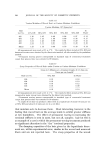
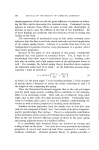
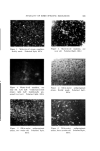
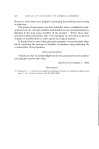
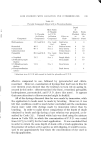
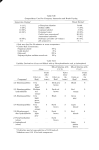
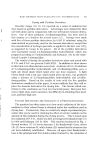
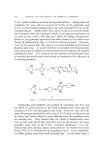
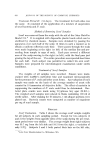
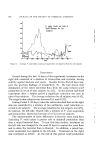
592 JOURNAL OF THE SOCIETY OF COSMETIC CHEMISTS the disadvantage of all. Despite the reluctance of scientists to publish data of unplanned and unorganized observations, this is a field in which such pragmatic information on usually complex systems can be valu- able, especially in supplementing basic research on simple emulsions such as exemplified by the recent paper by Sherman (1). As an ex- ample of such information, this paper presents a trio of case histories out of the daily effort under the pressure caused by the usual urgency of the cosmetic marketing situation. CASE HISTORIES Many varieties of emulsions have two types of emulsifier systems working in conjunction: the primary system, either anionic, cationic, or nonionic, which serves to emulsify by interfacial action, and a second- ary system, consisting of agents which act as stabilizers due to viscosity building or gelling action on one or more components of the emulsion system. Among the latter are such crystalline materials as glyceryl monostearate, cetyl alcohol, and beeswax, this last one being a combina- tion of both an anionic primary emulsifier and a gelling agent. It is with the use of these materials, whose value has made them generally used but whose crystalline properties pose special stability problems, that this discussion is concerned. All photomicrographs included in this paper are Polaroid photo- graphs taken from 35 mm Agfachrome color slides. The latter were made on a Zeiss Universal Microscope using polarized light at a 165X magnification. Where a scale is shown on the picture, each division corresponds to 6.5 •. Water-in-Oil Cream The first case concerns a water-in-oil cream emulsion, utilizing a beeswax-borax emulsifier system. Despite a good gross stability record in the laboratory, the pilot-plant-processed product demonstrated an alarming tendency to develop a grainy texture after a few months of storage, which was quite variable in its extent from batch to batch. The product was processed in the plant in the usual manner, the final emul- sion being milled in an Eppenbach Colloid Mill* at a narrow setting after cooling to slightly above room temperature and then further cooled to room temperature. Figure 1 is a photomicrograph of the finished cream when just a few days old. The occasional large agglomerates and a wide range of ir- * Gifford-Wood Co., Hudson, N.Y. 12534.

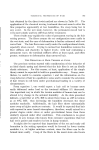
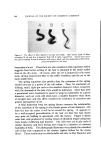
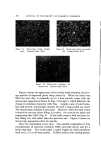
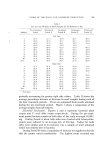
STABILITY OF SOME SPECIFIC EMULSIONS 593 ß • i•o. ß ' • ..,.$.• .. ,. • •.• . '- • ..' ,• • ' •'• 9 .• c?:' ¾'• ,4.•,,*•' g.-• •.' :7 -' • ß ,, . ... •. •' .. •, ), •' •, ?• . . Figure 1. Water-in-oil cream emulsion, freshly made. Polarized light, 165X .•..•: • •.•...• '•"' '' • • ' '" :--• .. .$.• ....... ß •{..:• :• ,•'.• . •' -' . •. '/•' .::. %' 4' Figure 2. Water-in-oil emulsion, one year old. Polarized light, 165X Figure 3. Water-in-oil emulsion, one year old. Left half: Votator-processcd cream right half: traditionally pro- cessed (see text). Polarized light, 165X -• --•, • :' . .... • .::• .. .... Figure 4. Oil-in-water antiperspirant cream, freshly made. Polarized light, 165 X - '": ' .•' •'.. ' .. ,' .,,t.• .' "•/-. - ' ' ß .. .:: •.. : .- :.:.. . ?:...'. ".'.' !i :--:.L. ': -.. :•_•..:.....- •.•..• -:-.:: ,..-.:. :-.?• .:..: . ".. - • -..:•.....:• •. :..?. :.. •:.'. • . ..:.-.:...• .:•.", ... --:: ß .. . ':2:.::,7"-,. ':. :.:.•:..:':.y-/:... ". .... '7:: '"' /• -' •:'•-•..-...,-..7% '' ...... :.'.• ',•-. .,... ß , ..... .......:.-..:: •.. :• .,.- .. *•:'•- ,,.• .... • /... .......--.... '. . • ,. '-.. . ....... .•.:..•,,. ß - / ..-•' ..: ... -?. •:•.• . -. •'• ,, - ,•,. ,*. -.::. - -•:•. • •,.....• • ½ . •. ½• , '•.' • ß .•.• • ß i •,• ' Figure 5. Oil-in-water antiperspirant cream, two weeks old. Polarized light, 165X .::.• • ..... •½ .,.' •. : ::..:• ...• .: :. i Y:L'". ß • ........,• . .... - : ....... , .:•. ..... ... :• •..... .... .'t• ' "'"" '""J' •.• 2'•. .g •"'• ... .• •."½. :.•. ß ß ......, •. 7 .... - . . . ... Figure 6 Oil-in-water antiptrspirant cream, three months old. Polarized light, 165X
Purchased for the exclusive use of nofirst nolast (unknown)
From: SCC Media Library & Resource Center (library.scconline.org)