J. Soc. Cosmetic Chemists, 18,609 628 (Sept. 16, 1967) Hair Coloring with Oxidation Dye Intermediates HAROLD H. TUCKER, Ph.D.* Presented before the New York Chapter, November 2, 1966 Synopsis--Data on patents for 33 primary intermediates and 20 color modifiers were collected from the literature. The effect of structure on shade, depth of color, light fastness, and solu- bility was determined for each product. The effect on color, depth of shade, and light fast- ness of dyeing mixtures of each of the 20 color modifiers with equimolar quantities of 3 pri- mary intermediates is reported. It is shown that by proper selection of color modifier the shade may be varied, the depth of color greatly increased, the fastness to light increased many fold, and the tendency to turn red on aging decreased. By using the formation of Bandrowski's base from oxidation of p-phenylenediamine as a tool the percentage of conversion to the colored form was shown to be only slightly more than 5% under the conditions normally used for dyeing hair. The effect of various factors on this yield is reported. The results of using five recently described pyridine derivatives are tabulated and dis- cussed. INTRODUCTION Oxidation dye intermediates account for a major share of the hair dye market today. These dyes differ from the usual textile dyes in that, with the exception of the nitro dyes, they are colorless or nearly colorless products which form dyes upon oxidation. According to Heald (1), the intermediates, because of their small size, are able to penetrate into the hair fiber where they undergo oxidation. This converts them into dyes which, because of their increased size, are trapped in the fiber. In other words, during the use of the oxidation dye intermediates, dye manufac- turing occurs within the hair fiber. * 14 Chesterfield Road, Scarsdale, N.Y. 10583. 609

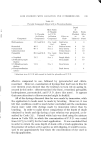
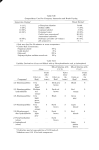
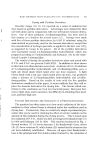
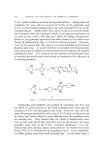
610 JOURNAL OF THE SOCIETY OF COSMETIC CHEMISTS Wilmsmann (2) has demonstrated that there exists a critical molec- ular size which is important for the penetration of hair. He showed that, under conditions used in hair dyeing, globular molecules having a diameter of more than 6 A are prevented from penetrating into the hair cortex by a barrier near the hair surface. The intermediates used in oxidative hair dyeing vary in diameter from 4.7 A for p-phenylenediamine to 5.6 A for p-aminodiphenylamine, well under this critical molecular size. Although the first patent for the use of p-phenylenediamine in dyeing hair was granted to Erdmann (3) in 1883, the commercial de- velopment of this class of dyes took place largely in the fur industry. Kass (4) has classified oxidation hair dyes as: i, primary inter- mediates which yield colors on oxidation ii, color couplers or modifiers which do not form dyes on oxidation but do produce color changes when used with primary intermediates and iii, nitro derivatives which do not depend upon oxidation for the production of color but are limited to shades of yellow, red, and orange. In this work the primary inter- mediates have been divided into derivatives of p-phenylenediamine, o-phenylenediamine, p-aminophenol, o-aminophenol, and diphenyl- amines and the color modifiers into derivatives of rn-phenylenediamine, rn-aminophenol, hydroxyphenols, and naphthols. The nitro compounds are included in the classification corresponding to their structure. An attempt has been made to include all of the important intermediates used for oxidative hair dyeing along with pertinent data, some of which were collected from the literature and the balance determined in this laboratory. METHODS AND RESULTS In order to determine standard practice in this country, ten com- mercially available black oxidation dye solutions, products of the recog- nized leaders in this field, were purchased. All of them were solutions of low viscosity which thickened upon the addition of the oxidizing agent. For nine of these products the user was directed to add an equal quantity of 6% hydrogen peroxide just prior to application. Directions for the tenth product called for the addition of a solid material from a packet which contained both the oxidizing agent and a thickening agent. Ac- cording to the directions furnished by the manufacturers, the dyeing times varied from five minutes to forty-five minutes. The pH of these products, after the addition of the oxidizing agent, varied from 9.,5 to 10.2, with an average of 9.7. It has therefore been concluded that, in this country, it is common practice in oxidation hair dyeing to use a pH
Purchased for the exclusive use of nofirst nolast (unknown)
From: SCC Media Library & Resource Center (library.scconline.org)