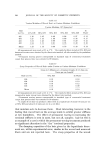
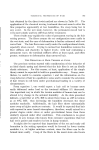
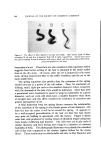
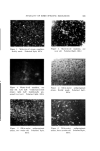
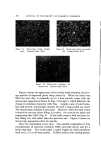
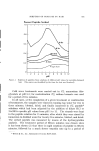
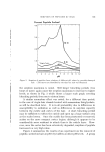
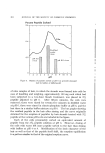
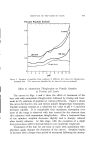
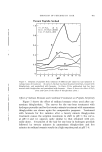
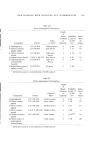
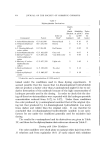
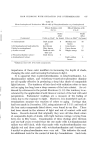
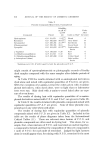
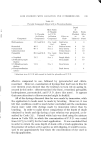
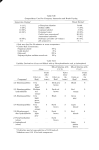
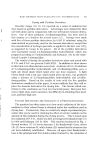
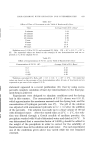
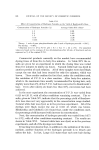
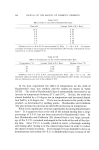
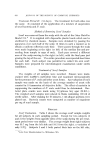
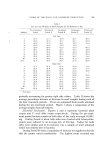
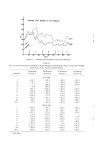
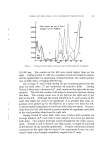
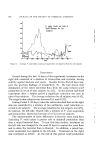
FLORA OF THE SCALP AND DANDRUFF PRODUCTION 637 on the left side was reduced in seven of ten subjects. The average reduction was 16.8% from pre-treatment levels. On the right side scurf production continued to lessen, averaging 52.6% in all subjects. This represented an increased reduction of 22% over Period A. During Period C (14 days) treatment on the right side continued as before, but antibiotic treatment on the left side was omitted entirely. A mixture of P. ovale cells and bacteria was applied daily. The right side showed a definite leveling off in scurf production with only a 3% decrease from Period B. Previous studies (9) had shown that threshold levels were established for different individuals and that it was impos- sible to lower scurf production below certain levels by eliminating the microbial flora. A reduction was also seen on the left side (19% from Period B) despite the application of a microbial flora. Two explanations can be offered for this. The first is that the residual effect of nystatin treatment was carried over into Period C and prevented the establish- ment of a substantial yeast flora. The second is that the mixture of antibiotics applied on the right side exerted a similar suppression effect due to a possible carry over from right to left side. Microbiological studies of the scurf from both sides (Figs. 1 and 2) showed no significant increase in the microbial flora during this time. For this reason all antibiotic treatment was stopped, and a mixed microbial flora was applied to the entire scalp. After 14 days (Period D) when the experiment had to be terminated, it was apparent that scurf production was beginning to increase, particularly on the left side (Fig. 1). This period was too short to show definitely how soon scurf values would return to pre-treatment levels. VanderWyk (9) observed that under similar conditions a lag period of about 21 days passed be- fore a significant rise in scurf production was evident. Observations on Individual Subjects. Variations in results were noted among several individuals taking part in the experiment. Of the ten subjects six showed a pattern of scurf production previously described. Two subjects (4 and 8) had very low pre-treatment scurf values of 20.2 mg and 26.0 mg per sample respectively on the left side. Neither sub- ject showed any visible dandruff problem, and their scurf production did not appear to be significantly affected by antibiotic treatment. One subject (5) showed little or no change in scurf production on the right side during the first 66 days despite the continuous use of nystatin. On the left side, however, there was an increase of 95%. Microscopic studies of the scurf indicated an increase in P. ovale counts during all four treatment periods on both sides. During Period B the averaxe

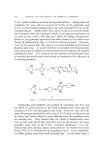
638 JOURNAL OF THE SOCIETY OF COSMETIC CHEMISTS counts were 60 per field on the right and 65 per field on the left side. A nystatin resistant organism was indicated. Confirmation of this was made when a culture of P. ovale was isolated from the scalp and subjected to sensitivity studies. Only one subject (10) showed any sig- nificant decrease in scurf production on the left side during Period A. The reduction was 26%. This same subject showed a reduction of 49.9,% on the right side which was treated with nystatin. SUMMARY AND CONCLUSIONS 1. A half-.head experiment was carried out on ten subjects in which the application of a mixture of tetracycline and nystatin to the right side of the human scalp resulted in a reduction of 56.4% in dandruff production after 66 days of treatment. 2. The left side of the scalp was treated with tetracycline for 26 days and then with nystatin [or 26 days. The effect of these separate treatments upon dandruff production was compared with the effect of the combined treatment on the right side. Tetracycline was used to control the bacterial flora, nystatin to control yeasts (including P. ovale) and a mixture to control the entire flora. 3. Treatment with a tetracycline-nystatin combination on the right side during the first 26 days resulted in a 30% reduction in dan- druff in six subjects. During the same period a 9.1% increase in dan- druff was seen on the left side when the bacterial flora was suppressed with tetracycline but the yeast flora was encouraged to flourish. 4. During an additional 26 day period, a tetracycline-nystatin combination treatment on the right side resulted in a 52.6% reduction in scurf production in eight subjects. During this same period when the left side was treated with nystatin instead of tetracycline scurf production was reduced by 16.8% from pre-treatment levels in seven subjects. 5. These results indicate that the presence of a yeast flora in the scalp, principally P. ovale, has a greater influence upon dandruff pro- duction than does a bacterial flora in the majority of individuals studied. Eight subjects showed scurf productions which were lower when the scalp was treated with nystatin than when treated with tetracycline. The final results also showed that for best control of dandruff the entire microbial flora should be suppressed. 6. There were variable results among individuals. Two subjects with low pre-treatment scurf values and no obvious dandruff problems
Purchased for the exclusive use of nofirst nolast (unknown)
From: SCC Media Library & Resource Center (library.scconline.org)