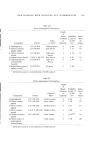
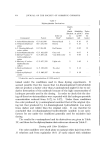
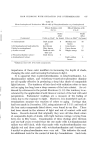
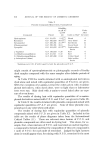
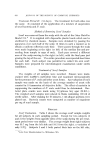
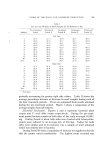
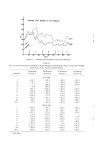
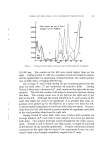
FLORA OF THE SCALP AND DANDRUFF PRODUCTION 639 did not respond with a significant reduction in scurf production. Another subject harbored a nystatin resistant P. ovale in his scalp. As a result scurf production on the left side increased by 89% after 79 days. 7. It was not possible under the conditions of the treatment to produce microbial-free scalps in any subject. 8. The results clearly demonstrated the beneficial effect of antimi- crobial agents in the control of dandruff. The use of agents having broad spectrum activity, particularly against yeasts is important. This work suggests further studies in the use of long-acting, substantive, penetrating creams and dressings. Such an approach, combined with periodic use of medicated shampoos, seems to offer the best solution to the dandruff problem. (Received November 30, 1966) REFERENCES (1) Roia, F. C., VanderWyk, R. W., and Beal, J. A., The human scalp as a habitat for yeasts, J. Soc. Cosmetic Chemists, 14, 81 (1963). (2) Beal, J. A., Isolation and identification of aerobic bacteria from the human scalp, Master of Science Thesis. Massachusetts College of Pharmacy, Boston (1962). (3) Epstein, J. M., Isolation and identification of fecal organisms from the human scalp. Ibid., (1963). (4) DiMenna, M. E., Non-pathogenic yeasts of the human skin and alimentary tract, J. Pathol. Bacteriol., 68, 98 (1954). (5) MacKee, G. M., and Lewis, G. M., Dandruff and seborrhea, I. Flora of "normal" and diseased scalps, J. Invest. Dermatol., 1, 131 (1938). (6) MacKee, G. M., Lewis, G. M., Pinkerton, E. M., and Hopper, M. E., Dandruff and seborrhea, II. Flora of the face and further studies on the flora of the scalp, Ibid., 2, 31 (1939). (7) Pachtman, E. A., Vicher, E. F., and Brunner, M. J., Ibid, 22,389 (1954). (8) Shaw, C. T., The human scalp as a habitat for yeasts, Master of Science Thesis. Massa- chusetts College of Pharmacy, Boston (1965). (9) VanderWyk, R. W., and Roia, F. C., The relationship between dandruff and the micro- bial flora of the human scalp, J. Soc. Cosmetic Chemists, 15,761 (1954).

Book Reviews PLASTmS, by J. Harry Du Bois and Frederick W. John. Reinhold Pub- lishing Corporation, New York. 1967. 342 pages, illustrated and in- dexed. Price $11. This book can be barely recognized as the fourth edition of a work last revised in 1945. Developments dur- ing this rapid growth period of the plastics industry have required a vir- tually complete rewriting of the ear- lier edition. This edition provides a broad treatment of plastics materials and processing with emphasis on the engineering aspects. Following an interesting presenta- tion of the history of the industry since early in the last century there are concise descriptions of each of the various commercial plastics. The advantages of both thermosetting and thermoplastic materials are described as well as their principal and unique applications. The remainder of the book is prin- cipally concerned with processing methods and material properties in so far as they are related to processing. Extensive treatment is given to extru- sion, injection, and compression mold- ing techniques including several de- tailed diagrams of the processing 641 machinery. Other precedures such as vacuum coating and blow molding are also outlined, but in less detail. Considerable discussion of a rational for material choice from both end-use and processing viewpoints is also in- cluded. The book is well illustrated with more than a hundred photographs as well as many line drawings, graphs, and diagrams. It is dearly written and would be useful to the cosmetic chemist generally concerned with packaging and processing problems. --John D. Galligan--Gillette Re- search Institute. NON•ONm SURFACTANTS, edited by Martin J. Schick. Marcel Dekker, Inc., New York, N.Y. 1967. 1085 pages, illustrated and indexed. Price $43.50. This volume is the first one in a se- ries entitled Surfactant Science Series. It is a collection of papers covering the subject of nonionic detergents. This book is massive and comprehen- sive and includes 28 chapters by more than 30 contributors. The book is divided into four parts. The largest
Purchased for the exclusive use of nofirst nolast (unknown)
From: SCC Media Library & Resource Center (library.scconline.org)