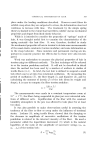
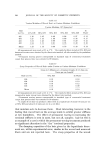
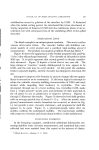
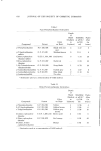
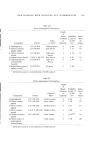
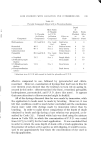
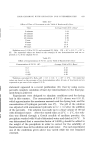
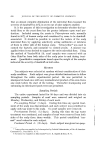
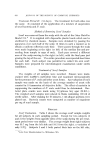
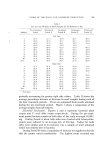
HAiR COLORING WITH OXIDATION DYE INTERMEDIATES 617 Table IX Meta-Aminophenol Derivatives Mixed with p-Phenylenediamine or p-Aminophenol Mixed Solution with Mixed Solution with P.P.D. P.A.P. Fades Fades After After Compound Color on Hair a (in hours) Color on Hair a (in hours) m-Aminophenol 3,5-Diaminophenol hydrochloride Diethyl-m-aminophenol p-Amino-o-cresol p-Phenylenediamine (alone) p-Aminophenol (alone) Dark purple 8 Medium red 16 grey brown Red brown 4 Grey brown 14 Olive brown 5 Green brown 7 Dark red with 18 ]3right orange 18 blue east Dark brown 4 ...... ...... Light golden 4 brown Solutions were 0.01 M in both components. importance of these color modifiers in increasing the depth of shade, changing the color, and increasing the fastness to light. It is apparent that m-phenylenediamine, m-toluylenediamine, 2,4- diaminoanisol sulfate, and 4-methoxy-6-methyl-m-phenylene diamine are all equally effect'-•e i'n producing a deep blue shade of comparable light fastness. The tendency of hair dyed with oxidation colors to turn red on aging has long been a deep concern of the hair colorist. As evi- denced by references in the patent literature (9, 10) this tendency is ac- celerated by the application of acid rinses or contact of the hair with acid perspiration. Fadeometer readings are a measure of the fading of colors due to the exposure to light. However, it is doubtful if such de- terminations measure the reaction of colors to aging. Dyeings that had been made in December, 1952, using mixtures of P.P.D. and each of the four meta-compounds listed above, were found in our files. These had been stored in the absence of light and out of contact with acid fumes. Records showed that originally they were all blue-black colors of comparable depth of shade, with light fastness ratings varying from forty-two to fifty hours. Examination of these dyeings after thirteen and one-half years revealed that the one made with 2,4-diaminoanisol sulfate was still black, while that made with m-phenylenediamine was slightly red and those made with m-toluylenediamine and 4-methoxy- 6-methyl-m-phenylenediamine were very red. This indicates the need for additional tests for the control of hair dye formulations. Such tests

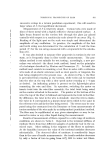
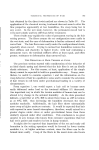
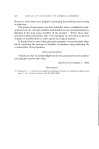
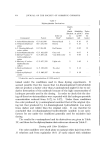
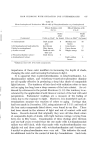
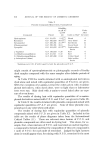
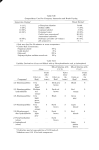
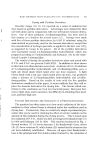
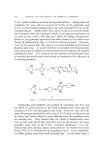
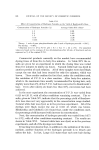
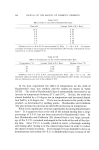
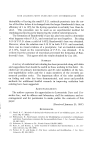
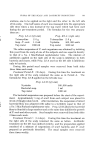
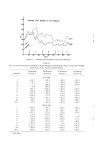
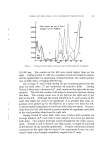
618 JOURNAL OF THE SOCIETY OF COSMETIC CHEMISTS Table X Phenolic Compounds Mixed with p-Aminophenol Compound Patent Solubility at pH 9.7 (g/100 ml) Fades After Color on Hair • (in hours) Hydroquinone G.P. 51,073 5.915øC Resorcinol G.P. 162,625 58.42øøC Pyrocatechol G.P. 276,761 31.22øøC Chlororesorcinol G.P. 276,761 29.9 Pyrogallol G.P. 104,622 62.525øC a-Naphthol G.P. 162,625 0.26 1,5-Dihydroxynaphthalcnc G.P. 51,073 0.27 2,7-Dihydroxynaphthalcne G.P. 367,680 0.84 p-Aminophenol (alone) ...... Blond 6 Grey blond 14 Red brown 12 Green blond 8 Light golden 12 brown Red 6 Red 6 Yellow blond 2 Light golden 4 brown Solutions were 0.01 M with regard to both the phenolic and P.A.P. might consist of spectrophotometric or photographic records of freshly dyed samples compared with the same samples after definite periods of aging. In Table VIII the results obtained with m-aminophenol derivatives dyed alone and mixed with equimolar quantities of P.A.D.A. are given. With the exception of p-amino-o-cresol the colors given with m-amino- phenol derivatives, when dyed alone, were so light that no fadeometer tests were run. Hair dyed with p-amino-o-cresol faded after an expo- sure of seven hours. The results of dyeing hair with equimolar quantities of m-amino- phenol derivatives mixed with P.P.D. and P.A.P. are given in Table IX. In Table X the results obtained with phenolic compounds mixed with equimolar quantities of P.A.P. are given. None of these phenolic com- pounds gave any color when used alone. The results of dyeing hair with equimolar quantities of phenolic compounds mixed with P.P.D. are given in Table XI. Included in this table are the results of phase diagrams taken from the International Critical Tables (11). These are relevant since fusions of P.P.D. and phenolic compounds are often used in dyeing hair. This shows, for ex- ample, that, when mixtures of P. P.D. and resorcinol are melted together, a compound is formed and that the composition of this new compound is I mole of P.P.D. for each mole of resorcinol. Judged by light fastness alone it would appear that, for mixing with P.P. D, resorcinol is the most
Purchased for the exclusive use of nofirst nolast (unknown)
From: SCC Media Library & Resource Center (library.scconline.org)