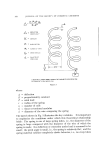
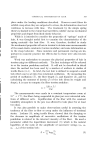
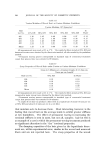
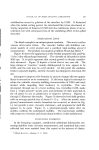
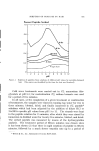
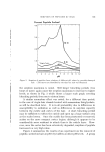
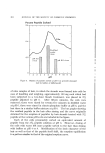
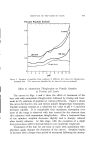
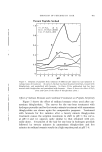
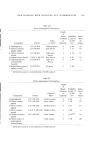
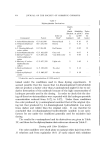
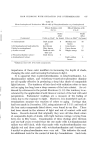
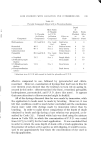
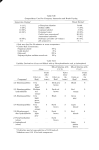
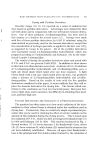
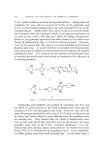
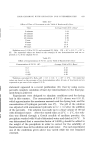
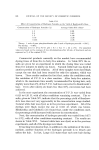
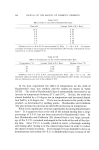
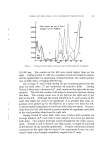
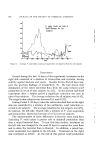
SORPTION OF PEPTIDES BY HAIR 6O7 Percent Peptide Sorbed I I I I I 1.0 1 hr, 6% H202 A C 20 min, 5% NHaTG A B D 5 mln, 3% NaBrO 3 A B 0.8 0.6 0.4 0.2 Virgin hair I I I 1 2 3 4 5 6 7 8 9 10 11 12 pH Figure 7. Sorption of peptides from solutions of different pH values by hair subjected to various types of treatment. (In curve A the hair has been bleached with H202, treated with thioglycolate, and neutralized with bromate. In Curve B the unbleached hair has been treated with thioglycolate and neutralized with bromate. Curve C shows the effect of alone and Curve D the effect of thioglycolate alone.) Effect of Sodium Bromate and Combined Treatments on Peptide Sorptivity Figure 7 shows the effect of sodium bromate when used after am- monium thioglycolate. The curves for the one-hour treatment with hydrogen peroxide and for the twenty-minute treatment with ammonium thioglycolate are shown again for comparative purposes. Treatment with bromate for five minutes after a twenty minute thioglycolate treatment causes the sorption maximum to shift to pH 7 the curve, at pH 11 and 12, appears quite similar to that obtained with per- oxide alone. Treatment of the hair for one hour in hydrogen peroxide followed by twenty minutes in ammonium thioglycolate and five minutes in sodium bromate results in a high sorption peak at pH 7-8.

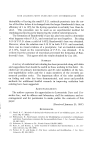
608 JOURNAL OF THE SOCIETY OF COSMETIC CHEMISTS SUMMARY AND CONCLUSION In the case of both hydrogen peroxide and ammonium thioglyeolate, rapid changes in sorption occur in the first five to ten minutes. There is little change in sorption for the next thirty minutes to one hour of treatment with either reagent. After one hour of hydrogen peroxide treatment, peptide sorption becomes progressively greater with in- crease in time. This apparently is true also in the case of ammonium thioglycolate treatment. Oxidizing agents, such as hydrogen peroxide used in bleaching, or sodium bromate used to neutralize ammonium thioglycolate, have relatively little effect in increasing peptide sorption at the highest pH levels but cause sharp increases in sorption at neutral pH values. The use of ammonium thioglycolate alone has less effect on promoting sorption at neutral pH values than at the higher pH levels. It is concluded that the cuticle is destroyed rapidly by the re- agents used, with the swdling and opening up of the cuticle being responsible for the rapid uptake of peptide at this stage. Further chemical treatment removes the cuticle, leaving a cortex which is considerably more resistant to chemical action. Sharply increased peptide sorption occurs only after the oxidation or thioglycolate treat- ments have damaged the hair extensively. ACKNOWLEDGMENT The authors wish to acknowledge the assistance of Elliot Silber and Maxine McCutcheon during the course of this investigation. (Received November 30, 1966) REFERENCES (1) Karjala, S. A., Williamson, J. E., and Karler, A., Studies on the substantivity of collagen- derived polypeptides to human hair, J. Soc. Cosmetic Chemists, 17,513-524 (1966). (2) Karjala, S. A., Bouthilet, R. J., and Williamson, J. E., Some factors affecting the sub- stantivity of proteins to hair, Proc. Sci. Sect. Toilet Goods Assoc., 45, 6-7 (May, 1966). (3) Heiling6tter, R., The swelling and stretching of human hair in solutions of mercapto- compounds, Fette, Seifen, Anstrichmittel, 55,868-871 (1953). (4) Freytag, H., Studies on the physical and chemical properties of human hair. IV. Studies on the phenomenon of wave formation in human hair, J. Soc. Cosmetic Chemists, 15,667-690 (1964). (5) Laden, K., and Finkelstein, P., Studies concerning modification of ionic character of the hair, Am. Perfumer Cosmetics, 81, (10) 39-40, 42 (1966).
Purchased for the exclusive use of nofirst nolast (unknown)
From: SCC Media Library & Resource Center (library.scconline.org)