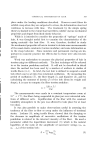
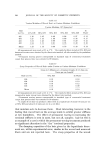
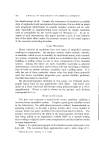
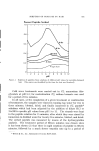
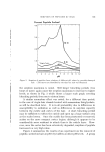
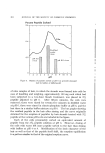
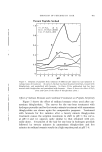
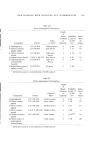
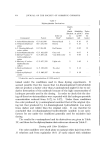
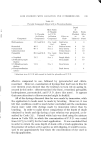
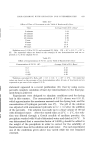
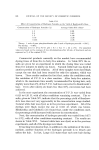
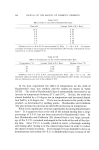
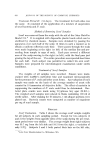
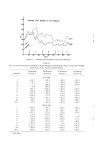
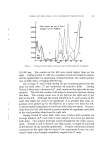
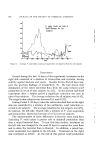
FLORA OF THE SCALP AND DANDRUFF PRODUCTION I •0000 ILOOOO 90000 70000 50000 30000 I0000 0 Plate Counts per mg. of Scurf Samples for Ten Subjects I II •x • I I • I :•0 30 40 5O 60 Doys Left• I I Right I I I I •o Figure 2. Average bacterial plate counts per mg of scurf sample for all subjects 145,000/mg. The counts on the left were much higher than on the right. During Period D, with the cessation of anti-microbial treatment and the application of a suspension of mixed bacteria, the counts quickly rose on both sides, averaging 200,000/mg. The average P. ovale count during the pre-treatment period was the same for both sides (17 per immersion oil objective fidd). During Period A there was a decrease in P. ovale counts on the right side in nine subjects. The left side counts of all subjects showed an increase during this time. The average count was 13 per field on the right and 47 per fidd on the left. Although the actual reduction in P. ovale counts on the right side might not seem to be significant, it is possible that some or- ganisms were picked up by the HairVac as a carry-over from the left. A microscopical comparison of scurf from both sides was made. Prepara- tions from the left side showed a greater number of organisms embedded in the scurf particles than from the right side. During Period B when both sides were treated with nystatin the average number of P. ovale cdls in nine subjects was seven per field for both sides. One subject had high counts throughout the entire experi- ment. Periods C and D showed very high counts, as might be expected in the absence of any nystatin application. Despite continuous nystatin treatment on the right side for most of the experiment it was very un- usual to find a scurf sample completely negative for P. ovale.

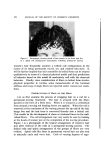
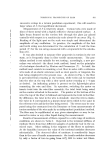
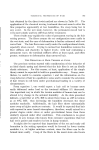
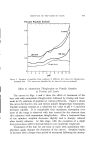
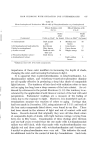
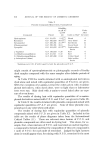
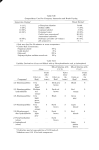
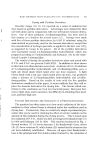
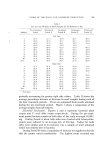
636 JOURNAL OF THE SOCIETY OF COSMETIC CHEMISTS 7O 6O P. ovale Counts per Field of Scurf Samples for Ten Subjects Figure 3. Average P. ovale slide counts per immersion oil objective field for all subjects DISCUSSION Except during the last 13 days of the experiment, treatment on the right side consisted of a mixture of tetracycline and nystatin, having activity against bacteria and yeasts. Results for the first 66 days sup- port the previous findings of VanderWyk (9). He had shown that elimination of the entire microbial flora from the scalp reduced scurf production in seven of nine subjects by 31%. In the present half-head experiment after a similar period a significant reduction was seen in nine of ten subjects. The average reduction for all subjects was 56.4%. The range in nine subjects was between 25.4 and 85.2%. During Period A (26 days) when the entire microbial flora on the right side was controlled by a mixture of two antibiotics, scurf reduction oc- curred in six subjects. The average reduction for ten subjects was 30%. In contrast, the left side, treated with a mixture of P. ovale suspension and tetracycline, showed an increase of 9.1% in seven subjects. The interpretation of these differences is that the yeast scalp flora (including P. ovale) plays a greater role in dandruff production than does a mixed bacterial flora. To test this idea further, treatment on the left side was changed for the next 26 days to control the yeast flora and to allow the bacterial flora to flourish. In addition, a mixed bac- terial suspension was applied to the left side. Treatment on the right side continued as before. At the end of this period, scurf production
Purchased for the exclusive use of nofirst nolast (unknown)
From: SCC Media Library & Resource Center (library.scconline.org)