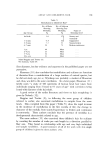
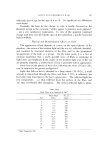
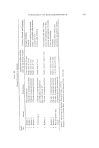
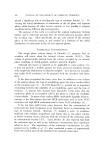
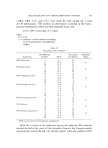
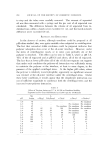
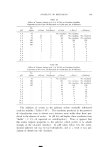
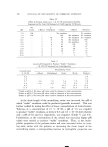
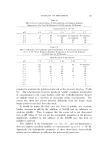
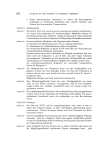
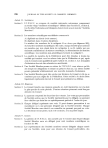
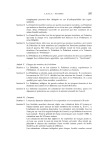
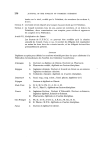
TOXICOLOGY OF HEXACHLOROPHENE 175 nonionic solvent for hexachlorophene, Tween © 80,* on the toxicity for mice was also studied (6). A dose of 250 mg/kg of hexachlorophene gave a 10070 mortality this was not changed when one part of hexachlorophene was mixed with 2, 4, and 9 parts of Tween 80. The acute oral toxicity of hexachlorophene for rats is about the same as that for mice. The LDa0 was 161 mg/kg (range 138 to 188 mg) when hexachlorophene was administered in the form of a 40{j solution in 35% aqueous propylene glycol (7). At a test level of 200 mg/kg, the microscopic examination of liver, kidney, and spleen of the rats showed normal histology. Thorpe (8) observed a LDs,, of 146 mg/kg with a 1.5g, suspension of hexachlorophene in a solution (0.15 % each) of Lissapol-Dispersol.,• Feder- mann (9), using hexachlorophene in the form of a 30% wettable powder, and administering single doses of 100, 250, and 500 mg/kg to 10 rats each, reported that all animals survived the lowest dose, four died at 250 mg, and all died at the highest dose. Dogs appear to be somewhat more su ceptiblc. All of 12 dogs died receiving single doses of 140 mg/kg of hexachlorophenc in gelatine capsules Table II Acute Oral Toxicity of Hexachlorophene in Mice LD•0 No. Formulation mg/kg Range Investigator Year 1 Suspended in 10 % soln. of 80 gum acacia 2 10% soln. of soap containing 187 1% hexachlorophenc (on total weight) 3 10% soln. of soap containing 186 1% hexachlorophene (on total weight) 4 Same as No. 3 plus 1% 105 polyvinylpryrrolidone 5 25 mg hexachlorophene per 215 ml of dist. water plus one drop of 10% sodium hydrox- ide soln. 6 Suspended in 0.5 % soln. of gum tragacanth 7 Deodorant soap with 1% of hexachlorophene 8 Deodorant soap with 0.75 % of hexachlorophene and 0.75 % of 3,4,4'-tric hlorocarb anilide ......... Florestano (5) 1949 166-209 Nickorson (52) 1949 2-226 Lebcrco 1954 Labs. (6) 84-131 Lcbcrco 1954 Labs. (6) 186-250 Leberco 1952 Labs. (6) 168 141-200 13 g kg 10.7-15.9 12 g kg 10.2-14.2 Leberco 1952 Labs. (6) Leberco 1963 Labs. (6) Leberco 1963 Labs. (6) * Atlas Chemical Industries, Wilmington, Del. • L. C. L. Ltd., Dyestuff Division, London, England.

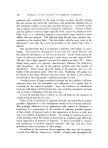
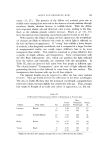
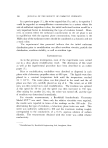
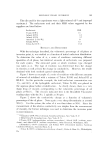
176 JOURNAL OF THE SOCIETY OF COSMETIC CHEMISTS (10). However, in another test (7), dogs survived doses from 100 to 160 mg/kg. Higher toxicity was reported by Delak et al. (11) when they conducted tests on a small number of dogs. Doses of 10 to 20 mg/kg were tolerated without toxic symptoms. Administration of 30 mg was toxic doses of 40 to 50 mg/kg caused death of most of the animals. Since Hirschler (12) reported on the anthelmintic property of hexa- chlorophene against liver flukes, many papers have been published on this subject, and besides reports on the efficacy of the drug, data on its oral toxicity for cattle and sheep are usually presented. While space does not permit referring to all toxicity studies, it would appear that these animals are more susceptible to hexachlorophene than rodents. Doses of 20 mg/kg are well tolerated by cattle, doses of 30 and 40 mg give toxic symptoms, and death may occur at the higher level (3, 9). Sheep tolerate somewhat higher doses of hexachlorophene. Guilhon and Graber (13) reported that, in most cases, the animals did not exhibit toxic symptoms at single doses of 100 mg/kg on the other hand, Curalp et al. (14) stated that all 8 sheep given 70 or 80 mg/kg showed signs of toxicosis, and 4 of them died. Factors such as breed, pregnancy, condition of animals, climate, and mode of administration, whether suspension in water or solution in oil, influence the toxicity of hexachlorophene for cattle and sheep. SUBACUTE ORAL TOXICITY Not much had been done in regard to subacute oral toxicity. A study (15) in six rats each at a dose level of 0.02 and 0.04% of hexachlorophene in their diet over a period of 30 days showed that the lower dose was mildly toxic, the animals gaining less weight, and that the higher dose was definitely toxic, showing pathological changes in the liver and kidney of the sacrificed animals. SYSTEMIC TOXICITY Concerning systemic toxicity, Price and Bonnett (16) reported in 1948 that hexachlorophene was toxic when injected intravenously. As little as 85 mg in 0.01N sodium hydroxide solution caused death in dogs weighing 7 or 8 kg within a few minutes. Convulsions, sudden respiratory failure, and widespread intravascular clotting of blood were the characteristic symptoms. Tests in rats (17) given a solution of hexachlorophene in propylene glycol intravenously showed a LD•0 of 9.1 mg/kg (range 7.8 to 10.6 rag) and in a preliminary study in rabbits (18) the LDs0 appeared to be 8.5 mg/kg. Vitez (19) studied the toxicity of hexachlorophene when injected intraperitoneally into mice. Those animals which received 12.5
Purchased for the exclusive use of nofirst nolast (unknown)
From: SCC Media Library & Resource Center (library.scconline.org)