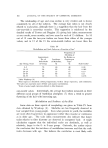
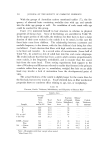
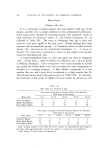
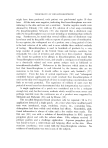
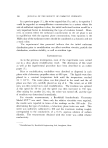
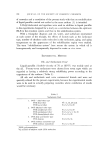
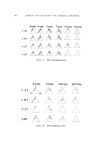
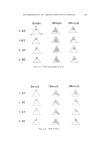
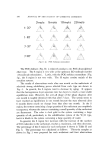
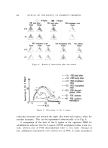
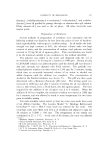
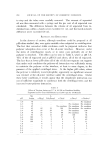
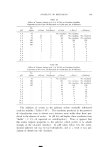
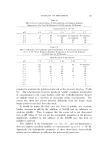
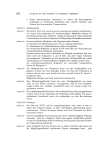
162 JOURNAL OF THE SOCIETY OF COSMETIC CHEMISTS The relationship of age and cross section is very evident and is shown consistently by all of the subjects. The average hair index is not clearly related to maturation, although there is a suggestion that the hair from the one-year-olds is somewhat rounder. This suggestion is reinforced by the detailed results of Trotter and Duggins (8) giving hair index measurements at one month, seven months, and two years for each of 15 children. In 14 out of 15 cases the two-year indices are lower than either of the younger values, and in 13 of the 15 the seven-month indices are lower than the Table IV Medullation and Scale Index as a Function of Age • Proportion of Medullas of Approximate the Broken or No. of Incidence Continuous Individuals of Medullas, Type b Age Group, Years in Group % % Scale Index • 0-9 70 40 48 0.24 10-19 30 82 89 0.085 20-29 40 55 67 0.10 30-49 37 80 68 0.11 50-99 60 76 65 0.135 •After Wynkoop (4). bFour types are described: absent, fragmentary, broken (large segments), and continuous. The latter two represent more definite and massive medullation. •Ratio of scale length (proximo-distal) to fiber diameter. one-month values. Interestingly, the average hair indices measured on three different racial groups of Australian aborigines (7) show a trend to greater flattening of the hair with increasing age. Medullation and Scaliness o[ the Hair Some data on these aspects of morphology are given in Table IV from data obtained by Wynkoop (4). Medullas are less frequently observed in hair sampled from young people. Even when present in youth, the medullas are more often fragmentary in appearance rather than massive or continuous as in older ages. The scale index measurements also indicate that larger scales relative to fiber diameter are observed in youngsters' hair. A rough calculation suggests that the individual scales are absolutely, as well as relatively, larger in the 0- to 9-year group. Curiously, the author rejects the conclusion that the incidence of medullation increases and that the scale index decreases with age. She believes the correlation is most likely with

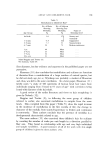
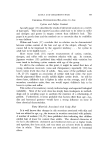
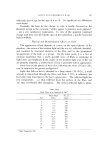
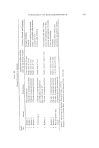
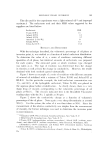
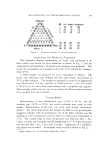
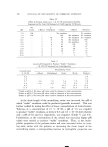
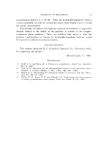
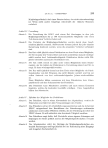
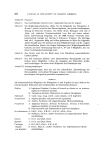
ADULT AND CHILDREN'S HAIR Table V Medullation in Children's Hair • 163 Age Group No. of Hairs No. of Subjects Showing Showing Any Medullas, Medullas, Types of % % Medullas Seen 6 At birth 1-2 mos. 3-5 mos. 6-7 mos. 1.0 17 f Scanty and extremely 0.4 32 fragmented 7.7 31 Scanty-broken 34 73 Broken -continuous 1 yr. 48 Most 2-4 yrs. 25 Most 5-9 yrs. 36 Most 10 q- yrs. 31 Most •Aftcr Duggins and Trotter (9). bSce footnote, Table IV. fiber diameter, but her evidence and argument in the published paper are not persuasive. Hausman (10) also concludes that medullation and scaliness are functions of diameter from a consideration of a large number of animal species, but he did not study age per se Wynkoop was probably a student of Hausman and, thus, was led to the same conclusion. In a later paper, Hausman ( 11 ) briefly notes "a study of 483 specimens of human head hair taken from individuals ranging from 3 hours to 91 years of age" with correlation bei_ng found with diameter of the hair shaft. A good review of the earlier literature and views on hair morphology is given by Noback (12). Duggins and Trotter (9), in following the same group of children referred to earlier, also examined medullation in samples from the same heads. Data compiled from this paper (Table V) show the rapid increase in the incidence of medullation in the first months of life the change in character of the medulla from scanty-fragmentary to broken and continuous is noteworthy. These authors conclude that the presence of medullas is a developmental characteristic related to age. The same authors (13) also examined these children's hair for scaliness by counting the number of scales per unit length in a direction parallel to fiber axis. They found no relationship with age and very high individual and sample variability. A good summary of all of the work with this single group of children is given by these authors (14).
Purchased for the exclusive use of nofirst nolast (unknown)
From: SCC Media Library & Resource Center (library.scconline.org)