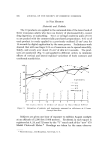
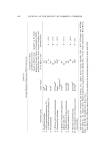
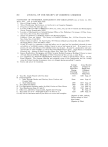
784 JOURNAL OF THE SOCIETY OF COSMETIC CHEMISTS Synthetic Sebum Solution The simplified mixture reported by Spangler (7) was selected as a representative soil. The fatty composition consists of the following: Ingredient Palmitic acid 10 Stearic acid Oleic acid Coconut oil 15 Olive oil 20 Squalene 5 Paraffin 10 Cholesterol Spermaceti 15 A 20% w/v solution of this blend was prepared in a 1:1 mixture of benzene/isopropanol (7). Before generation of foam, 2 ml of this solu- tion were added to 50 g of diluted detergent sample, giving a ratio of fatty material to sodium lauryl sulfate of 0.8 to 1.0. This represents a fairly heavy soil level. Hard Water A 0.825% w/v calcium chloride solution was prepared in deionized water. The addition of 1 ml of this solution to the 49 g of diluted deter- gent sample prior to generating the foam provides moderately hard water containing 150 ppm Ca + + as calcium carbonate. EXPERIMENTAL In order to study the desired variables of water-hardness (deionized rs. 150 ppm Ca++), temperature (23 ø rs. 45øC), presence of sebum in deionized water at 45 øC, and concentration of additive, it was necessary to establish standards for a number of other potential variables. All test formulations were diluted to provide solutions for foam generation containing 1% active sodium lauryl sulfate and 0.67% amide. Experi- mentation revealed that the slopes of the concentration rs. specific foam volume and concentration rs. per cent drainage curves were essentially flat around this concentration. The speed and time of beating for foam generation were standardized at 720 rpm for three minutes. These conditions were found acceptable by both New and Bromley. Experiments with sodium lauryl sulfate solutions confirmed that this combination of speed and time best suited the requirements of this investigation. If the speed is too slow or the

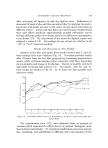
LANOLIN DERIVATIVES IN SHAMPOOS 785 mixing time too short, the rate of the foam volume buildup is at a maximum and equilibrium is not attained. If the speed is too fast or the mixing time too long, differences can be masked. For example, the influence of sebum on foam properties is practically negligible after five minutes beating time, since the foam-depressing effects of the fatty material are overcome by the extra work used in generating the foam. A further consideration in selecting this combination of speed and time was the good correlation reported by New between foams produced on heads in salon tests and foams produced in the laboratory under these test conditions. Drainage volume was recorded after five minutes so that indications of potential instability could be noted. If the drainage time is too short or too long, differences between the foams are less apparent. The five- minute reading was selected after several different foams had been char- acterized by recording drainage at intervals of 30 seconds for extended time periods. The five-minute interval provided maximum differentia- tion between the various foams in a reasonable period of time. Plotting drainage rs. time or determining the time required for the total collapse of each foam proved to be time-consuming and contributed nothing sig- nificant toward characterizing the foams. Results are reported as per cent drainage rather than direct volume readings to allow a more meaningful comparison between foams of different densities. It is, of course, possible for the volumes drained from two foams of different specific gravities to be identical after five minutes. But the foam with the higher specific gravity would yield a larger volume of liquid on total collapse. It is, therefore, actually drain- ing more slowly than the foam with the lower specific gravity. Treating the results as per cent drainage takes into account the potential volume on total collapse and the differences in the weights of the foams that are being drained. All the foams were examined visually for luster and bubble size, and were handled to evaluate feel. After more than 100 tests had been run, it was possible to establish acceptance criteria for both sFeeifie foam volume and per cent drainage. The specific foam volume must be at least 13.5 ml/g and the per cent drainage after five minutes must be be- tween 60 and 70%. Acceptable shampoo foams must meet both criteria. Foams that have specific volumes lower than 13.5 ml/g and that drain less than 60% in five minutes consist of small dry bubbles. These foams lack the luster and rich wet feel desirable in shampoo foams. As
Purchased for the exclusive use of nofirst nolast (unknown)
From: SCC Media Library & Resource Center (library.scconline.org)