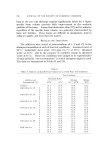
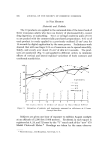
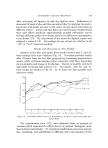
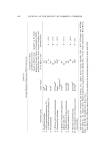
792 JOURNAL OF THE SOCIETY OF COSMETIC CHEMISTS In the presence of synthetic sebum at 45 øC, there is a general reduc- tion in both specific foam volume and per cent drainage, indicating a tendency toward drier foams with a smaller bubble size. In contrast to the control, the shampoos containing derivatives Nos. 16, 25, and 75 gen- erate acceptable foams while the control does not. As in the other test conditions, derivative No. 16 is a more desirable additive than No. 25. Spangler attributed good performance in the presence of sebum to emul- sifying power (7). Although all of these soluble lanolin derivatives are O/W emulsifiers, the differences in their structure and ethylene oxide content may determine the specificity of their response to the particular fatty material added. SUMMARY AND CONCLUSIONS The influence of six different water-soluble ethoxylated lanolin derivatives on the foam characteristics of a typical shampoo system was determined using relatively simple laboratory procedures. Ethoxylated stearyl alcohol was also evaluated for comparative purposes. Reproducible quantitative measurements of specific foam volume and per cent drainage after five minutes were utilized to characterize the foams. Significant differences in foam properties were detected when additive concentration or chemical constitution were the experimental variables, establishing the value of the described test procedures and measurements for evaluating shampoo additives and for determining the concentration required for optimum foam properties. On the basis of subjective evaluation of appearance and feel of more than 100 foams, a minimum specific foam volume of 13.5 ml/g and a range of 60 to 70% drainage were established as criteria for acceptable foams. Satisfactory shampoo foams must meet both these limits. All of the additives were tested at 1, 2, and 5%. In general, a signifi- cant response to changes in concentration was observed. The "opti- mum" concentration for each additive was not necessarily the same. Four test conditions representative of some probable use-environ- ments were studied: deionized water at 23 øC and at 45 øC moderately hard water (150 ppm Ca ++) at 23 øC and presence of synthetic sebum in deionized water at 45 øC. Significant differences between the perform- ance of the control shampoo and of the shampoos containing the addi- tives were noted at all test conditions. The presence of the ethoxylated lanolin derivatives generally improved foam properties, especially in moderately hard water and in the presence of sebum. The ethoxylated

LANOLIN DERIVATIVES IN SHAMPOOS 793 stearyl alcohol, however, was not an acceptable additive for the shampoo system used in these studies. Because of the diversity of the lanolin derivatives, no over-all correlation could be found between performance and per cent ethylene oxide, HLB, or chemical type. However, derivative No. 16 was con- sistently a more desirable additive than No. 25, its higher ethoxylated homolog. This indicates that for this particular lipophile, a balance of 16 rather than 25 moles ethylene oxide produces a more favorable orien- tation in the bubble film. Inspection of the data confirms that the superior performance of derivative No. 16 is not simply a consequence of its numerical HLB. Other lanolin derivatives of different molecular structure have the same HLB as No. 16 but do not exhibit universally good performance properties in this shampoo system at all test condi- tions. The addition of the appropriate ethoxylated lanolin derivative at its optimum concentration can stabilize shampoo performance under a variety of use conditions. This was demonstrated by the data reported for derivative No. 16 at 2% in the shampoo used in this study. In other shampoo systems, a different lanolin derivative and/or concentration may achieve this foam stabilization effect. (Received January 31, 1969) REFERENCES (1) Bikerman, J. J., Chemistry and Physics of Interfaces, American Chemical Society Pub- lications, Washington, D.C., 1965, pp. 58-64. (2) Ross, J., and Miles, G. D., An apparatus for comparison of foaming properties of soaps and detergents, Oil Soap, 18, 99 (1941). (3) Barnett, G., and Powers, D. H., Factors contributing to the performance of shampoos and to customer acceptance, Proc. Sci. Sect. Toilet Goods Assoc., 24, 24-8 (1955). (4) New, G. E., Techniques of foam measurement, J. Soc. Cosmetic Chemists, 11, 390-414 (1960). (5) Bromley, J. M., Modern trends in the assessment of shampoos, Ibid., 15,631-9 (1964). (6) Amerchol Lanolin Derivatives, American Cholesterol Products, Inc., Edison, N.J., 1964. (7) Spangler, W. G., Dynamic foam test, J. Am. Oil Chemists' Soc., 41,300-6 (1964).
Purchased for the exclusive use of nofirst nolast (unknown)
From: SCC Media Library & Resource Center (library.scconline.org)