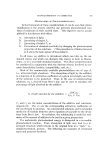
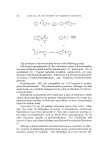
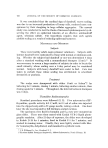
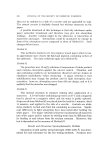
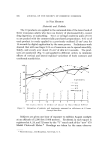
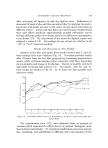
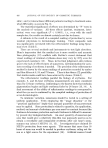
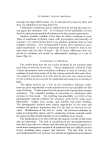
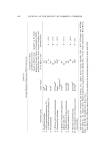
764 JOURNAL OF THE SOCIETY OF COSMETIC CHEMISTS HO R OR I II • • OH Ill IV X•CYANO Y=ESTER HO The products in this area belong to one of the following groups: 2-Hydroxybenzophenones (I) are substances whose photochemistry has been studied in detail and the intermediacy of "photoenols" (II) is established (6). Typical materials available commercially are 4-do- decyloxy-2-hydroxybenzophenone, 4-decyloxy-2-hydroxybenzophenone, 4-octyloxy-2-hydroxybenzophenone, and 4-methoxy-2-hydroxybenzo- phenone. Benzotriazoles (III) are exemplified by 2-(2'-hydroxy-5'-methyl- phenyl)benzotriazole. The photochemical processes, although less well understood, are probably analogous to the photoenolization of hydroxy- benzophenones. Substituted acrylonitriles (IV) constitute a class of substances which absorb ultraviolet light in the primary step and dissipate the energy in a photochemical reaction, in this case most likely cis-trans isomerization about the olefinic bond. Aryl esters (V) are yet another structural type in this series. Here also, the mode of dissipation of energy is incompletely understood. Speculations have been advanced (7) that these materials undergo ir- reversible rearrangements, such as Photo-Fries rearrangement (8), to yield structures capable of photoenolization. The availability and sources of these and related products are discussed in industrial literature (7). Although photoenolization and related processes constitute an effec- tive method of dissipating photochemical energy, photosensitization by absorbers cannot be excluded. The chronology of events and the effi-

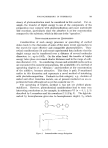
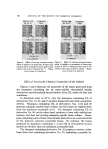
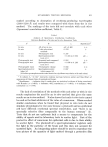
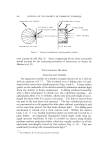
PHOTOCHEMISTRY IN COSMETICS 765 ciency of photoenolization must be considered in this context. For ex- ample, the transfer of triplet energy to one of the components of the preparation may compete with photoenolization and cause undesirable side reactions, particularly since the absorber is at low concentration compared to the substrate, which in this case is the "quencher." PHOTOSTABILIZATION BY QUENCHING Consideration of such energy processes or quenching of excited states leads to the discussion of some of the more recent approaches to the search for more effective and compatible photostabilizers. Theo- retical considerations (9) and recent experimental data indicate that the singlet energy can be transferred over a distance of several molecular diameters, i.d., up to 100A. On the other hand, the transfer of triplet energy takes place over much shorter distances and in the range of colli- sion diameters (10). In considering viscous and semisolid media such as are encountered in cosmetic preparations, the availability of a method of quenching singlets at a "distance," and therefore at low concentration of the additive, becomes attractive. This then is path B mentioned earlier in this discussion and represents a novel method of interfering with photodecomposition. Products in this category, e.g., chelates of nickel and other transition metals, are at present marketed on an ex- perimental basis although not as yet for cosmetic use (7). The quenching of triplets, method C, has not yet yielded photo- stabilizers. However, photochemical considerations lead to some very interesting conclusions as, for example, in substances VI (n = 0, 1, 2, 3) described by Leermakers and his coworkers (11) (Fig. 2). The light ab- sorbed by benzophenone gives rise to benzophenone singlet, SB, which --(C H.:,ln--•,• C • VI E •I TN -- S o -- Figure 2. Intramolecular energy dissipation
Purchased for the exclusive use of nofirst nolast (unknown)
From: SCC Media Library & Resource Center (library.scconline.org)