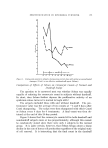
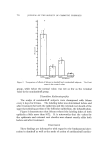
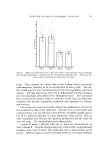
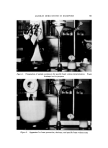
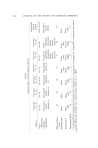
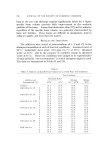
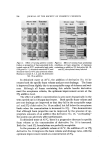
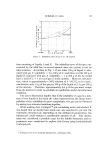
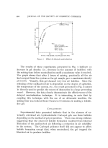
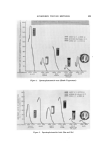
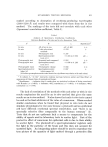
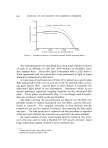
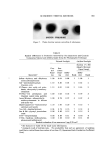
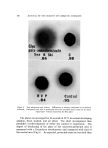
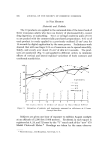
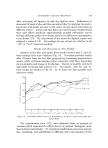
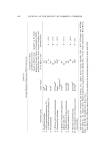
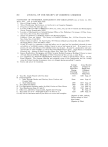
SUNSCREEN TESTING METHODS 821 through this high MED barrier (17) as advocated by Giese in 1946, and they are suitable for screening tests (18). Uniformity of thickness can be attained best by having the same per- son apply the substance (19). It is because of this possibility of error that the same person applied all substances in the present experiments. Another possible variable is the time at which erythema is read. Time of maximum erythema varies with wavelengths and intensity of exposure (14), which means there is no absolute optimum time to read sunlight erythema. The recommended 8 hours after exposure is not a rigid requirement it is more important that all results be read at the same hour and not after 24 hours. By 72 hours, differences were ob- served in erythema not noted by reflectometer readings at 8 and 24 hours (Fig. 10). COMPARISON OF METHODS The results show that the six in vitro methods do not correlate with each other or with the in vivo test. This is statistically verified in Table I where Spearman's rank correlation coefficient is used to correlate the rankings of protection achieved by the various methods with each other. The negative correlation of in vitro with in vivo tests was expected since in vitro systems do not account for epidermal and sunscreen scattering of light. The highly positive (-•s 0.8) in vivo correlation indicates reflec- tometry gives reproducible results and attests to its acceptability for this type of testing. It also shows that the mean trend of protection remains consistent. The compiled grading of protection by physicians adds credence to this trend. The startling reproducibility (-•s 0.952) of the photographic method confirms the accuracy achieved by using exact dimensions:_ weight, area, energy, and machine end point readings. The photographic method most closely approaches in vivo tests and confirms the authors' impression that it is the best in vitro test yet de- vised. Modification of this test to "catch" all scattered radiation by using an integrating sphere and by emplacing stratum corneum under the sunscreen film should simulate in vivo conditions more closely. The implications to be derived from the negative results in this work also are important. The lack of correlation of the spectrophotometric tests with each other is evidence that skin with all its topical vagaries is a much more homogenous receptacle of products than are artificial carriers tested, including glass, papers, and solvents. The fact that, in the spectrophotometric test systems, the method of application and amount

822 JOURNAL OF THE SOCIETY OF COSMETIC CHEMISTS
Purchased for the exclusive use of nofirst nolast (unknown)
From: SCC Media Library & Resource Center (library.scconline.org)