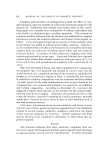
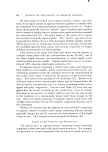
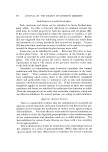
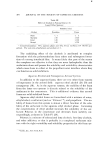
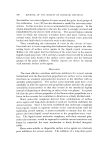
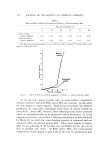
384 JOURNAL OF THE SOCIETY OF COSMETIC CHEMISTS Table III Effect of Alcohols in Polyoxyethylene (4) Lauryl Ether Systems- Stability (min) Alcohol Emulsion Foam None 1 5 Myristyl 30 120 Cetyl 30 120 Stearyl 30 120 Aerosol formulation: 90% aqueous phase and 10% Freon 12/Freon 114 (40/60) pro- pellant. The tool ratio of surfactant and alcohol is 1:1. The stabilizing effect of the alcohols is attributed to complex formation with the polyoxyethylene fatty ethers and subsequent forma- tion of a strong interfacial film. It seems likely that part of the reason the complexes are effective is that they are more hydrophobic than the surfactants alone and possess the solubility and wettability characteristics which cause them to collect at the propellant-water interface where they can h•nction as solid stabilizers. A q •teous Alcohol and Nonaqueous Aerosol Systems In addition to the aqueous foams, there are two other foam systems of importance in the aerosol field: aqueous ethyl alcohol (28, 29) and nonaqueous (30). As in the aqueous systems, the stability of the foam oerom the latter two systems is directly related to the solubility of the sur[actant in the concentrate. This is additional evidence that aerosol foams are solid stabilized foams. Aqueous ethyl alcohol foams are formulated with a mixture of water, ethyl alcohol, a surfactant (such as "Polawax"*), and propellant. The sta- bility of foams from this system is almost a direct function of the solu- bility of the sur[actant in the aqueous ethyl alcohol phase. Increasing the concentration of ethyl alcohol increases the solubility of the sur- factant Polawax in the concentrate and decreases foam stability cor- respondingly, as shown in Table IV (28). Polawax is a mixture of ethoxylated fatty alcohols, free fatty alcohols, and other additives, so that it probably is a complexed surfactant mix- ture with the right wettability and solubility properties for this foam sys- * Croda, Inc., New York, N.Y.

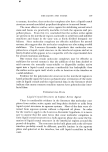
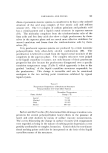
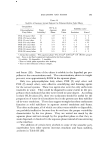
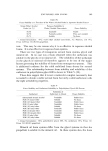
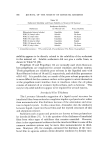
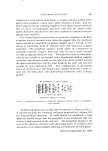
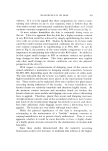
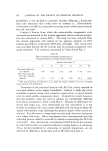
EMULSIONS AND FOAMS :385 'Cable IV Foain Stability as a Function of the Water/Alcohol Ratio in Aqueous Alcohol Foams,, Water/Ethyl Alcohol Ratio (wt %) Polawax Solubility in Water/Alcohol Concentrate Foam Stability 35/65 Insoluble Stable 30/70 Partially soluble Thin and unstable 25/75 Soluble No foam • Aerosol formulation: 87% water/ethyl alcohol concentrate, 3% Polawax, and 10% Freon 12/Freon 114 (40/60)propellant. tern. This may be one reason why it is so effective in aqueous alcohol foams. It is also effective in aqueous foam systems. There are two types of nonaqueous aerosol foam systexns, glycol and mineral oil. In no case was a foam obtained when the surfactant was soluble in the glycols or in mineral oil. The solubility of the suffactant in the glycols or mineral oil therefore appears to be one of the major factors governing the stability of foams from nonaqueous systems. This is additional evidence for the solid stabilized foam theory for aerosol systems. The relationship between foam stability and solubility of the surfactant in polyethylene glycol 400 is shown in Table V (30). These data suggest that it is not a molecular complex necessarily that is needed to obtain a stable aerosol foam but only a solid surfactant with the right wettability properties. Table V Foam Stability and Surfactant Solubility in Polyethylene Glycol 400 Foalns a Solubility of Surfactant Surfactant in Glycol Foam Stability Ethoxylated stearyl alcobol Insoluble Stable foam POE (4) lauryl ether Soluble No foam POE (23)lauryl ether Insoluble Stable foam POE (2)cetyl ether Insoluble Stable foam POE (10)cetyl ether Soluble No foam POE (20) cetyl ether Insoluble Stable foam POE (2) stearyl ether Insoluble Stable foam POE (10)stearyl ether Insoluble Stable foam POE (2) oleyl ether Soluble No foam POE (10)oleyl ether Soluble No foam • Aerosol formulation: 86% polyethylene Freon 114 (40/60) propellant. glycol 400, 4% surfactant, 10% Freon 12/ Mineral oil foam systems differ from the glycol systems in that the propellant is soluble in the mineral oil. In these systems also, the foam
Purchased for the exclusive use of nofirst nolast (unknown)
From: SCC Media Library & Resource Center (library.scconline.org)