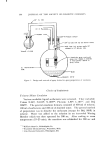
368 JOURNAL OF THE SOC1ETY OF COSMETIC CHEMISTS understanding the apparently complex effects ot• preparative variables on emulsions. EXPERIMENTAL All emulsification experiments were carried out in identical 600-ml Pyrex beakers using Lightnin mixers fitted with 2-in. stainless steel pro- pellers. The measured amount of water was first placed in a beaker and the required amount of the surfactant blend, having the desired HLB value, was then dispersed in the water with the propeller mixer. The oil phase was similarly prepared in a separate beaker. The amount ot• oil used was equivalent to 20% of the emulsion and the size of the batch was 400 g in all cases. Bet•ore emulsification, the propeller mixer was placed in the center ot• the beaker containing the aqueous phase. The clearance between the bottom ot• the beaker and the mixer tip was set at exactly 1/i in. The oil phase then caret•ully poured into the water phase. This opera- tion was done slowly to avoid emulsification prior to turning on the mixer. As soon as the oil phase was added, the mixer, set at 5(54 --4-_ 2 rpm, was turned on to start emulsification. The emulsion was mixed t•or exactly 3 minutes. In most cases, six batches with different HI J3 values were made simultaneously using six identical beakers and mixers. The experiments were carried out at 24øC. After preparation, the emulsions were poured into graduated cylin- ders and were observed for any sign of phase separation. The kill3 value of the surfactant blend yielding the most stable O/W e•nulsion was judged to be the required HLB of that system. At first, the emulsions were prepared with one HLB unit apart. After an approximate value of the required HLB was established, the experiment was repeated by making emulsions having 0.5 HLB unit apart until the required HLB value was established. The required HLB to form W/O emulsions was not studied in this investigation. All emulsions prepared had the following composition: Deionized water 77% Oil 20 Surt•actant mixture 3 The surt•actants used were Arlacel 80©* (HLB = 4.3) and Tween 80©* (HLB-- 15). * Arlacel 80 (sorbitan monooleate) and Tween 80 (polyoxyethylene sorbitan monoolcatc), Atlas Chemical Industries, Wilmington, Del.

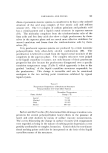
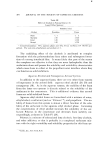
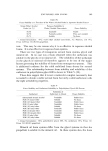
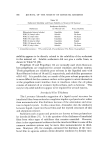
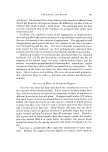
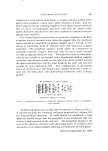
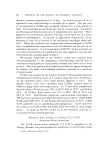
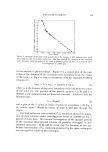
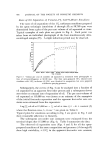
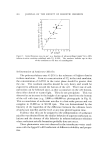
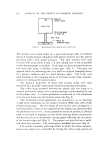
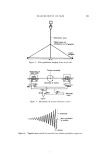
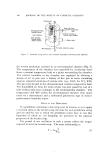
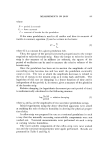
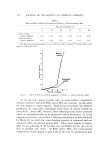
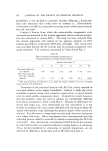
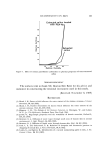
SURFACTANT LOCATION 369 The oils tested were light mineral oil, • a heavy mineral oil? a mineral spirit,* and a castor oil.{ RESULTS AND DISCUSSION Effect on Required HLB The effect of initial surfactant location on the required HLB for light mineral oil is shown is Fig. 1. Tween 80-Arlacel 80 combinations were used in the experiments and the total surfactant concentration was kept at 3% in all cases. The abscissa represents the percentage of the total surfactant combination initially placed in the aqueous phase prior to emulsification (e.g., 0% means that the entire surfactant blend was ini- tially placed in the oil phase). As indicated, the HLB values required to form O/W emulsions varied from 8.5 to 11 depending on the initial surfactant location. Figure 2 represents the runs obtained with the heavy mineral oil. In this series, the required HLB values varied from 8 (when all surfac- tants were placed in water) to 10.5 (when all surfactants were placed in oil). Figure 3 shows a similar result obtained with mineral spirit. The determination of the required HLB values involved judgment of emulsion stability which, unfortunately, is subject to human error. * Carnation©, Witco/Sonneborne, New York, N.Y. t Kaydol©, Witco/Sonneborne, New York, N.Y. .+ Amsco©, American Mineral Spirit, Oakland, Calif. {Crystal O©, Baker Castor Oil, Chicago, Ill. • LIGHT MINERAL OIL 7 6 I • I I 20 40 60 80 I00 % SURFACTANTS IN AQ PHASE Figure 1. Effect of initial surfactant loca- tion on required HLB to form O/W emul- sion (light mineral oil emulsified with 3% Tween 80-Arlacel 80) HEAVY MINERAL 01 L 20 40 60 80 % SURFACTANTS IN AQ PHASE IOO Figure 2. Effect of initial surfactant loca- tion on required HLB to form O/W emul- sion (heavy mineral oil emulsified with 3% Tween 80-Arlacel 80)
Purchased for the exclusive use of nofirst nolast (unknown)
From: SCC Media Library & Resource Center (library.scconline.org)